by David Oates
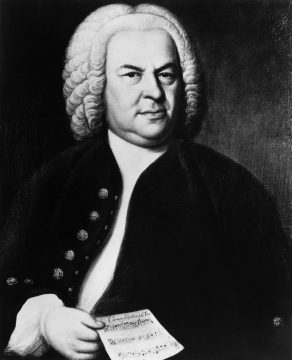
Some time before the beginning of the quarantine, walking in a pleasantly not-fancy Portland neighborhood near my own, I was stopped dead in my tracks: Bach on the piano. And close by! Suddenly all my thoughts were of music. The day’s work dropped away; the tangles and labors of writing; the distant threat of disease; the mental backdrop of our national ordeal-by-politics. . . all forgotten. Music.
After a long beat I was able to place it as one of the famous Goldberg Variations. It was coming from a little duplex with a front window facing the sidewalk, a black piano glimpsed just within. And someone practicing this difficult, beguiling music. Not struggling, no indeed quite fluent. But stopping, repeating, working out some tricky bit.
Isn’t it a wonder when music floats in all unexpected? Yes, we all have music on demand. Radios and devices, earbuds and headphones. But there is a change in the air when living sound, sound in the very act of creation, reaches us. We halt, suddenly in the moment. Not digitized, irreal, somewhere else: Here.
It seems like every traveler has a story of music in a faraway place. Choir practice transforming a quiet weekday cathedral, guitar heard in a favela, strain of song floating out over a crooked cobbled street. The moment becomes immortal, at least in the memory of the lucky traveler: the strange magic of the close and the near, the heartsound, found amidst alien ways. Read more »

 In the Age of Trump, the banality of evil can perhaps best be defined as unfettered self-interest. Banal because everyone has self-interest, and because American culture expects and even celebrates its most gratuitous pursuits and expressions. Evil because, when unchecked, self-interest leads not only to intolerable disparities in wealth and power, but eventually the erosion of democratic norms.
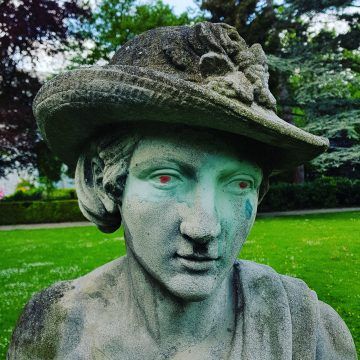 I may rise in the morning and notice that a long overdue spring rainfall has revived the flagging vegetation in my kitchen garden. I may give thanks to an unseen, benevolent power for this respite from a protracted and wasting drought. And I may record in my journal: “The heavens cannot horde the juice eternal / The sun draws from the thirsty acres vernal.” In such exercises, I will not have practised rigorous inquiry into the causes of things; I will not have subscribed to any particular view of the metaphysical; and I will certainly not have produced literature. But I will have replicated the conditions for the birth of science, as sketched by Geoffrey Lloyd in his account of the pre-Socratic philosophers, the first thinkers (at least in the Western world) to consider natural phenomena as distinct from the supernatural, however devoutly they may have believed in the latter; and who frequently set down their observations, theories and conclusions in formal language. For my observation of a natural phenomenon (rain and its effect on plant life), while not methodical, would bespeak a willingness to collect and consider empirical data unconstrained by superstitious tradition, and would not necessarily be contradicted by my ensuing prayer of gratitude to a supernatural force; and the verse elaboration of my findings into a speculative theory would not consign them to the realm of poetry (or even doggerel), but would merely represent a formal convention, whose forebears include Hesiod, Xenophanes, Lucretius and Vergil.
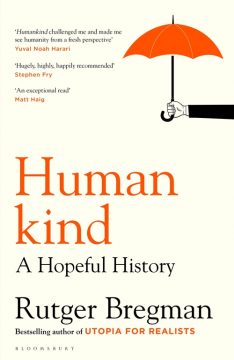 Rutger Bregman’s Humankind: A Hopeful History is a clearly written argument if ever there was one. Bregman believes humans are a kind species and that we should arrange society accordingly. The reason why this thesis needs intellectual support at all is not that it is particularly profound or complicated, but that there are so many misunderstandings to be cleared away, so many apparent objections that need to be overcome.
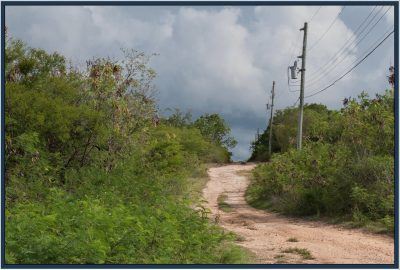 Anguilla is a sandbar ten miles long. It’s three miles wide if you’re being generous, but generous isn’t a word that pairs well with the endowments of a small, arid skerry of sand pocked with salt ponds.


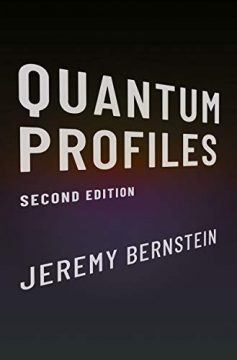 Physics writing, let’s face it, is usually pretty boring. In a recent
 I have a friend who is a self-described “cop magnet.” He’s been arrested six or seven times, just standing there.