by Jerry Cayford

The wealth tax was reintroduced a few months ago. Sponsors of the Ultra-Millionaire Tax Act are leading progressive Democrats Elizabeth Warren, Pramila Jayapal, and Brendan Boyle. The sixty or so co-sponsors are all Democrats (plus independent Bernie Sanders)—hardly a surprise, since taxing wealth, rather than just income, is a progressive policy. But the wealth tax need not end in another long-shot partisan battle. I propose a different approach to the politics here.
Another big story in this political season is the national debt, which just passed forty trillion dollars. Forty trillion! Our debt is far bigger now than our country’s gross domestic product. The interest on that debt is a quarter of the federal budget. Interest alone costs us more each year than we pay for social security, the military, or Medicare—more for debt than for our comfort, our protection, our health, or anything else. Traditionally, fiscally conservative Republicans are the ones who worry about debt.
Put these two stories together. Progressive wealth taxation and conservative debt reduction could be surprisingly symbiotic. What if Democrats pledged half of any wealth tax directly to paying down the national debt?
The politics of this proposal are what interest me. Arguments about the policy details of various wealth tax designs are easy to find. The figures generally put potential revenue at two to six trillion dollars (over ten years). Discussions of the politics of a wealth tax, though, seem to just presume a rigidly partisan and polarized battle ahead.
For example, the Ultra-Millionaire Tax Act (UMTA) press release says the plan is “to pay for investments like universal child care, free community college, Medicare expansion, and more.” The “more” includes schools, clean energy, new housing, and universal paid family leave. Bernie Sanders and Ro Khanna introduced their own wealth tax bill expressly to “use this revenue to address some of the major crises facing working families, the children, the elderly, the sick and the most vulnerable.” The wealth tax framing is indisputably partisan, and many discussions simply assume that Democrats therefore need a supermajority to pass one. But what if we approach the politics differently? Read more »
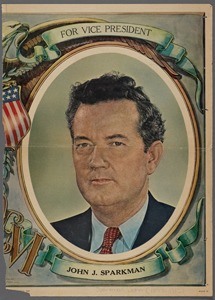 That Fifties-looking gent to your right is John J. Sparkman (D-Alabama) who was Adlai Stevenson’s running mate in 1952. Sparkman served in Congress for more than 40 years, the last 32 of them in the Senate. While not a star, he was associated with several pieces of important legislation and became Chair of the Senate Banking Committee and, late in his career, the Senate Foreign Relations Committee. He was also a committed segregationist and, in 1956, signed the Southern Manifesto, in emphatic opposition to Brown vs. Board of Education.
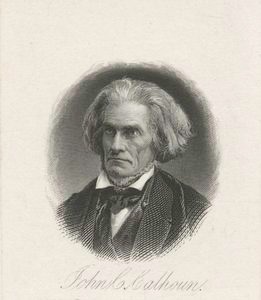 This scary-looking guy to your left is John C. Calhoun of South Carolina, who, during a truly extraordinary career that included being a Congressman, Senator, Secretary of State, and Secretary of War, also managed to sneak in two terms as Vice President under two very different Presidents, John Quincy Adams and Andrew Jackson. You are going to hear a lot over the next few weeks about “chemistry” between Joe Biden and his running mate. Suffice it to say that John C. Calhoun never had chemistry with anyone, except perhaps of the combustible kind. Mr. Jackson and Mr. Calhoun disagreed constantly, particularly on the enforcement of federal laws that South Carolina found not to its liking (including the juicily named “Tariff of Abominations”), which led Mr. Calhoun to resign the Vice Presidency during the Nullification Crisis in 1832.