
A view of the Dolomites in the distance during a thunderstorm in Brixen, South Tyrol, in August of 2020.

Though we are an aggregator blog (providing links to content elsewhere) on all other days, on Mondays we have only original writing by our editors and guest columnists. Each of us writes on any subject we wish, and the length of articles generally varies between 1000 and 2500 words. Our writers are free to express their own opinions and we do not censor them in any way. Sometimes we agree with them and sometimes we don’t.Below you will find links to all our past Monday columns, in alphabetical order by last name of the author. Within each columnist’s listing, the entries are mostly in reverse-chronological order (most recent first).
A view of the Dolomites in the distance during a thunderstorm in Brixen, South Tyrol, in August of 2020.
by Peter Wells
 Our classes in the British university where I was teaching Pre-sessional students (mainly Chinese) were cancelled for a Special Event. Instead of their normal lessons on academic English, our students were shepherded off to witness a series of presentations on ‘learning.’ Learning, they were told, was ‘Collaborative,’ ‘Creative,’ and ‘Self-directed,’ and depended upon ‘Taking Responsibility for one’s own learning,’ ‘Thinking Critically,’ ‘Problem-solving’ and ‘Taking the Initiative.’
While no one would dispute that these approaches are valuable in themselves, and relevant in some learning situations, they clearly exemplify stereotypical Western liberal values. I looked in vain in the prospectus that had drawn my students to attend our university for evidence that the syllabus included the imparting of these ideals. No, what they had paid for was instruction in the English language; specifically, training in academic writing.
To me this looked like a failure on our part to supply our customers with the goods they had paid for. More seriously, it looked like a neo-colonialist attempt to impose British cultural values upon a captive audience of rather vulnerable foreigners. I do not think that our lecturers, if they attended a conference in Beijing, would appreciate being obliged to attend a plenary session on Chinese Communism. I observed as much to a senior lecturer, in the politest possible manner.
His response was robust. Apparently, learning can take place only with the sort of educational approaches that have developed in our culture over the past generation or so. My suggestion that Chinese people seemed to be very good at learning things – better in some areas than Westerners – was met with a direct contradiction. Chinese people could not really learn at all. Nor, it turned out, as the conversation developed, could Indians, Arabs or Africans. They were not even able to think properly. In fact, only Western people could think, or learn anything worthwhile, the qualification being softened to include people of colour who were entirely Westernised, like, say, Barack Obama. To be fair, the bit about Obama was an inference on my part. Read more »
by Carol A Westbrook
 I began taking piano lessons when I was 8 years old, along with Lynn, my older and Mark, one of my brothers. Every Wednesday we’d walk together from school to a small storefront on Milwaukee Avenue about a half mile away. The store windows were covered in drapes, with a little sign indicating the teacher’s name and PIANO LESSONS. My sister gave her the $3 for three lessons, and we entered the small studio, which had a grand piano and a sofa, bookshelves, and a heavy, dusty drape separating the studio from the living quarters. We’d each wait patiently, doing our homework on the sofa while the other one had his or her lesson.
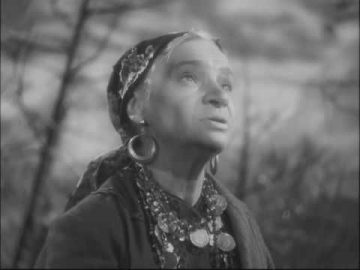 We enjoyed learning the piano, but didn’t enjoy Mrs. K. She was creepy. We thought she might have been a Roma fortune teller or a magician, as she wore strange jewelry and shawls, and had Persian carpets and draperies around her studio. To us kids she looked about 90 years old (probably more like 40). She was actually a rather unsuccessful concert pianist, and memorabilia was scattered around the studio such as notices of performances and autographed pictures of famous conductors. She didn’t talk about it much her past life at all, as she was reduced to teaching piano lessons to the blue-collar neighborhood kids like ourselves. We persisted with lessons because we always did as we were told. We went home and put in our half-hour of practice on the second-hand but well-tuned piano that dad bought for us, and little by little we began to learn how to play. Read more »
by Rafiq Kathwari
Before the Modi regime annexed Kashmir on August 5th last, Jawaharlal Nehru, India’s first prime minster, in fact annexed Kashmir in 1947 just months after India partitioned herself to create the new state of Pakistan.
Delhi flew in a regiment of troops to Srinagar as soon as the Maharajah of Kashmir signed an Instrument of Accession. Even the great Mahatma Gandhi approved of Nehru’s action.
Modi’s so-called annexation last year was religiously motivated. Kashmir penetrates the core of Hindu nationalist idea of Akhand Bharat, united, undivided Hindu India from Afghanistan to Pakistan to Myanmar to Thailand, Cambodia and Laos.
That’s the map draped in orange the color of choice of the Rashtriya Swayamsevak Sangh, RSS, founded in 1924, a volunteer army of the young, world’s largest fascist organization, based in Nagpur. It’s the parent organization of the Bharatiya Janata Party, BJP, the present xenophobic regime in Delhi.
Modi’s functionaries told their Hindu goons that Kashmir’s Muslim majority population was now truly an integral part of India and that Hindus should at once apply for Domicile Certificates to buy property in Kashmir. and marry fair-skinned Kashmiri girls.
But Nehru loved Kashmir. It was his ancestral home. His family were Kashmiri pandits. There are 250,000 pandits in Kashmir, 3% of Kashmir’s 8 million Muslims. Pandits are 0.1% of India’s 1.2 billion, but Modi’s regime has weaponized the 0.1 % pandits to rouse India’s Hindus. Modi will dump the pandits after doing his feats, and the pandits know it. Read more »
by Emrys Westacott
 America is a truck rolling down a hill towards a cliff. The downhill slope is the erosion of democratic norms; the cliff is the point where anti-democratic forces become powerful enough to crush democratic opposition by authoritarian means. The re-election of Donald Trump would very likely see the country sail over that cliff.
In this situation, anyone who believes that it would be a good thing to preserve what remains of American democracy and, if possible, to strengthen it and extend it so as to better realize the nation’s professed ideals, should want to see Trump and his Republican enablers in Congress soundly defeated. So anyone who has a vote should use it accordingly. Each such vote is a hand on the wheel trying to steer the truck away from disaster. To vote for Trump is to help push the truck over the cliff. To refuse to vote for Joe Biden (the presumptive Democratic candidate), especially in swing states, is effectively to stand by and watch as disaster threatens.
I understand the frustration progressive-minded people feel with a candidate like Biden. I feel it too. Once again, as so many times before, we are asked to vote for an establishment politician whose record does not indicate any deep commitment to really challenging the status quo, because the alternative is so much worse. There are only two arguments to support withholding one’s vote; but both of them are bad. Read more »
by Joseph Shieber
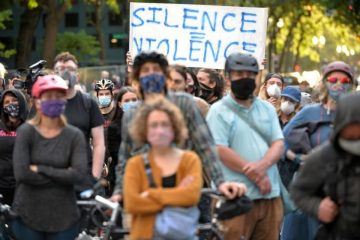
Given the multiple cataclysms that the United States has experienced within the last three or four months, it might seem puzzling that one of the most hotly discussed topics recently has been that of free speech and whether it is under threat by the bugbear of cancel culture. What could be objectionable about open debate? What is there even to discuss about the importance of free speech?
Apparently, a great deal. A recent Cato Institute poll, for example, found that “Nearly two-thirds—62%—of Americans say the political climate these days prevents them from saying things they believe because others might find them offensive.”
Furthermore, within the past few weeks alone, the New York Times columnist Bari Weiss announced her resignation by means of a fiery letter to Arthur Sulzburger, claiming that she was subjected to a hostile work environment because she championed open debate. Within hours, Andrew Sullivan announced his departure from New York Magazine on twitter.
Prior to the resignations by Weiss and Sullivan, the previous controversy around free speech was sparked by the Harper’s “Letter on Justice and Open Debate”, in which more than one hundred prominent intellectuals and writers pledged a commitment to open debate in a statement larded with vague platitudes. Read more »
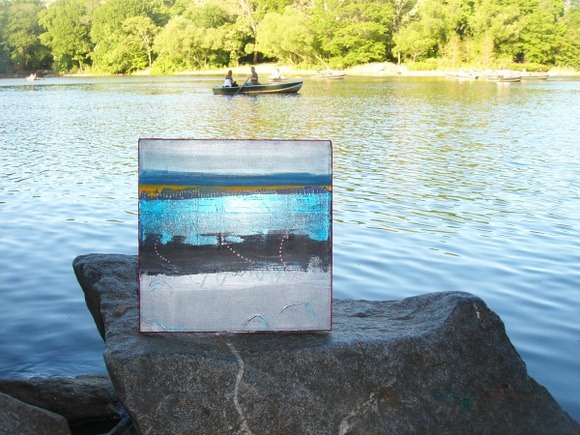
Sughra Raza. City Lights, Central Park, NY. 2015.
Digital photograph, acrylic on canvas.
by Jackson Arn
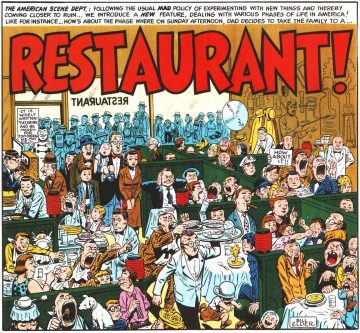
Writing seriously about comedy is a thankless challenge. Only an idiot, or somebody who’s used to thankless challenges because he’s a freelance critic, would bother. The risks are high, the rewards low. Overanalyze your subject and you’ll kill it. Treat it too indulgently and you’re left with a jumble of second-hand bits. Clearly, jokes say something important about the society that laughs at them, but woe to the writer who takes them too literally or too earnestly. They are, after all, jokes.
Sometimes, comedy changes so profoundly that it’s worth risking some kind of grand, straight-faced interpretation. And mainstream American comedy has changed profoundly in the last thirty-ish years. It’s gotten thinner, lighter, you could almost say healthier. The style of humor that nourished America for decades has dried up—it’s still possible to find it if you know what to look for, but it’s become the exception where it used to be the rule. To put it another way: comedy has been drained of chicken fat. Where did it go?
If my subject is chicken fat, I have to start with Mad Magazine. No humor source—not SNL, not Carson, not Lenny Bruce—had as much influence on America in the back half of the 20th century. This is impossible to prove, and almost certainly true. Mad was founded in 1952 and lasted until 2019, when it announced it would stop printing new material. At its peak it had two million subscribers. It made its reputation poking fun at McCarthy and Khrushchev and lasted long enough to take on Trump and Putin. Read more »
by Robyn Repko Waller

My professional expertise as a philosopher concerns questions of free will. Sometimes the question is whether determinism threatens our free will. Sometimes the question is whether science speaks against our having free will. And sometimes the question is how others’ influence on our lives limits our control and responsibly. Often the discussion centers on thought experiments about sci-fi manipulators, studies of the neural events that lead to our actions, or logical entailments of the laws of nature. But we don’t need these experiments and metaphysical claims to see a quandary of free will at the intersection of all three staring us in the face: how do we — and ought we — as agents navigate a COVID-19 world? Let me explain.
Recently I read an article in which an anti-mask protestor held up a sign stating “Is it about the virus or is it about control?”
Regardless of one’s stance on masks, the sign vociferously speaks to the phenomenology of control in COVID times. Now one interpretation of the sign is, of course, that government mandates have restricted citizens’ activity and required masks in some jurisdictions; and this individual might be claiming, then, that government mandates are a matter of state control firstly and public health perhaps only secondarily at best. Or perhaps the protestor is stating that the debated right to not wear masks is an issue of individual liberty, and not a rejection of the statistics of COVID-19. While I personally do not take either of these views of the recent government mandates, the expressed experience of agency of this individual, who felt an encroachment on his control, stood out as intriguing. What is it like to be an agent, a person of personal and civic freedom, during COVID? Read more »
by Jochen Szangolies
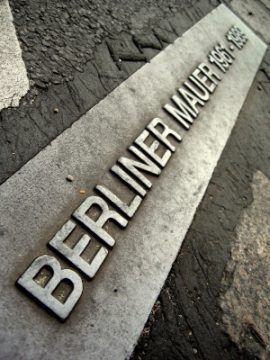
J Richard Gott, now an astrophysicist famous for the notion that the universe might have created itself by reaching back through time, visited the Berlin Wall in 1969, while an undergraduate at Harvard. There, he made the following prediction (paraphrased):
The Wall will stand for at least 2 and 2/3 years more, but no longer than 24 years.
On November 9, 1989, a rough twenty years later, his prediction came to fruition, and the Wall came down, precipitating the reunification of East and West Germany.
How did Gott arrive at this prediction? Did he have some special insight into the sociopolitical climate of the times? Was he so convinced of the inherent flaws of Soviet communist ideology that he could confidently predict its downfall? Or did he merely note a structural weakness in the construction itself?
The answer is, of course: none of the above. For his prediction, Gott needed only one single point of data: how long the Wall has stood so far. At the time of his visit, the Wall had existed for about eight years—construction having begun on August 13, 1961, two months after GDR council chairman Walter Ulbricht’s emphatic declaration that ‘nobody has the intention of building a wall’ (“Niemand hat die Absicht, eine Mauer zu errichten”).
Armed with this knowledge, Gott estimated that the Wall would stand between one third and three times that time longer. For this, he needed to appeal to two further assumptions—the Copernican Principle, and the Principle of Indifference. Read more »
by Brooks Riley
by Raji Jayaraman
Audio Version

As a young and idealistic 21-year-old, I spent a year in India working with my hero, Jean Drèze. This was the mid-nineties. There were many idols to choose from. Nelson Mandela was universally worshipped. Even Bill Clinton had a following. Cool kids were building altars to Kurt Cobain, who had recently died by suicide. I suppose it says something about my social acumen that my hero was a pyjama-kurta clad Belgian who had renounced worldly possessions and lived in a Delhi slum. I say he “was” my hero not because he no longer is, but because he is no longer Belgian. He is the only European I know who has wanted, and successfully obtained, Indian citizenship. I’m Indian, but I think I can say without any self-loathing that only someone who is utterly committed to the cause would do that. He is often described as an economist activist. The oxymoron speaks for itself.
In order to afford one square meal a day and avoid having to room with Jean in his basti, I got a day job in the World Bank’s Delhi office. Bretton Woods Institutions, for all their post-modern capitalist swagger, have a strangely missionary zeal in their quest to save the world’s poor. Their employees—including my parents who worked for the UN for decades—regularly go “on mission” to developing countries, and they say that with a completely straight face. In the first month I was there, we had our first mission from Washington which, after a debriefing and reception in Delhi, was going to head to “the field”—a turn of phrase that rhymes with “mission” in all but rhyme.
Over the last few decades, numerous Indian states and cities in the field have been re-christened, mostly because the British romped around the planet mispronouncing names and then spelling them accordingly. I’ve spent a long time trying to decide whether their misspellings are a mark of a. carelessness, b. arrogance, or c. disrespect. My best guess is d. all of the above. Take the names of Indian indentured labourers to the Caribbean, for instance. V.S. Naipaul is clearly just an anglicization of Naipal because as his grandfather was being herded off the boat, the guy in the safari suit and sola topee at the bottom of the gang plank repeated, “Nai-Paul” when grandpa said “Naipal”, because….Well, because “Pal” isn’t a name and “Paul” is, and that just made more sense to write down in a name ledger. Correct answer: d. Read more »
by Alexander C. Kafka
The French scientist Pierre Curie, in the new film Radioactive, is impressed by a colleague’s paper on the magnetic properties of steel. It’s an apt reflection of his attraction to that steely colleague herself, the Polish-born Maria Sklodowska.
They become labmates, chisel through four tons of rock pitch over four years, and discover radium and polonium. In the process, they fall in love and fall ill from their glowing, deadly new atomic treasures.
Radioactive is a hybrid of traditional prestige-film grand biopic and quasi-psychedelic time travel. That peculiar combination — occasionally refreshing, more often distracting — speaks to the production’s parentage. Producer Paul Webster has to his credit decades of award-crowned major pictures like The English Patient and Atonement. This film is adapted by Jack Thorne from a graphic novel by Lauren Redniss, Radioactive: A Tale of Love and Fallout, and it is directed by the graphic novelist turned animated-film director Marjane Satrapi (Persepolis).
The result is a handsome, elaborate production, designed by Michael Carlin with cinematography by Anthony Dod Mantle, that chafes at the constrictions of its predominantly linear storytelling and finite historical elbow room. But reminding viewers that the Curies played both Prometheus and Pandora to the wonders and horrors of the atomic age feels unnecessary and vaguely patronizing. Read more »
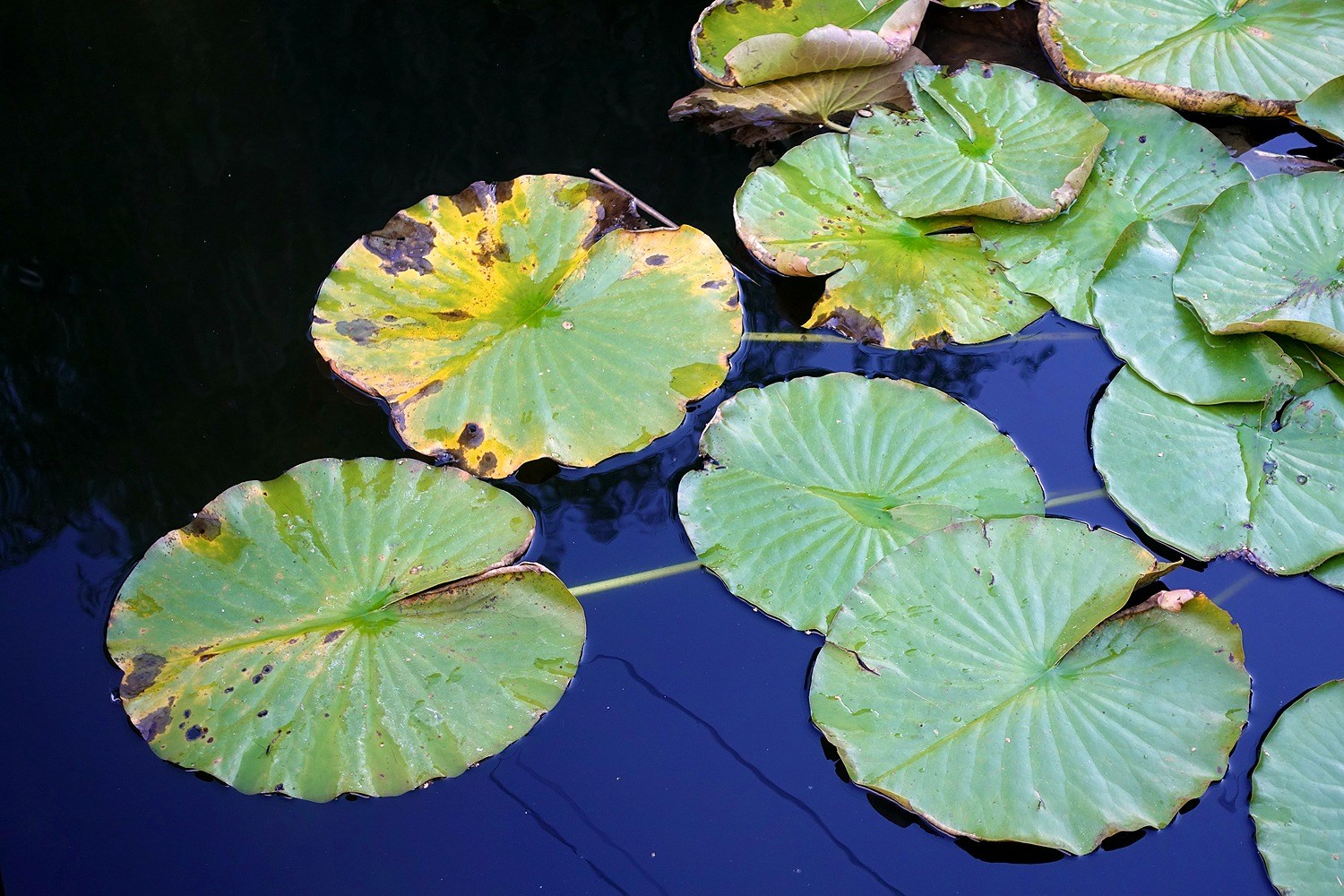
Water lilies on a trout pond in Vahrn, South Tyrol, in July of 2020.
by Eric Miller
1.
On occasion, a long epoch of concord with a favouring breeze may seem to grace us: inspiration in the sense that birds must relish it. What a divine—almost avian—thing it was for us, the hotel kitchen staff, to pack cheesecake, kiwifruit and champagne into our rucksacks, to tighten the straps that secured these dainties on our shoulders, and to climb right from the back exit with its tubs of lard to the stark summit of a Rocky Mountain in Alberta.
We felt we flew or, to speak more precisely, scudded upward. I wore shorts and a clean undershirt and sneakers with no socks, my colleagues wore nothing more substantial, and we scaled the steep flank of the darkling peak as though, like magpies, we half hopped, half sailed, never shaking off an appearance of indolence in spite of the winged celerity of our ascent. We might have kicked altitude away beneath our flexing feet, bubbling giddily like divers whom ebullience, in shimmering snorts of submerged laughter, expedites to the water’s surface.
After night fell, a thunderstorm broke out well below us in the valley. We were dry. We watched the lightning flash and fret; it resembled the dome and tassels of a jellyfish aglow in a cove. The spectacle of electrical unrest promoted our repose. When one couple began to thrash in a single sleeping bag, they rejoiced us, intimately clustered on that narrow summit, with the audible excess of their droll yet solemn ecstasy. The sounds they made as they scaled in duet the scarp of their pleasure amounted to musical improvisation, disclosure rather than presumption of form: a gasping flag or panting plume to mark—to augment—the height of the mountain and our happiness. Making instruments of each other, musicians of each other, they performed for and they warmed us. Sonorous fire! Read more »
by Dwight Furrow
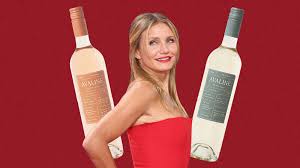 Actress Cameron Diaz and her business partner, the entrepreneur Katherine Power, have been all over various media promoting their new product Avaline, a white wine and a rosé, which they bill as “clean wine”. This has stirred up a hornet’s nest of controversy. Here is how they describe this very sanitary liquid:
Winemakers are legally required to disclose very little about their wines. Those disclosures only reveal information such as growing and bottling locations, whether the wine contains sulfites, and the percentage of alcohol. There’s no obligation to tell you how their grapes are grown or to name any of the more than 70 additives that are used in the winemaking process to alter the taste, color, and mouthfeel of what is in your glass.
We believe in holding our wine to a higher standard. Here’s to a new class of beverage: delicious taste, clean ingredients, bold transparency.
Wine writer Alder Yarrow calls this a “commercial scam” and most serious wine enthusiasts are treating this notion of “clean wine” with a good deal of skepticism.
So what is all this controversy about and should anyone care? Read more »
by Eric J. Weiner
Dear Chloe:
You were born an old soul and I was sure you had been here before.[i] You arrived sporting a black, faux-hawk and I immediately imagined you as a punk rock girl banging heads and breaking hearts wherever you went.[ii] From the moment you were placed on your mother’s breast, there was something in the way that you took an account of your surroundings; the alertness of your wide, brown eyes, the perpetual grin of amused curiosity that turned the corners of your rosebud lips slightly upwards, suggesting, perhaps, that you were making comparisons between an older catalogue of memories and the new reality in which you found yourself. You were born into a family tree hardened by the pain of poverty and ripened by the triumph and tenacity of Holocaust survival; a blank slate you were not. Vibrating with light and energy, yet calm like still waters, you frightened and amazed me. I desperately wanted to learn what you knew, reach across the chasm of time and space that separated us, read into the history of your dreams, but I could not speak your language. However nervous your birth made me feel, I was thrilled to have a daughter as I secretly dreaded the idea of having to raise a son within the patriarchy.
It’s extraordinary to me that you will be ten-years-old in January. As I write this letter, the world is plagued by incompetent and corrupt male-dominated governments that are unable to gain control over a viral pandemic; male autocrats at home and abroad continue to do their best to erode democratic institutions; male-dominated militaries fight endless wars throughout the globe; the planet is warming at an alarming rate because male-dominated oil and gas industries refuse to help curb the use and production of fossil fuels; economic inequality is growing rapidly and managed almost entirely by male-dominated financial/governmental partnerships under the banner of neoliberalism; gun violence as well as the production of other weapons of mass destruction is overwhelmingly caused and overseen by men; racial injustice is systemic and overseen by a male-dominated judiciary; homophobia is a normative and constitutive dimension of masculinity; male intimate partner violence against women is pandemic; educational systems relegate the accomplishments of women to the margins of curriculum even as the majority of the teaching workforce is female; male-dominated global media conglomerates produce content and representations of women that are degrading and sexist; and the gender gap remains stubbornly large.[iii] And all of this is true even though feminism is the most successful social justice movement in the world.
This is the focus of my letter to you today; not your Colombian heritage nor your European Jewish ancestry, not our family’s economic class, our educational level, nor our ideological alliances—all vital interconnected pieces of the experiential puzzle that I will write to you about at another time—but your female identity and its measure in the patriarchy. Read more »
by Michael Liss
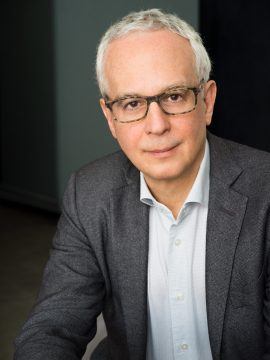 On November 11, 2019, I wrote a review of Willful: How We Choose What We Do (Yale University Press, November 2019), by Richard Robb, Professor of Professional Practice in International and Public Affairs at Columbia University, and CEO of the investment firm Christofferson, Robb & Company. He was kind enough to let me interview him in our changed times.
Michael Liss: Richard, last fall you published Willful, which introduced a new model of how to think about the way we make choices. Willful reached beyond classical “Rational Choice” to something you called “For-Itself Choice.” I know it is an economist’s job to be able to project into the future, but did you ever anticipate having such a bonanza of opportunities to demonstrate your ideas as that which arose because of the COVID-19 pandemic?
Richard Robb: I didn’t foresee COVID-19, Michael, if that’s what you’re suggesting! But yes, the pandemic has given us a “stage”—however ugly—on which to test a variety of ideas, including a few of mine.
My book was published in November last year, and my hope was that the phrase on which I rest my thesis—“for-itself”—would someday seep into the language. It would have come in handy during the pandemic. For instance, when President Trump, seeking to scoff at those he saw as COVID-wimps, said that we continue to drive cars despite auto accidents, Dr. Fauci called that “a false equivalency.” He could have explained that it’s a false equivalency because the choice of how quickly to de-isolate is for-itself. Read more »
Socrates said to Glaucon,”The things we think we know are like shadows cast by a distant light on the walls of a cave of things unseen we do not know.”
—For L. who couldn’t find the balloon she’d saved
in remembrance of a cousin of her childhood
You called last night troubled,
looking for something in particular
(a pink balloon shaped like the heart
of your long dead cousin)
you’d stumbled upon a hole in the banal:
a weakened spot in the thin skin of our conceits
stretched so taut over the otherworld
a hint of it broke through and pierced
your shell of rapt doing
and you glimpsed the truth of shades
that dance upon the walls of caves
to music most often unheard
under the rush of jets
behind the daily brushing of leaves against sky
drowned by the litanies of radios
made silent by the roar of willed tornadoes
blowing through the aisles of malls
muted by the fierce narcissism of war
the accumulation of stuff thrown up
as dikes to keep the unspeakable sea at bay
and you wondered if perhaps Socrates was right
So I recalled for you a day driving to Colrain
when a song bled from the dash
so filled with poignancy my heart broke too
and I sobbed from the steel arched bridge
where two rivers meet to the office door
remembering my mother,
my father, and Danny my autistic brother
hearing them hearing me sob
through a veil of ordinary tears and regret
saltier than the Dead Sea
This is where you and I meet, where we all meet,
on the beach of that sea, catching now and then
between surf and horizon glimpses of creatures
breaking through, breaching the membrane
between worlds unexpectedly
as we wonder how the dancing shadows
on cave walls can be true
by Jim Culleny
11/14/11
by Usha Alexander
[This is the first in a series of essays, On Climate Truth and Fiction, in which I raise questions about environmental distress, the human experience, and storytelling. All the articles in this series can be read here.]
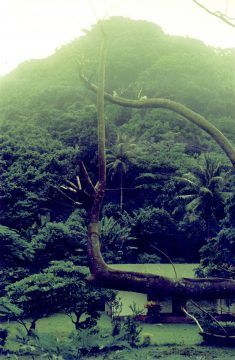 In 1997, I was living on Ambae, a tiny, tropical island in the western South Pacific. Rugged, jungle-draped, steamy, volcanic Ambae belongs to Vanuatu, an archipelago nation stretching some 540 miles roughly between Fiji and Papua New Guinea. There, under corrugated tin roofs, in the cinderblock classrooms of a small, residential school, I taught science to middle- and high-schoolers as a Peace Corps volunteer.
That December, the rainy season was in full force, with heavy downpours most afternoons, lasting sometimes long into the night. Never before had I, and never again would I, witness rains like those, where the water poured straight down, not in drops, but in globs and sheets. Standing in it felt like standing under a waterfall; I’d catch myself stepping forward or back, left or right, in an attempt to get out from under the flow, but it was everywhere. It seemed impossible that the sky could hold so much water, constricting summer’s broad daylight to a sodden gloaming.
One evening, during such a downpour, I left a teachers’ year-end potluck to return to my room—one in a row of tiny, concrete flats for the school’s single female staff. Mine was not much more than 100 yards away across an open lawn, which was now filled with ankle-deep water flowing gently down the long campus green toward the sea. As this was not my first deluge, I wasn’t concerned by the prospect of a routine water-logging; it was only water, after all, and not at all cold. The only problem was that the rains had washed away all light into a blind, enveloping darkness. I knew that once I stepped into it I would become disembodied, aware of my limbs only through my untrained sense of proprioception. How dependent we are upon the faculty of sight, even to know where we end and the external world begins.