by Emrys Westacott
 The coronavirus pandemic has massively disrupted the working lives of millions of people. For those who have lost their jobs, income, or work-related benefits, this can mean serious hardship and anxiety. For others, it has meant getting used to new routines and methods of working. For all of us, though, it should prompt reflection on how we think about work in general–both as a curse and as a blessing. Here, I want to focus on how work relates to time.
In ‘The Superannuated Man,’ Charles Lamb writes,
that is the only true Time, which a man can properly call his own, that which he has all to himself; the rest, though in some sense he may be said to live it, is other people’s times, not his.
This is a basic and obvious reason that many people resent having to go to work. Work takes up time, and time, as many sages have observed, is supremely valuable, irreplaceable, priceless. It is precious because we each know that we are granted only a limited amount of it.
Time is, in the words of Ben Franklin, “the stuff life is made of.” So insofar as work consumes your time, it consumes your life. If your work is what you really want to do, this is not a problem. But if much of the time when you are working–whether you are selling your services to someone else for an agreed number of hours, or drudging away at home–you would really prefer to be doing something else, then your working hours represent an enormous sacrifice. You are using up your supply of a decidedly finite, non-renewable resource. Read more »

 by Paul Braterman
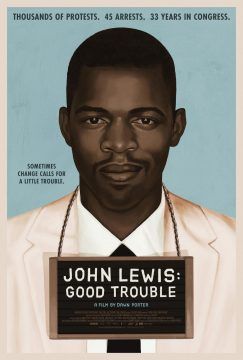 John Lewis: Good Trouble


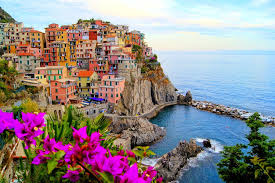 Beauty has long been associated with moments in life that cannot easily be spoken of—what is often called “the ineffable”. When astonished or transfixed by nature, a work or art, or a bottle of wine, words even when finely voiced seem inadequate. Are words destined to fail? Can we not share anything of the experience of beauty? On the one hand, the experience of beauty is private; it is after all my experience not someone else’s. But, on the other hand, we seem to have a great need to share our experiences. Words fail but that doesn’t get us to shut up.
 In a survey released at the end of May by the AP and the NORC Center for public affairs research, 49% of Americans said they intended to be vaccinated against the new coronavirus, 31% said they were unsure, and 20% said they would not get the vaccine.

 Had enough of the 2020 election? Take heart, there are just 134 days left until Vote-If-You-Can Tuesday. That’s less time than it took Napoleon to march his Grande Armée into Russia, win several lightning victories, stall out, and then retreat through the brutal winter, with astronomical casualties, all the while inspiring the equally long