
by Eric Bies
 But—let’s be honest—to me he’s Dad.
It’s just the sentence seems better how I have it up there in the title, more satisfying given its slight alliterative lilt, more interesting, rhythmically, to frustrate what otherwise would render as absolute sing-song.
My father is full of stories.
He grew up on a modest farm in a city—a town? a village?—what Wikipedia informs me is an unincorporated community, boasting “no legally defined boundaries or population statistics.”
In January of 2024, Dad’s dad will turn a hundred and three—if I were Julius Caesar I’d say CIII—a rather remarkable number and a very respectable age for a member of our species.
Dad’s dad doesn’t often figure in Dad’s stories. This is because Dad’s stories have everything to do with being five or six years old in the early sixties, running free on a modest farm in an unincorporated community whose citizenry we can’t call numberless but simply unnumbered.
Suffice to say where Dad grew up was and remains right on the perilous edge of what soft-palmed suburbanites like myself rarely shy from dubbing Nowhere.
It’s an exceedingly picturesque Nowhere—the kind of place people like me go to be turkeys, tracing the mazes and lanes of green corn to stand open-mouthed and drooping-combed beneath unassailable stretches of blue—and there’s nowhere I can picture Dad’s stories springing from but there.
When I was a boy Dad told me what it was like when he was a boy. Read more »

 Martyn Iles, a lawyer by training, was the managing director of the Australian Christian Lobby (ACL) from 2018 until he was

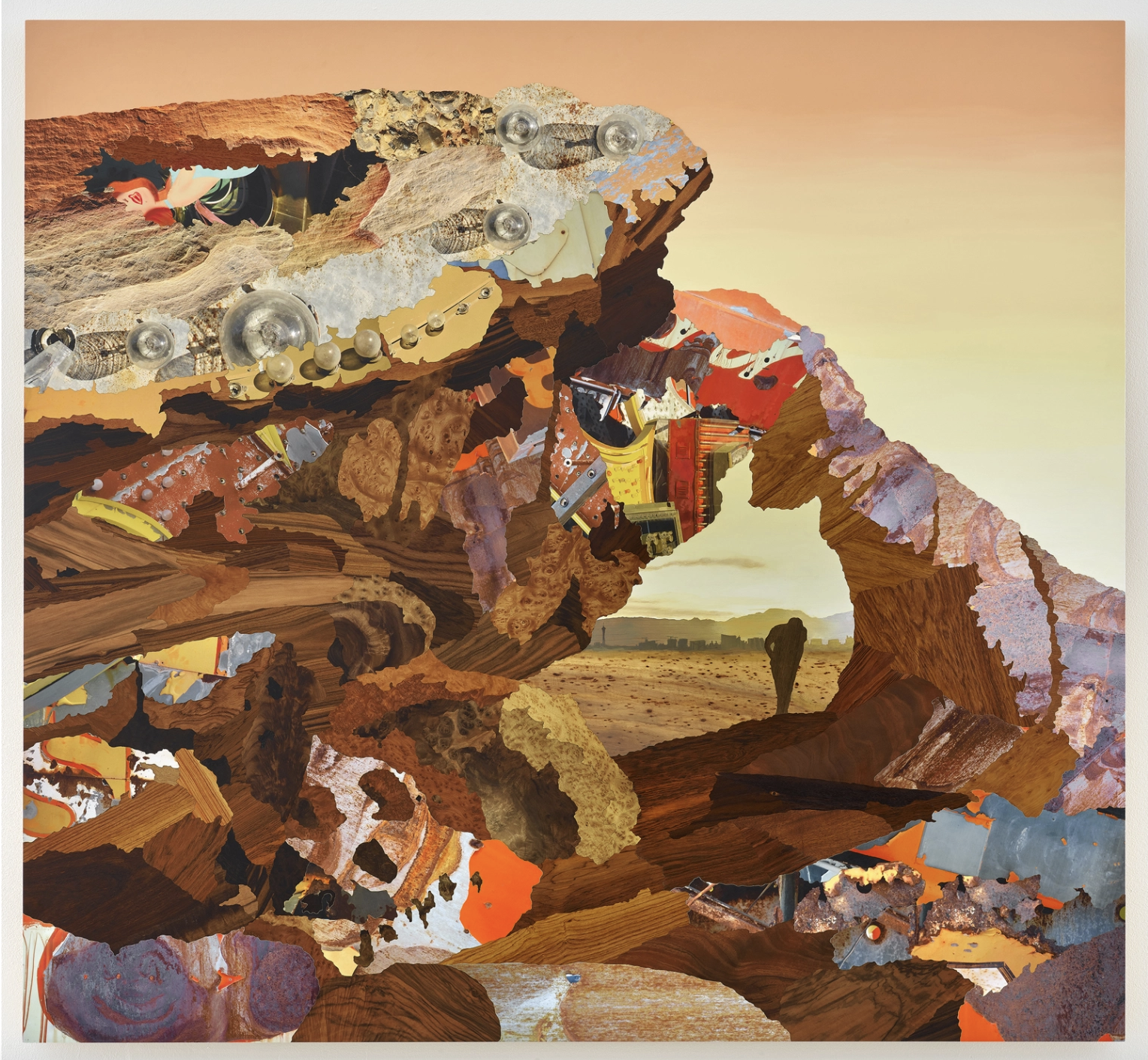 Allison Elizabeth Taylor. Only Castles Burning, 2017.
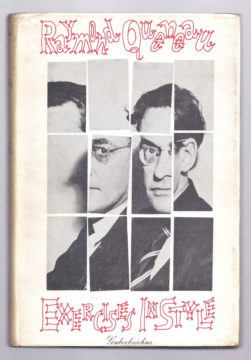 Raymond Queneau was a French novelist, poet, mathematician, and co-founder of the Oulipo group about


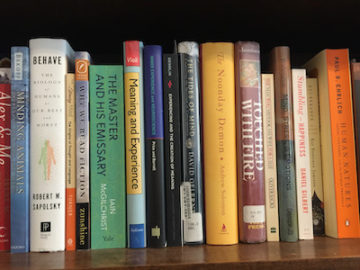

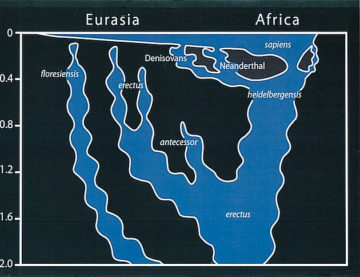
 Human minds run on stories, in which things happen at a human level scale and for human meaningful reasons. But the actual world runs on causal processes, largely indifferent to humans’ feelings about them. The great breakthrough in human enlightenment was to develop techniques – empirical science – to allow us to grasp the real complexity of the world and to understand it in terms of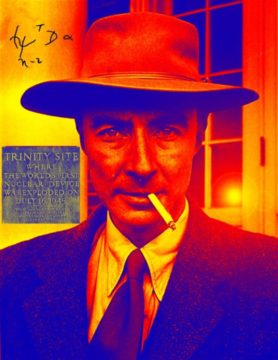
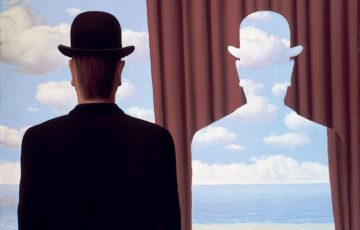 One of the amusing things about academic conferences – for a European – is to meet with American scholars. Five minutes into an amicable conversation with an American scholar and they will inevitably confide in a European one of two complaints: either how all their fellow American colleagues are ‘philistines’ (a favourite term) or (but sometimes and) how taxing it is to be always called out as an ‘erudite’ by said fellow countrymen. As Arthur Schnitzler demonstrated in his 1897 play Reigen (better known through Max Ophühls film version La Ronde from 1950), social circles are quickly closed in a confined space; and so, soon enough, by the end of day two of the conference, by pure mathematical calculation, as Justin Timberlake sings, ‘what goes around, comes around’, all the Americans in the room turn out to be both philistines and erudite.