by Ed Simon
Demonstrating the utility of a critical practice that’s sometimes obscured more than its venerable history would warrant, my 3 Quarks Daily column will be partially devoted to the practice of traditional close readings of poems, passages, dialogue, and even art. If you’re interested in seeing close readings on particular works of literature or pop culture, please email me at [email protected]
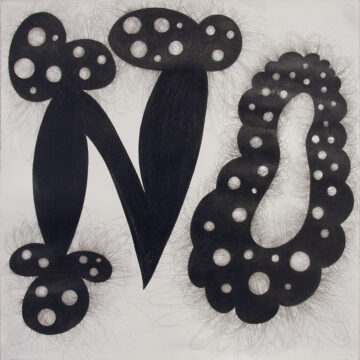
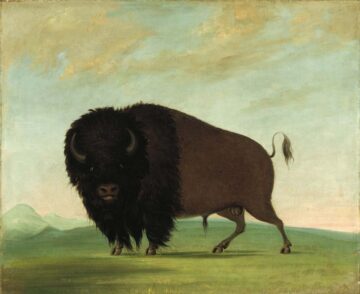
The shortest lyric in Natalie Diaz’s 2013 collection When My Brother Was an Aztec has two less words than its title does. At only five words, the poem “The Clouds are Buffalo Limping Towards Jesus” is, because of its length, an incongruous entry in the collection, which for the most part combines more conventional quasi-formal and free verse that ranges from a few dozen lines to a few pages. Brevity is, of course, not necessarily a marker of radicalism; after all, the lyric as a form was originally defined not just by a strong individual voice, but also by representing a brief observation or emotion rather than a narrative with epic scope. The traditional Japanese genres of haiku, sijo, and tanka are marked by an economy of precision, but in the West even that most venerable form of the sonnet makes its argument and takes its logical turn in a short fourteen lines. Then there are the poets with a reputation for parsimony, masters of concision such as Emily Dickinson or Edna St. Vincent Millay. Still, a short Millay work such as “First Fig” (“My candle burns at both ends.”) with its four lines and twenty-five words might as well be the Iliad; a Dickinson lyric such as “Poem 260” (“I’m Nobody! Who are you?”) at eight lines and 42 words is a veritable Odyssey when compared to Diaz. When a poem counts in at under a dozen words, or even under half-a-dozen, there is a suspicion that the poet is courting the gimmick more than anything, the purview of the limerick and bawdy lyric, of Strickland Gillian’s “Lines on the Antiquity of Microbes,” which has been claimed as the briefest poem in the language, reading in its entirety “Adam/Had ‘em.” Read more »

 One longstanding debate in aesthetics concerns the relative virtues of formalism vs. contextualism. This debate, which preoccupied art theorists in the 20th Century, now rages in the culinary world of the 21st Century. Roughly, the controversy is about whether a work of art is best appreciated by attending to its sensory properties and their organization or should we focus on its meaning and the social, historical, or psychological context of its production. The debate is similar in the world of cuisine. How best should we appreciate the food or beverages we consume? Should we focus solely on the flavors and aromas or does authenticity and social context matter?
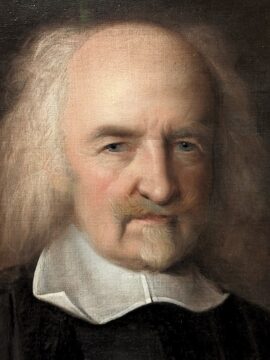 Historians often ask what led to Trump’s landslide victory back in 2024. All those guilty verdicts in the “PornHush” trial certainly helped — the final proof, for many, that the President was an innocent lamb set upon by crooks. And the November exit polls showed that millions of patriotic Americans found democracy a chore anyway, or were actively Fascism-curious, or simply got a buzz out of the fact that, being disempowered in every other meaningful way, they could at least step up and play a part in destroying their own children’s future. But surely the decisive factor was Trump’s inspired choice of running mate — philosopher and controversialist Thomas Hobbes.
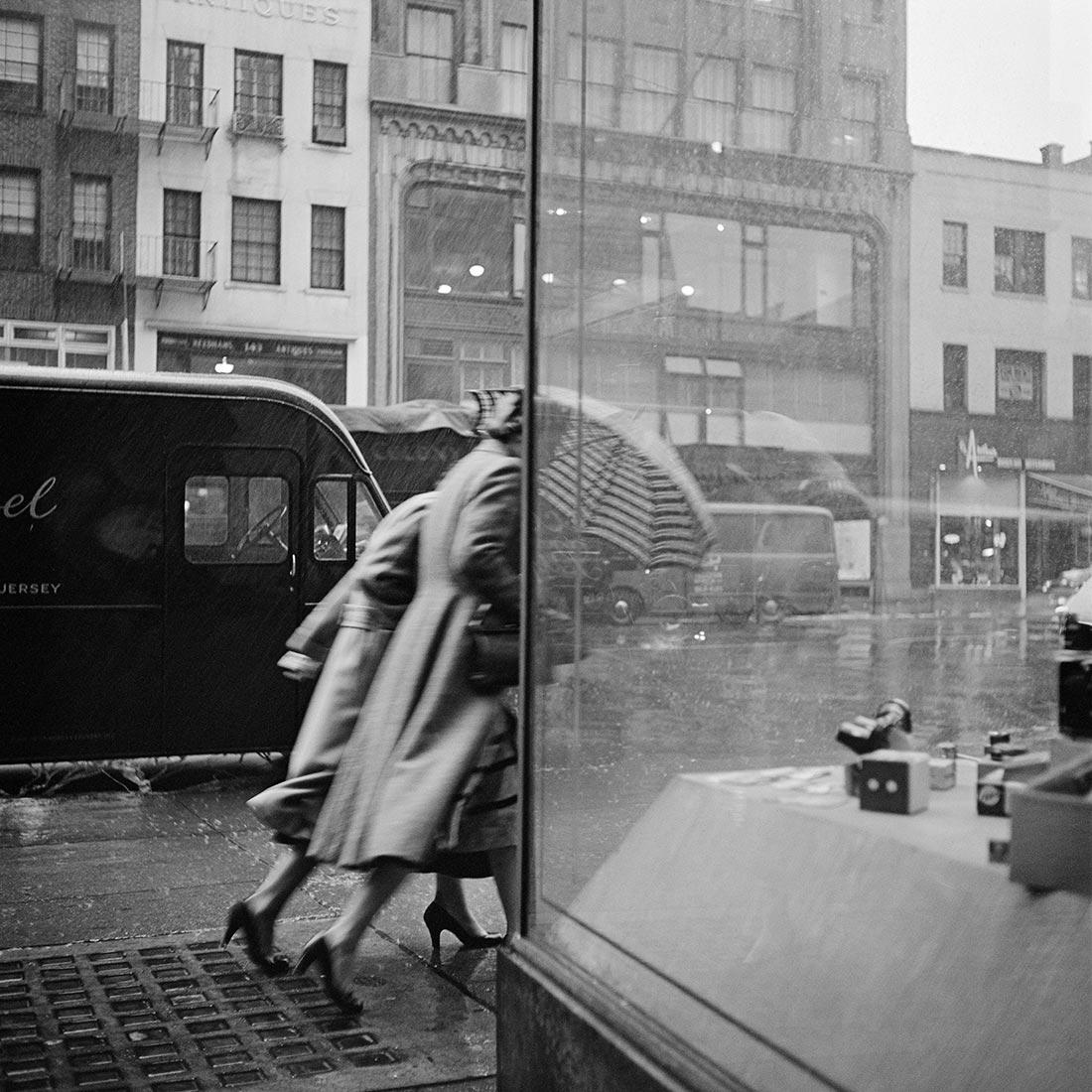 Vivian Maier. October 29, 1953, NY, NY.


 Malawi, Zimbabwe and Mozambique almost never get good press. The modest coverage of last year’s