by Mike Bendzela
As you slide toward retirement age, it becomes clear that you have not accomplished what you had hoped by this point in life and that the meaning of it all is still as unfathomable as it was when you were thirty. You have resigned yourself to the fact that you do not know half the things you thought you knew, but you do know for certain that what you do not know advances by orders of magnitude every day and will continue to do so long after you are dead. The boundaries of human extravagance leap forward light-years by the minute without waiting for you and there is no point in trying to keep up. Might as well spend your remaining time on the planet thumping your fingernail against a string.
*
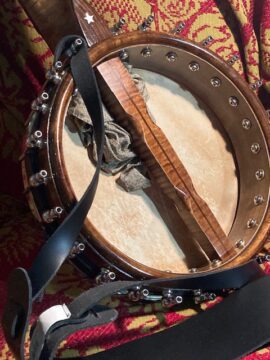
Hundreds, perhaps even thousands of years ago somewhere in Africa, a village wag became bored with banging an animal hide-covered hollow gourd with his mere hands. So, he attached a stick to the gourd (it could very well have been she; perhaps she wanted to stir men out of their torpor), ran two or three strings of plant fiber from the top of the stick to the base of the gourd, and thumped the strings against the animal hide top, a sound that immediately seized hearts. The villagers couldn’t help dancing. It’s inspiring to know our predecessors were as bored with monotony as we are today and made stuff up as they went along. Even this short history is half fable.
*
This innovation made its way to the New World via the slave trade. Like any entity in a Darwinian universe that gains a foothold in a new geographical location, the immediate response was adaptive radiation. The entity spread widely and became fixed in the population. Mutations ensued: Gourds and fibers were substituted with wood and steel; bridges, strings and frets were added or subtracted; styles multiplied and diverged, fruitfully. One struck the strings with one’s fingernail and thumb, or with finger picks, or with plectrums. These respective cults of the banjo retreated to separate corners of the continent, appearing at square dances, in minstrel shows, on steamboat decks, finally in jazz bands and even concert halls. They would all come to rub elbows again at latter-day banjo camps. Read more »

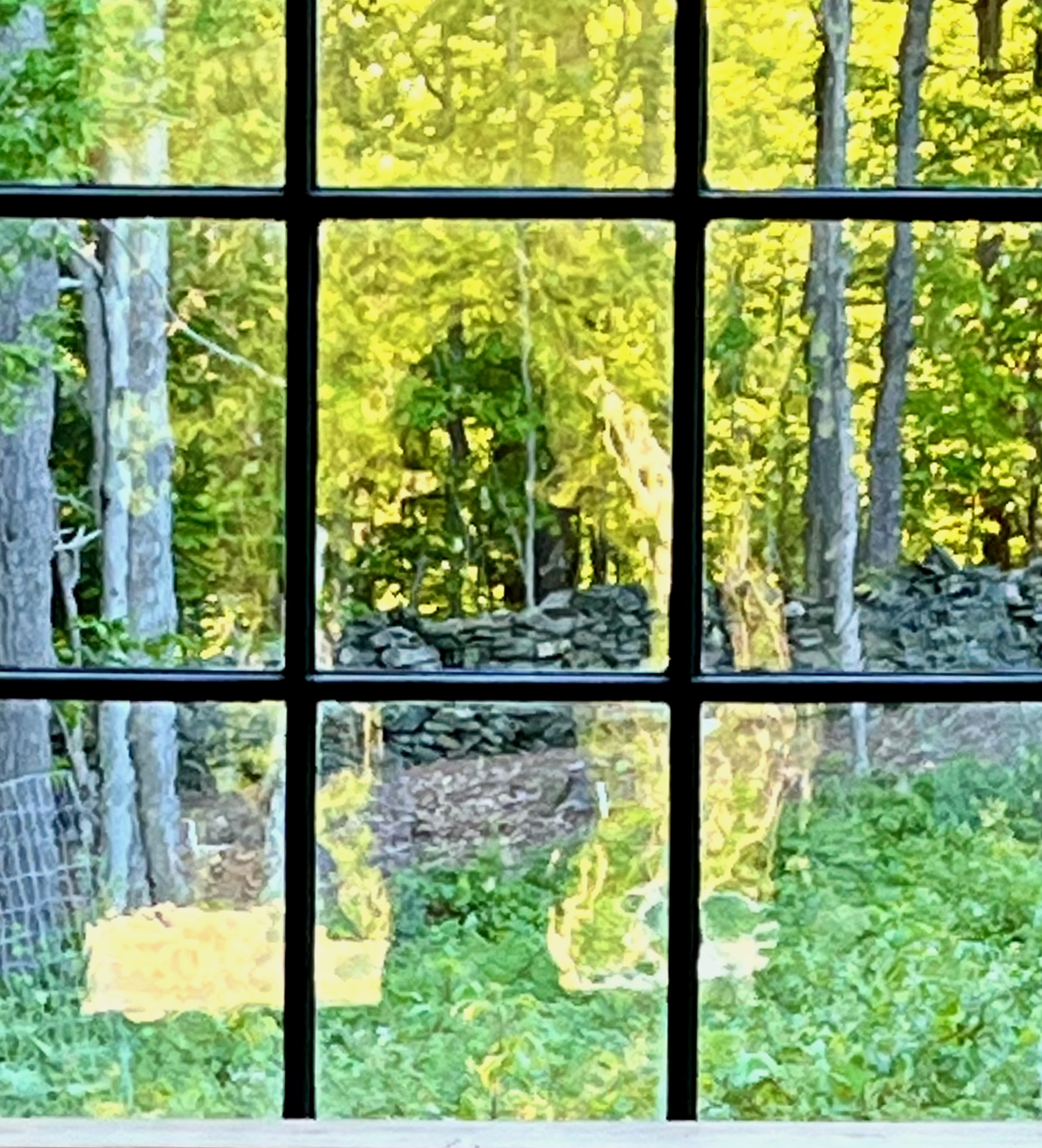 Sughra Raza. Self Portrait in Early Summer, May 2024.

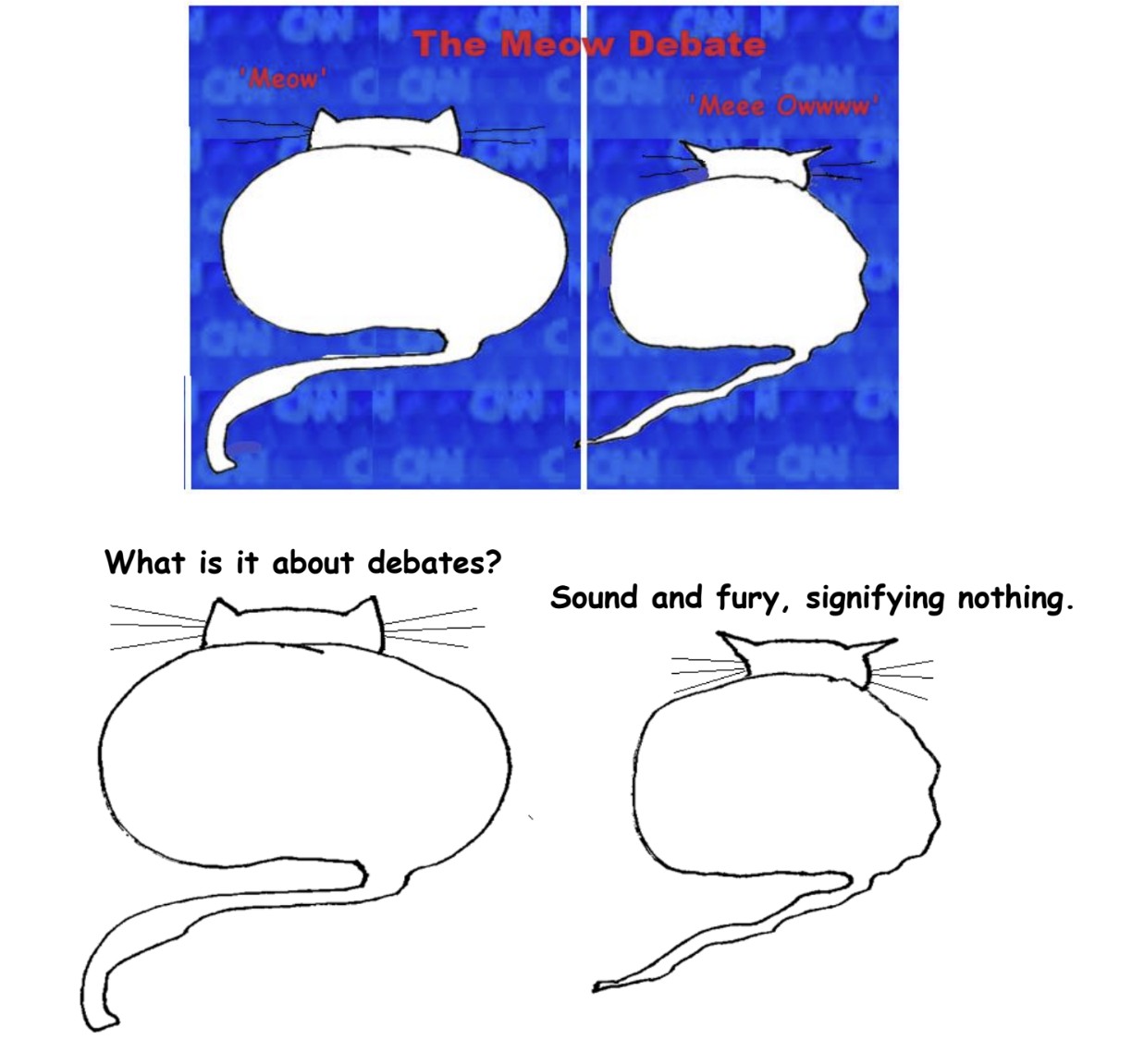

 In 1762, Jean-Jacques Rousseau prophetically declared that “we badly need someone to teach us the art of learning with difficulty.” Two hundred and fifty years later, Rousseau’s words seem clairvoyant in their relevancy to schooling in the United States. Education has come to the forefront of the array of issues emerging in the post-Covid era. The abandonment of the alphabet soup of standardized tests, student reliance on Chat GPT, and rampant grade inflation all point to a wider problem. And though some politicians see the Ten Commandments as the solution to classroom troubles, universal progress toward a real solution seems far away. Not that some don’t try.


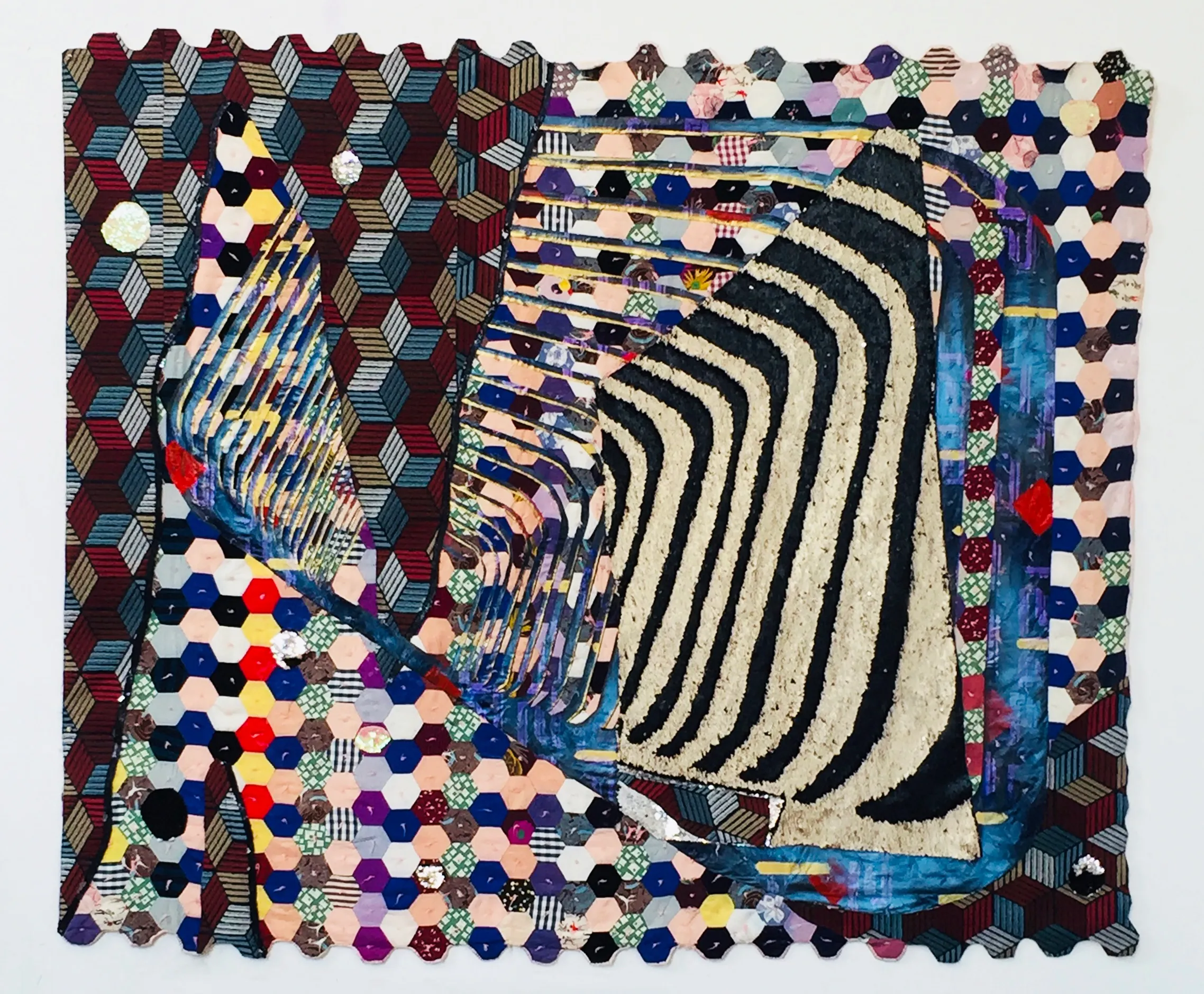 Sanford Biggers. Transition, 2018.
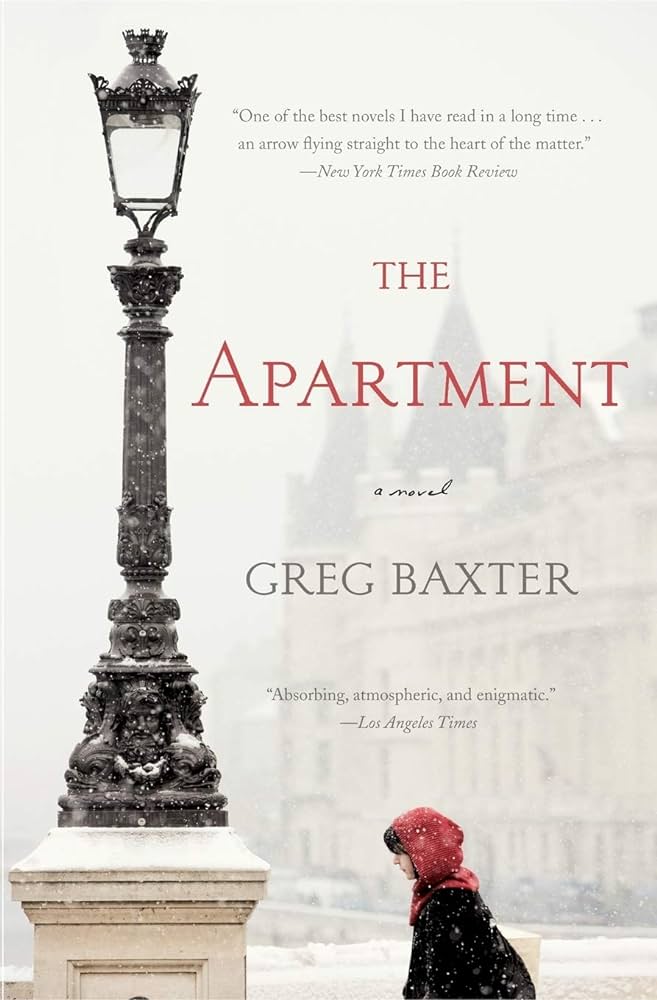 Have you ever read a book that you thought you were going to write? A book that captures something you’ve experienced and wanted to put into words, only to realize that someone else has already done it? The Apartment by Greg Baxter is that book for me.