
by Jim Hanas
Like a lot of people, I’ve spent the last week thinking about a filmmaker who, having refined the technical and philosophical aspects of his mature style, took a big swing with a controversial, genre-bending documentary that raised questions about the nature of knowledge and truth.
I am speaking, of course, of Errol Morris, whose The Thin Blue Line (1988) turned documentary filmmaking on its head when it was released almost forty years ago. The movie slowly unravels the murder case against Randall Dale Adams for the 1976 killing of police officer Robert W. Wood, most controversially through a series of reenactments. Every theory of the crime receives one, except—quite effectively—the one that the film leads you to conclude is the case. The Texas Court of Criminal Appeals agreed. Adams was released the following year.
The movie was to documentary films what New Journalism was to journalism, the inevitable moment when a form—having previously taken its medium to be transparent—begins to thematize itself and its limitations. This made The Thin Blue Line exciting for postmodernists, who read it as a deconstruction of an official narrative through close reading and a blurring of the line between fiction and non-fiction.
Despite his incessant flirtation with such questions, Morris is having none of that.
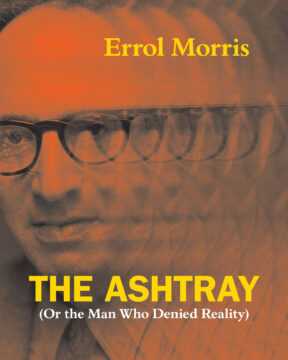
I only became aware that Morris was a fellow grad-school dropout with the release of his 2018 book The Ashtray (Or the Man Who Denied Reality), in which he relates his experiences amid the postmodernism debates on the analytic side of the aisle, where he could have hardly had a better seat. He studied with Thomas Kuhn, author of The Structure of Scientific Revolutions—which Morris characterizes as “a kind of postmodernist bible”—with whom he had a dramatic falling out. The titular ashtray was lofted at Morris’s head by Kuhn himself. Read more »
 Sughra Raza. It’s Not Art, They Say. Boston, Oct 22, 2026.


 On October 6th, everything changed. That was the day an AI company dropped a


 Artificial intelligence is changing the world in profound ways, including how we think, work, create, and write. At 3 Quarks Daily, we believe these developments deserve serious attention, thoughtful criticism, and open-minded experimentation.




 It didn’t really surprise me that someone has worked out the mathematical laws I have been reading about of late. It did surprise me that it’s taken me till the ripe old age I’m at now, when the laws have been known for over a century, to find out about them.

 Sughra Raza. Dancing On The Esplanade. Boston, August 2026.