
by Jim Hanas
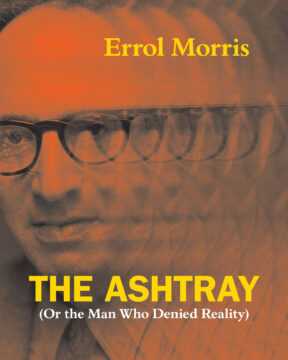
Like a lot of people, I’ve spent the last week thinking about a filmmaker who, having refined the technical and philosophical aspects of his mature style, took a big swing with a controversial, genre-bending documentary that raised questions about the nature of knowledge and truth.
I am speaking, of course, of Errol Morris, whose The Thin Blue Line (1988) turned documentary filmmaking on its head when it was released almost forty years ago. The movie slowly unravels the murder case against Randall Dale Adams for the 1976 killing of police officer Robert W. Wood, most controversially through a series of reenactments. Every theory of the crime receives one, except—quite effectively—the one that the film leads you to conclude is the case. The Texas Court of Criminal Appeals agreed. Adams was released the following year.
The movie was to documentary films what New Journalism was to journalism, the inevitable moment when a form—having previously taken its medium to be transparent—begins to thematize itself and its limitations. This made The Thin Blue Line exciting for postmodernists, who read it as a deconstruction of an official narrative through close reading and a blurring of the line between fiction and non-fiction.
Despite his incessant flirtation with such questions, Morris is having none of that.
I only became aware that Morris was a fellow grad-school dropout with the release of his 2018 book The Ashtray (Or the Man Who Denied Reality), in which he relates his experiences amid the postmodernism debates on the analytic side of the aisle, where he could have hardly had a better seat. He studied with Thomas Kuhn, author of The Structure of Scientific Revolutions—which Morris characterizes as “a kind of postmodernist bible”—with whom he had a dramatic falling out. The titular ashtray was lofted at Morris’s head by Kuhn himself.
Morris does not like Kuhn—“the man who denied reality” of the book’s subtitle—personally or professionally. That much is clear. But Kuhn is also a stand-in for postmodernists generally, from whom Morris has always made it a point to distance himself, since—as with Socrates and the Sophists—he might easily be mistaken for one.
Consider this 1999 exchange with interviewer Ron Rosenbaum:
RR: I wanted to ask you about an epistemological question. Your films like The Thin Blue Line suggest that reality is just a series of perspectives, or they seem to suggest that. But, on the other hand, you believe in truth that Randall Adams was innocent and the other guy did it. Same with Holocaust denial, or is Holocaust denial sort of the end of relativism? Do you believe that there is such a thing as real, historical truth? Or is it all socially constructed or a matter of perspective?
EM: Yes, I believe there is such a thing as real, historical truth. I am no post-modernist. I live in Cambridge, Massachusetts. And one of the nice things about Cambridge, Massachusetts is that “Baudrillard” isn’t in the phone book.
To me, there’s a physical world out there, pure and simple. There’s a world where things actually happen. In The Thin Blue Line, it was of all-consuming importance to figure out who was driving that car; who pulled the gun out from underneath the seat, who shot the cop. Questions like these are not up for grabs.
There’s a real world in which real things happen. And in some small way, my job is to look at that world and to try to figure out what those things might be.
For Morris, Kuhn’s influential theory of scientific revolutions threatens the very idea of truth by suggesting that individuals in different paradigms are not only experiencing but a) living in different worlds that b) cannot be translated into one another. They are “incommensurable.” (Kuhnians, of course, dispute this characterization, but Morris’s concerns about the relativistic implications of Kuhn’s theory are not outlandish. Passages can be marshalled on both sides.)
This is the setup for The Ashtray, which is an odd and delightful book—the kind of book you can only write if you are already Errol Morris. It contains incidental illustrations and lots of marginalia, like Douglas Coupland’s Generation X. It is unruly—fast, cheap, and out of control, if you will—shot through with that urgent voice one can hear lobbing questions at Robert McNamara and Chipotle crew members alike in Morris’s body of work.
The book also serves as a tour through analytic philosophy’s reckoning with meaning and reference in the second half of the twentieth century. Morris counters Kuhn with Kripke—to adopt a strong realist position about reference—only to see this link to the real become increasingly narrow via conversations with Noam Chomsky, Hilary Putnam, and other specialists. Chomsky thinks ordinary language has a loose fit with reality, whereas scientific language can be made to strictly refer. This seems to satisfy Morris’s anxieties, which center around the idea that reality is only socially constructed. “The essence of postmodernism, for me,” he writes, “is the social construction of meaning. If there are such things as reality and truth, they are, at best, socially constructed.”
I share Morris’s anxiety. There is something horrifying about reality untethered from external reference. I think Kant was horrified, too, which is why he preserved the thing-in-itself, despite not having a philosophical warrant to do so. (As Fichte and Hegel were quick to point out.) New defenses of realism, like that proposed by Quentin Meillassoux in After Finitude, likewise attempt to redig a tunnel, however narrow, to “the great outdoors.”
Morris calls his own epistemology—which he does not build out as such—“investigative realism.” The truth is out there, but that doesn’t mean it is easy to get to. Again from his conversation with Rosenbaum:
RR: But you’ve also said that rather than “seeing is believing,” you think “believing is seeing.” In other words, that we see what we want to see. Is that right?
EM: I believe that we face incredible obstacles in our attempts to see the world. Everything in our nature tries to deny the world around us; to refabricate it in our own image; to reinvent it for our own benefit. And so, it becomes something of a challenge, a task, to recover (or at least attempt to recover) the real world despite all the impediments to that end.
One can see this viewpoint realized—or perhaps reenacted—in Morris’s filmmaking style. The truth is out there, but it must be discerned through an epistemological fan dance put on by our own faculties and delusions. And thematizing the dance is itself enjoyable. It is like a second show that runs alongside the show called “Randall Dale Adams is innocent,” which is really just news. This second show is called something like, “Look how hard it is for us humans to figure things out; how much we fool ourselves” and it is what makes The Thin Blue Line a film rather than a newsreel,
There is justice in the first show; catharsis in the second.
I enjoyed You Can See Everything, because—like The Thin Blue Line—it is about how we rarely do see everything, even if we can.
Enjoying the content on 3QD? Help keep us going by donating now.