
by Mindy Clegg
In a recent video, youtuber Belle of the Ranch discussed a question sent in by a viewer. The viewer wondered whether medicare for all (a policy that Belle supports) would be possible as it might give the US government a chance to ban trans healthcare. Belle pointed out that the government was already trying to do so in our current landscape. She noted that this comment was an argument against fighting for what all of us need at the expense of a marginalized group – a more robust healthcare system we can all access.
I appreciate her calling out this kind of bigotry and divisive rhetoric inherent in the question. To counter, she argues in favor of affirmatively defending all our neighbors and for the fight for a larger structural change for the benefit of all. But I’m interested in a slightly deeper problem she’s pointing out: how so many Americans have decided that big changes made by collective action are, in fact, not possible. A certain cynicism lay at the heart of the question, the either-or of divisive politics and the difficultly of making change becoming an impediment. This seems often universal in our political discourses these days. We have gone from AmeriCAN to AmeriCANT. So many – left, right, center – bemoan the state of affairs and often just settle on returning to some sort of status quo rather than moving our country forward, as if the post-9/11 status quo was actually working for most of us. In some cases, such as with climate change, they refuse to believe any solution is possible. But the status quo, as figures such as Naomi Klein and Astra Taylor have been arguing, will not get us to a better world. Instead they advocate for bold action driven by people power.
Many these days do not see such bold change as possible. Two things seem to be at the heart of this shift from American optimism to American pessimism. First is the demonization of activists from the postwar period who some believe ultimately failed and hence should not be replicated today. Second is the new wave of political corruption driven by corporate interests creating the neoliberal economy (thanks Jack Welch). These came together especially during the Reagan era to push a much more individualistic and more cynical worldview that was taken up especially by my own generation, Gen X. We live in the aftermath of that world today.
First, lets discuss an earlier era of optimism, the 1950s and 1960s, sometimes known as the liberal consensus era. Not everything was viewed through a rosy lens during this time. There were fears of nuclear annihilation for example. But there was certainly a feeling of optimism in part driven by the material abundance of the era (not evenly distributed, of course, but more so than in the current era). This abundance likely allowed for a sense of possibility for individuals and the country as a whole. The Cold War “threat” of the Soviet Union drove fears, but also gave space for boldness. We embraced the notion that we could spend on large-scale programs and that ordinary Americans were key to making this work. We needed to spend to compete against the Soviets, who were also seeking to improve the material conditions of their people. This included a welfare state, which began during the New Deal and expanded under later administrations such as President Johnson’s Great Society. Major programs were undertaken at the expense of tax-payers, such as the space race and the Eisenhower highway system. We also expanded our military which in reality was far too often channeled into imperialist programs of geopolitical domination. But these provided good jobs across numerous sectors. This was also a time when the upper tax brackets paid a considerable larger percent of their incomes compared to everyone else, a situation that has complete flipped today. Civic life benefited. We expanded and democratized our educational systems. In order to feed programs like NASA, we poured money and prestige into the university system and offered American GIs the opportunity at a college education. We also expanded the humanities and social sciences. Universities became a major social leveler. As a result, many young people embraced the idea that social and political change for the better were possible and worth undertaking. This is because that was what they grew up being told precisely that. Young Black men and women made up the primary foot soldiers of the Civil Rights movement. Some young white people took influence and embraced activism as well, both in the Civil Rights movement, but also in the anti-war movement, women’s rights movement, and other causes. People coming out in the street for a variety of causes during the 1960s did so out of an understanding that the systems under which we live can and should be made better. But the 1970s and 1980s saw a cynical turn and some labeled the activism of the 1960s a failure (ignoring real gains made during the era).
The seeds of that cynical turn were already in place which would allow for a rupture in the liberal consensus politics of hope. Racial politics fed by anti-communism became a rallying point for those looking to stall any progress. When white southern Americans were asked to “sacrifice” their supreme position in the American social order, a not insignificant number revolted via massive resistance. Integration was not a real imposition but rather a perceived sacrifice on the part of people who had been stewing in a racist social order for centuries by that point. Massive resistance, in other words, allowed reactionary politics purchase. The major political parties reacted to that rupture and reorganized politics going forward into the era of Reagan as a result. The Democratic party had once had a solidly racist wing that dominated southern politics (the solid south era), even into the New Deal era where they embraced labor. The party began to shift to a more inclusive position in the 1960s and 1970s. The Republicans followed Nixon’s southern strategy to pull votes away from segregationist George Wallace by introducing racial dog whistles. Racist Democratic voters slowly began to drift to the Republican party, even those involved in labor movements. In the 1980 election, Ronald Reagan courted and won the endorsement of PATCO after a promise of negotiations over a labor dispute and then destroyed that union after taking office by firing air traffic controllers on the picket line. But despite this broken promise, more white working class labor, organized or not, began to support the Republican party. The Democratic party began to tack to the right in response, embracing free trade, anti-crime legislation, privatization, and more moderate social positions (Clinton era third wayism). To this day, some Democrats believe that their main goal should be to win back this demographic, often at the expense of the rest of the big tent coalition, lately meaning throwing trans people under the bus. But as Elie Mystal argued recently, they will not stop at any one group. Throwing anyone under the bus makes us all vulnerable.
Another rupture came with regards to religion. In the 1970s, some religious leaders took on a new political role in right wing politics, motivated in part by racism, misogyny, and homophobia. Groups like the evangelical Moral Majority rejected addressing ongoing defacto racial segregation, the demands of feminists, and the growing LGBQT+ rights movement. One key issue was abortion which had been legalized nationally by the Supreme Court Roe V. Wade decision of 1973. This weaponization of faith in American life changed the game for Republicans. Although others had railed against rights movements of the era, the Moral Majority embraced a “traditional family” which should be enforced by the state that they claimed to be purely biblical. Political operatives on the right, whatever their actual religiosity, found it a useful way to position themselves as morally superior to the Democrats even when those opponents were themselves religious like Jimmy Carter, an evangelical Christian. They found an effective avatar in Reagan, who presented a sunny face of this movement. But he promoted a very top-down, authoritarian set of solutions to problems. Despite their anti-government rhetoric, these operatives that supported Reagan wanted to use the power of the government to impose their views on others. Since the 1980s, the Republicans have been understood as the party for the religious, with the media positioning Democrats as generally atheistic and often just anti-religious. The Democrats who do make public displays of religiosity are often seen as being disingenuous. This works against the Democrats as many Americans see religiosity as a short-hand for morally just. Many progressive activists tended to have more broad and inclusive movements that were not exclusively Christian (the Civil Rights movement was led in part by pastors but was religiously inclusive). Despite almost all activists making moral claims in favor of their cause such as ACT-UP demanding access to healthcare for victims of the AIDS pandemic, the media seemingly promoted the idea that the only moral position was the conservative, right wing Christian one. But their morality tends towards the individualistic, the authoritarian, the patriarchal, and the corporate, not to our shared responsibility to each other that we can express via building a better society for everyone. There is also a greater focus on God being the main actor in history, not people. The belief rests on the notion of an end of history as dictated by the divine. This view of religion’s role in people’s lives is at its heart cynical and authoritarian.
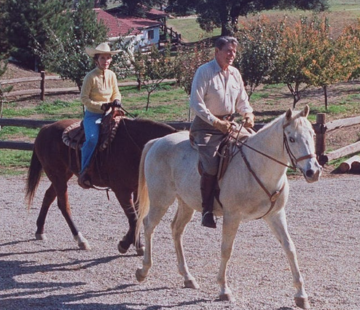
The second phenomenon that gave rise to our age of cynicism was how capitalism worked in the 1970s and 1980s. There was a corporate rebellion against labor power and state regulation. CEOs began to steer their focus towards more profit-seeking for a few via the stock market. Figures like Milton Friedman and CEO Jack Welch pushed these ideas into the mainstream during the 1970s and they found support in the Reagan administration. This new economic and political order would come to be known as neoliberalism by its critics. It gave rise to our current age of private equity dominating so many sectors of our economy. It also led to figures like Peter Thiel embracing end times concepts to justify their take over of the economy (see the Klein/Taylor interview above). Individualism was a key strategy to selling this massive wave of upper-bracket tax cuts and relaxing of environmental and labor regulations. One of the more well-known missives associated with Reagan was the notion that one should fear government help. Individuals should solve their own problems. The image employed to emphasize this key point of the primacy of the individual was the cowboy. A former actor, Reagan embraced this cowboy imagery, riding horses out in the picturesque west. This of course ignores what the term “cowboy” actually means: a wage laborer that performed tasks for a landowner on a ranch out west. A large number of actual cowboys were Mexican, indigenous, Black, and working class. I really doubt Reagan ever did any of the labor associated with actual, historically existing cowboys such as figures like Bose Ikard, a formerly enslaved man who carved out a major cattle trail in the 1860s. Rather Reagan’s cowboy politics plays on myths that have little to do with the reality of the development of the American west. The American government was deeply invested in that settlement in the post-Civil War era, from state-backed acts of genocide against indigenous peoples to deploying economic incentives for land settlement. But the myth of the cowboy that was made popular in film and TV during the mid-20th century was what he invoked from horseback. The film cowboys of that era (John Wayne, etc) were more often accomplished gunslingers, loners, but always men of integrity. These cowboys would reluctantly solve a problem for a community and then often move on. Politicians since Reagan embraced this myth of the cowboy. Such cosplaying has become a mainstay of conservative, western politics. The cowboy in this myth is a stand-in for living without an “oppressive” state dictating what they could do with “their” land, “their” women, “their” children, and those they saw as socially inferior. It bears little resemblance to how the west was actually integrated into the US and who did the work to get this done.
The embrace of the cowboy mythos promoted in popular culture to shape a “common sense” ideology reflects the modern right wing libertarian ideal of competitive wealth hoarding and deregulation masquerading as real freedom at the expense of our shared environment, social welfare, and economic mobility for most Americans. From Reagan onward, deregulation has allowed for a new depth of political and corporate corruption, capped off by the Citizens United Supreme Court decision. In addition to the dominance of private equity, it gave us Trump as a key figure in conservative politics. The sitting president is a man who made his image in mass media as a business genius (and has likely come to believe this myth) even as he regularly failed at many of his businesses. Popular culture, which has become ever more consolidated thanks in part to this state of affairs, pushed individualism favored by corporate interests (deregulated, exploitative, competitive to destructive ends) as the preferred means of solving problems that are ultimately systemic. If we just recycle or drive a more environmentally-friendly vehicle, we will “save the planet” even though the biggest polluters are large scale entities – corporations, governments, armies, not individuals. Standing up to individual acts of bigotry will solve the problems face by people of color, women, or the LGBQT+ community even though various forms of bigotry are part and parcel of our social, political, and economic structures. Individual actions can be worth undertaking but it does not solve larger structural problems that we should be organizing to fix. Many Americans, even those who see themselves as liberal or progressive, understand these problems as individualized and that is the solution which necessitates getting government out of the way. But we can and should see large-scale structures like the state as being one possible vector for problem solving. Some progressives are finally embracing this, such as the current Mayor of New York City Zohran Mamdani. He regularly works to solve problems for his constituents via government action. His agenda in office is guided by what the people who live in the city have told him that they need. He does not seem to see that government as something that exists outside of the people, but as an expression of the people. Of course, this only works with people power. A recent FD Signifier video reminds us that people power should always be at the core of moving us forward, and that individuals doing well and then claiming that their own wealth helps their people is not a fantastic measure of social progress.
It seems to me that what actually changed in the 20th century was that some people objected to the expansion of who was considered the people and some rejected larger political problem-solving because of that. It’s a cynical pose, one that is no longer fit to serve. We need to understand this as a long-term project. Our upcoming election is the ability to get this started. We owe it to ourselves to take this one aspect of our past and to apply to today. We can work to solve problems while improving the future for young people today. So, get out and vote for a start.
Enjoying the content on 3QD? Help keep us going by donating now.