by Shawn Crawford
Why do we stay? We lack the resources or the opportunities. We remain faithful to a place given to us through an accident of birth. We rage and complain but never wander very far, the reasons a cipher to ourselves. Even in America, a land of nomads and self-fashioning, most of us eventually find a place that is our Place, and feel compelled to return again and again. I continually meet people that define where they are merely in terms of where they left. We stay even in our absence.
The exodus of Irish writers from their country in the early 20th Century, most notably James Joyce and Samuel Beckett, would influence all of literature for the rest of the century. Before both could create, they would have to come to terms with an Irish culture that offered both a deluge of artistic tradition and a stifling insularity that threatened to eat every beautiful creature Irish writers produced. But they would become exiles in very different ways, although Beckett would work as Joyce’s literary secretary for a time, until he left to find his own identity and narrative path.

Joyce never left Dublin no matter how far he roamed. He occupied Dublin in his mind, obsessed over its topography, demanded to know of every change from friends, wrote of no place else his entire career. But Beckett would succeed by leaving in the most astonishing manner: not only would he leave Dublin in his work to inhabit a place that was Everywhere but Nowhere, he would leave English and begin writing exclusively in French. Moving to another language would give Beckett the order, discipline, and what he called the “impoverishment” needed to find his own voice and literature. He would create as close to the bone as possible and find the heart of modern human existence. And then he would put the work back together again in an English stripped of all flourishes.
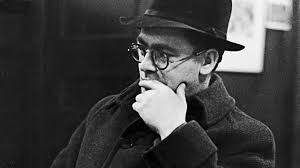
While Beckett and Joyce would grow into titans of modern literature, another Irish writer would stay in Dublin, laboring to survive while producing a body of work both utterly brilliant and utterly unknown today except for a devoted cult following. That man was Flann O’Brien. Read more »
 1. Bored, and with little to occupy their time, two cousins, Elsie, who was 16, and Frances, who was 10, decided to play around with photography. At a river near where they lived, they manipulated an image so that it looked as if they were interacting with little, magical winged creatures — fairies.
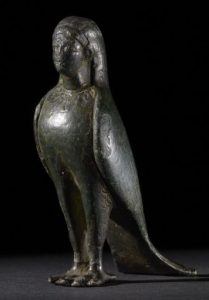 Two weeks ago, Maniza Naqvi evocatively wrote here on the resonance of a mythological rape in the eventual confirmation of Brett Kavanaugh to the US Supreme Court (
 Middle age brings sometimes uncomfortable self-reflection. One thing I have realized is that I am not a particularly good person. Not evil, just mediocre. Lots of people are much better at morality than me, including many of my students. On the other hand, I am quite good at the academic subject of ethics. Good enough to teach it at a university and write papers that occasionally appear in nice journals.
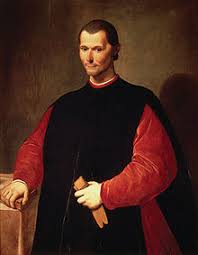 How conceivable is this? Trump loses the 2020 US presidential election. But he refuses to concede, claiming that results in the swing states of Ohio and Florida were invalid due to voter fraud and crooked election officials. Fox News, other right-wing media and the Republican controlled congress go along with this. So Trump remains president until, in the words of Senate leader Mitch McConnell, “we are able to clear up this mess.” Clearing up the mess, it turns out, could take some time–even longer than it takes for Trump to fulfill his promise to release his tax returns. Law suits are brought, but guess what? By a 5 to 4 majority, the supreme court refuses to hear them.
 Although wine writing takes diverse forms, wine evaluation is a persistent theme of much wine writing. When particular wines, wineries or vintages are under discussion, at some point the writer will typically turn to assessing wine quality. The major publications devoted to wine include tasting notes that not only describe a wine but indicate its quality, often with the help of a numerical score, and most wine blogs and online wine magazines include a wine evaluation component that is central to their mission.

 My dad was a pharmacist. He had an old-fashioned store (including an actual soda fountain and stools) and some of the old-fashioned tools of the trade: scales and eye-droppers, spatulas and ointment bases, graded flasks and beakers, amphorae, and his mortar and pestle.
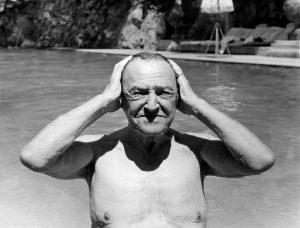
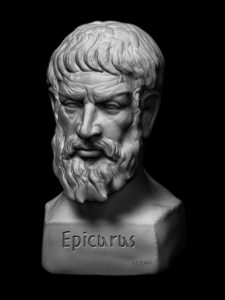 I have been a practicing Stoic for a few years now, with lulls here and there. Stoicism provides a compelling framework for living in a purposeful and ethical way. The question in my mind is, is it perhaps a little too compelling? In other words, not much fun?
 In 1790, shortly after the 13 states ratified the U.S. Constitution, the new federal government conducted its first population census. Its tabulations revealed an astonishingly rural nation. No less than 95% of all Americans lived in rural areas, either on a fairly isolated homestead (typically a farm) or in a very small town. How small? Fewer than 2,500 people. Meanwhile, just 1/20 of Americans lived in a town with more than 2,500 people. All told there were only 26 such towns, only half of which had so many as 5,000 people