by Ashutosh Jogalekar
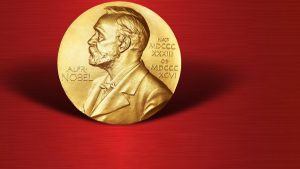
The Nobel Prizes in science will be announced this week. For more than a century the prizes have recognized high achievement in physics, chemistry and medicine. Some scientists crave the prizes so much that they get obsessed with them. A prominent, world-famous chemist once had lunch with my graduate school advisor. After a few minutes he went off on a tirade against the Nobel committee, cursing them for not giving him the prize. He never got it, and he never got over it. The Nobel can bring fame and recognition, but it can also make the lives of those who live for them miserable.
A human prize created by a human committee based on the will of a human who established it to atone for a better method of killing people should not cause people such agony. And yet, in many ways, the prizes reflect all that is good and bad about human nature. The physicist Phillip Lenard later turned out to be a Nazi who denounced Einstein and his relativity. The celebrated Werner Heisenberg wasn’t a Nazi, but he controversially participated in work toward an atomic weapon in Germany during the war. Fritz Haber made an even more damning pact with the devil. Haber and his collaborator Carl Bosch kept alive, by one measure, one third of the world’s population by inventing a process to manufacture ammonia for fertilizers from nitrogen in the air. Haber won the Nobel Prize for chemistry in 1918, right after he had spent the First World War inventing chemical weapons that led to the deaths of tens of thousands. António Moniz who won the prize in medicine in 1949 pioneered the highly controversial procedure of lobotomy which, even though it seemed like a good idea then, incapacitated thousands. And William Shockley who co-invented the transistor and inaugurated Silicon Valley later became infamous for promoting racist theories of intelligence. The moral landscape of Nobelists even in science is ambiguous, so one can imagine how much worse it would be and in fact is in areas like peace and economics. Read more »


 Every October there’s a huge book fair in my town, where used books donated by the community are put up for sale in a large hall at the fairgrounds. It’s no exaggeration to say that it’s a high point of my year.
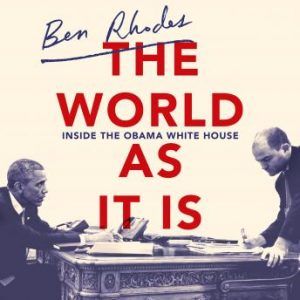 As the first African American president of the United States (US), Barack Obama is a uniquely historical personality. Each of us has our opinions, or will formulate opinions, as to the success or limitations of his eight years in office as a Democratic president from 2009-2017, and as to the person who is Obama. Helping us in the formulation of our views on Obama and his presidency, is Ben Rhodes book, The World As It Is: Inside the Obama White House.
  One of the most simple, elegant and powerful formulations of the conflict between science and religion is the following bit of reasoning. ‘Faith’ is belief in the absence of evidence; science demands that beliefs are always grounded in evidence. Therefore, the two are mutually exclusive. This is an oft-repeated argument by modern atheists, and it connects different aspects of what is usually called the ‘Conflict Thesis’: the idea that science and religion are opposed to each other not just now, but always and necessarily.
 In the Mood for Love

 One of the things I love about sports is they’re a low-stakes environment in which to practice high-stakes skills. For most people, most of the time, the results of a sporting match don’t affect the long-term quality of their lives. This is what I mean by “low-stakes.” In the grand scheme and scope of our lives, the outcomes of games rarely matter. Which is what makes sports such a great place to practice skills that really can and do impact our lives for the better. This is what I mean by “high-stakes.”
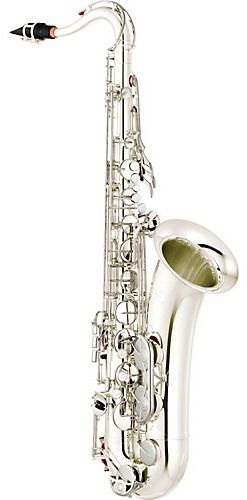 In the fall of 1970, I brought a Bundy tenor saxophone home from school. I was nine and in Mrs Farrar’s 5th grade class. To celebrate, my father slid an LP called “Soultrane”out of a blue and white cardboard jacket. The first sounds from the record player’s single speaker: a muscular folk song with rippling connective tissue that quickly spun free into endless cascades. Dad explained that it was my new horn, in the hands of John Coltrane. I didn’t know his name and nothing that day seemed possible, anyway.
 Recently, CNN sent their reporter to cover yet another Trump rally (in Pennsylvania), but this time reporter Gary Tuchman was assigned the more specific task of interviewing Trump supporters who were carrying signs or large cardboard cut-outs of the letter “Q” and wearing T-shirts proclaiming “We are Q”.