by Holly Case and Lexi Lerner
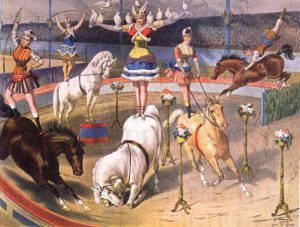 What follows is part of a collaborative project between a historian and a student of medicine called “The Temperature of Our Time.” In forming diagnoses, historians and doctors gather what Carlo Ginzburg has called “small insights”—clues drawn from “concrete experience”—to expose the invisible: a forensic assessment of condition, the origins of an idiopathic illness, the trajectory of an idea through time. Taking the temperature of our time means reading vital signs and symptoms around a fixed theme or metaphor—in this case, the circus.
***
In its most basic iteration, a circus is a ring or circle. The Circus Maximus in Ancient Rome was an oval-shaped track used for chariot races. Presbyterian minister Conrad Hyers writes that the modern circus has a “willingness to encompass and make use of the whole human spectrum”:
The costumed beauty rides on the lumbering beast or walks hand in hand with the ugly dwarf. The graceful trapeze artist soars high above the stumbling imitations of the clown in the ring below. Nothing and no one seem to stand outside this circumference, this circus.
***
From a 1930 program for Krone Circus in Vienna: a Roman-style chariot race, gladiator games, Eskimos and polar bears, a parade of twenty elephants, springing Arabs, “The Maharadja’s Grand Entrance,” an “Exotic procession,” the Chinese troupe of Wong Tschio Tsching, and Cossack riders. (“No smoking. No dogs allowed.”)
***
The circus often starts by breaking its own rules. Paul Bouissac, a semiotician at the circus, explains. A master juggler is poised to begin the opening act, but he is interrupted by a clown who appears among the audience–introducing himself, fumbling, stealing a child’s popcorn, all the while defying the warnings and threats of the Master of Ceremonies. “From the beginning,” writes Bouissac, “as a kind of foundational gesture, this clown has defined himself as a rule breaker.”
He has mocked good manners. He has transgressed even the circus code of which he is a part. But his tricks have made people happy. He has denounced the arbitrariness of authority. When the Master of Ceremonies wants to throw him out of the ring, the audience spontaneously boos…
Eventually, the clown is removed and the juggler can begin his act. “At the end,” Bouissac concludes, “the triumph of the juggling hero will be both physical and social.” But this satisfying resolution can only take place after the clown has created a problem. The juggler’s act is only triumphant within “the framing provided by the clown.” Read more »
 Beauty has long been understood as the highest form of aesthetic praise sharing space with goodness, truth, and justice as a source of ultimate value. But in recent decades, despite calls for its revival, beauty has been treated as the ugly stepchild banished by an art world seeking forms of expression that capture the seedier side of human existence. It is a sad state of affairs when the highest form of aesthetic praise is dragged through the mud. Might the problem be that beauty from the beginning has been misunderstood?
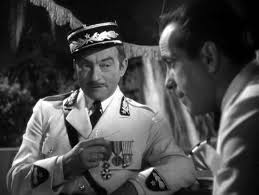 There is a famous exchange in Casablanca between Rick (Humphrey Bogart) and Captain Renault (Claude Rains):

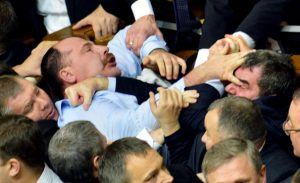
 Spectator sports can reflect a society’s worst inclinations by promoting pure partisanship.
 I have a friend who is a travel agent. The days when we all talked on the phone to travel agents in order to book any travel are long gone. These days, for the most part, travel agents, the actual human ones, deal with business travel and high end travel for elites. My friend was telling me about being contacted by a client who was the high end elite type, at 3am, saying her email wasn’t working and could my friend text her their itinerary. Now putting aside the obnoxious behavior in expecting a reply from anyone at 3am, my first response was “doesn’t she use Tripit?” Or Google Trips, or even the airline mobile apps? At any given time, I can find all my travel details in all of those ways and sometimes others (business trips get automatically put in my Google calendar). Travel is so automated and online now, it’s amazing to me that anyone wouldn’t take advantage of these tools.

 Although some may be heralding the end of free speech, 2018 has been a year of far-reaching debate and discussion. In the coming months, we can anticipate attending or streaming discussions ranging from such topics as the role of race in American politics to the nature of truth, from existential threats posed by artificial intelligence to the value of religion.