by Lei Wang
My mother, who was a doctor, always wished she could have been a teacher instead. She was assigned to be a doctor in 1970s China in the weird way the government assigned people to careers then, based solely on test scores. (My dad, assigned as a programmer, had really wanted to pursue a purer, less applied kind of science.) Mom did like being a doctor, though always warned me against going into medicine: the dangers of knowing too much, also all those turtle shells (what she called organic chemistry compounds) to memorize. Perhaps because she really wanted to be a teacher, perhaps because when she immigrated to America, she could no longer practice medicine, she loved to talk to me enthusiastically about biology, especially about T cells and germs as the cops and robbers of the immune system, as if she were my personal Mrs. Frisbee of the Magic School Bus.
I have not gone into medicine, but I have taken weird, pseudoscientific healing classes that may very well be related to growing up with too many biology metaphors. Recently, I have been thinking: we call it healing, but for whom? When healing a cold, aren’t we actually just mass-murdering viruses? I have a friend who everyone in our friend group agrees is the most loving person we know; during the pandemic, when she got sick yet again, the dark joke was that she was too hospitable to viruses, too accommodating of their comfort. She could have stronger boundaries.
“There are two kinds of people, cancer people and allergy people,” a metaphysical healer once told me. “Cancer people take too much in and allergy people keep too much out.” This made sense, metaphorically. We want to know why, and sometimes the symptoms really do fit the situation (I also like to think, since I have allergies, that this means I will not get cancer). Read more »
 In 2007, at the Munich Security Conference, Vladimir Putin announced that the current world order had changed. The unipolar world order, with one centre of power, force and decision-making, was unacceptable to the leader in the Kremlin. Yet, more than that, Putin’s speech prepared the replacement of the unipolar world order, a replacement, he would later come back to, over and over again: multipolarity.

 One argument for the existence of a creator /designer of the universe that is popular in public and academic circles is the fine-tuning argument. It is argued that if one or more of nature’s physical constants as mathematically accounted for in subatomic physics had varied just by an infinitesimal amount, life would not exist in the universe. Some claim, for example, with an infinitesimal difference in certain physical constants the Big Bang would have collapsed upon itself before life could form or elements like carbon essential for life would never have formed. The specific settings that make life possible seem to be set to almost incomprehensible infinitesimal precision. It would be incredibly lucky to have these settings be the result of pure chance. The best explanation for life is not physics alone but the existence of a creator/designer who intentionally fine-tuned physical laws and fundamental constants of physics to make life physically possible in the universe. In other words, the best explanation for the existence of life in general and ourselves in particular, is not chance but a theistic version of a designer of the universe.
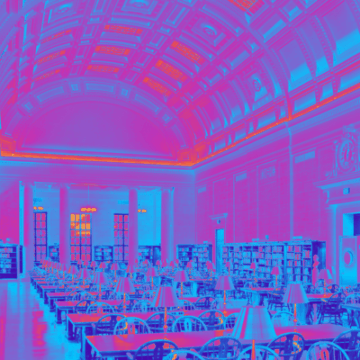
 Sughra Raza. Scattered Color. Italy, 2012.