
by Emrys Westacott
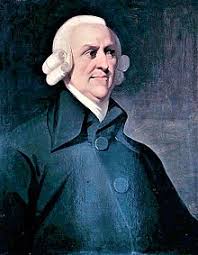 I just read Adam Smith’s The Wealth of Nations for the first time. Not every word. It’s over a thousand pages, and there are long “Digressions” (Smith’s term) on matters such as the history of the value of silver, or banking in Amsterdam, which I simply passed over. I was mainly interested in what Smith has to say about work, so I also merely skimmed some other sections that seemed to have little relevance to my research. Time and again, though, I found myself getting sucked into chapters unrelated to my concerns simply because the topics discussed are so interesting, and what Smith has to say is so thought-provoking. Reading the book is also made easier both by Smith’s admirably lucid writing and by the brief summaries of the main claims being made that he inserts throughout at the left-hand margin.
By any measure The Wealth of Nations is one of the most influential books ever written and represents a monumental intellectual achievement, initiating a paradigm shift in political economy. Before its publication in 1776, the dominant view in Britain and many other countries was some form of mercantilism. According to this theory, the path to prosperity and power for a nation lay in its having a positive balance of trade, exporting more than it imported, thereby accumulating wealth at the expense of its rivals. Government policy thus sought to promote the production of goods while ignoring or even suppressing domestic consumption. Against this, Smith argues that the wealth of a nation does not reside in a store of goods or gold, but consists, rather, in the totality of the economic activity that its people and institutions are engaged in. Read more »




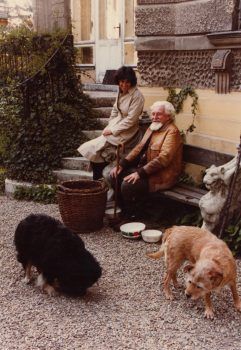
 It is fashionable to say that great wine is made in the vineyard. There is a lot of truth to that slogan but in fact wine is made by a complex assemblage with various factors influencing the final product. Last month
  From aviation to zoo-keeping, there’s a simple rule for safety in potentially hazardous pursuits. Always keep an eye on the ways that things could go badly wrong, even if they seem unlikely. The more disastrous a potential failure, the more improbable it needs to be before we can safely ignore it. Think icebergs and
  The man for whom the word “Emergency” must have been invented (“serious, unexpected, and often dangerous situation requiring immediate action”) pulled the pin out of yet another hand grenade.
 I’d been living in Tokyo about ten years, when a friend’s father decided to perform a little experiment on me. Arriving one cool autumn evening at their home in suburban Mejirodai, he waved my friend away, telling her: “I want to have a little chat with Leanne.” Sitting down on the sofa across from him, he poured me a cup of tea. In truth, I can’t recall what we chatted about, but about twenty minutes into the conversation, he suddenly clasped his hand together in delight–with what could only be described as a childlike gleam in his eyes– and said, “Don’t you hear something?”
 Just about everyone who visits the famous

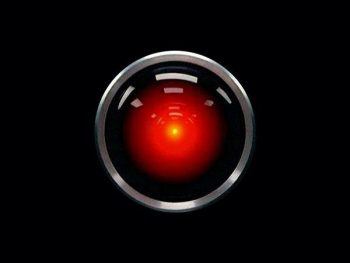 My seventy-something year old uncle, who still uses a flip phone, was talking to me a while ago about self-driving cars. He was adamant that he didn’t want to put his fate in the hands of a computer, he didn’t trust them. My question to him was “but you trust other people in cars?” Because self-driving cars don’t have to be 100% accurate, they just have to be better than people, and they already are. People get drunk, they get tired, they’re distracted, they’re looking down at their phones. Computers won’t do any of those things. And yet my uncle couldn’t be persuaded. He fundamentally doesn’t trust computers. And of course, he’s not alone. More and more of our lives have highly automated elements to them,
  The Anna Karenina Fix
 In the Third Essay of On the Genealogy of Morality, Nietzsche levels a powerful attack on the modern Platonistic conception of mind and nature, urging us to reject such “contradictory concepts” as “knowledge in itself,” or the idea of “an eye turned in no particular direction, in which the active and interpreting forces, through which alone seeing becomes seeing something, are supposed to be lacking.” More recently, Donald Davidson’s attack on the dualism of conceptual scheme and empirical content, and thus of belief and meaning, requires us to see inquiry into how things are as essentially interpretative.