by Brooks Riley

by Brooks Riley
by Sabyn Javeri Jillani
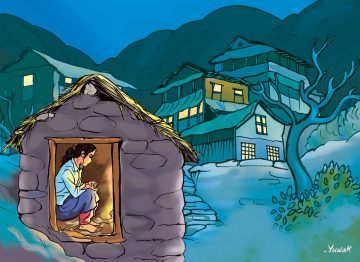 Now that we are witnessing a world that has withdrawn indoors, many people are reading plague literature, discussing Camus and Defoe, and reflecting on the nature of fear and contagion. But there is another kind of literature that lies neglected: stories that reflect the disconnect and dejection of seclusion -the literature of women’s isolation.
‘Alone today and for many days’, muses Virginia Woolf in her journal (1939) on the remoteness of wartime London. Today has a similar feel, as world over busy streets lie abandoned and silent, people cocooned in self-isolation. Those who are lucky enough, shelter in their sanctuaries, making seamless transitions to the digital world online. Those who are unable to adapt to this new reality, wait indoors for yesterday to return. Then, there are those for whom a house does not necessarily mean sanctuary, and yet others, who have no homes to shelter in. This pandemic has brought out many inequalities and injustices in our world but the one that seems overlooked is that self-isolation is not something new — for women.
There is, of course, the idea of a room of one’s own, which may empower a woman’s creative genius. But it is not Woolf’s idea of solitude that I discuss here but of isolation. An isolation that is linked to quarantine, and the idea of contagion. In many traditional societies, self-isolation is forced upon women as a custom during certain periods of their life such as menstruation (Chhaupadi), childbirth (Zuo yue zi), widowhood or, at times, even divorce (Iddat/Iddah). Through superstition or ritual, they are quarantined. Read more »
by Michael Klenk
 When academics and journalists criticise technology today, they often assume the perspective of a bitter and desperate lover: intimately acquainted with the failings of technology, and vocal in pointing them out, but also too invested and unable to perceive the world without it.
That critical perspective on technology is important and increasingly mainstream, but it myopically focuses on the wrong question. It presupposes technology, and merely plug on ethics as a constraint. An adequate, non-myopic ethics of technology must start with the question of why we need tech in the first place. A very brief sketch of the history of the ethics of technology in two stages, and a case study of digital contact tracing help us see why.
First came technology: Our hominoid forebears used stone tools to butcher dead animals long before the first Homo Sapiens walked the earth. Since then, technology has empowered humanity and propelled us to be the dominant species on this planet. From this perspective, technology was often useful, frequently inevitable, and mostly seen as something beyond the purview of ethical considerations. From that perspective, technology is an eminently helpful and value-neutral tool. But then came ethics: A critical perspective on technology is almost as old as our use of technology. Read more »

Photo taken from a bridge over the river Eisack in the village of Mittewald, in the South Tyrol, in May of 2020.
by Shadab Zeest Hashmi
 Gems carry a lure that is quintessentially primeval. Considered valuable throughout human history for obvious reasons such as rarity, durability and beauty, gems are inextricable not only from lore, art, architecture, culture, and craft, but also the aesthetics of language. Stories of different civilizations come to us carved in gemstones— Jade figurines of the Forbidden City in Beijing, lapis funerary masks of ancient Egypt, amber encrusted palaces in Moscow, the fabled and famously fought over “koh-i-noor” diamond, the emerald cups and diamond candlesticks of the Ottomans, the bejeweled “peacock throne,” the rubies of Ceylon— and stories manifold to these in words, from myths passed down via the oral tradition, to scripture, fairy tales, poetry and actual accounts of history, to science talk of archeology and gemology.
The seventeenth century Flemish chronicler and diamond dealer Jacques de Coutre describes the Mughal emperor Jahangir as “looking like an idol on account of the quantities of jewels he wore, with many precious stones around his neck as well as spinels, emeralds and pearls on his arms, and diamonds hanging from his turban.” While some are attracted to gems as symbols of power and wealth, and others as the source of wellness energy, adornment or materials for craft, poets, artisans and artists have developed a complex vocabulary around gems through the millennia and across cultures. Vermeer brings out the unique luster of a pearl, in “The Girl with the pearl Earring,” the mosque-builders of Samarkand make an epic out of turquoise, Giovanni Battista Salvi da Sassoferrato uses the most precious pigment available— derived from lapis lazuli— to paint the richest, most vibrant blue mantle in “The Virgin in Prayer,” the Mughals build the Taj Mahal, an architectural marvel of gem-inlay and marble. Read more »
by Adele Wilby
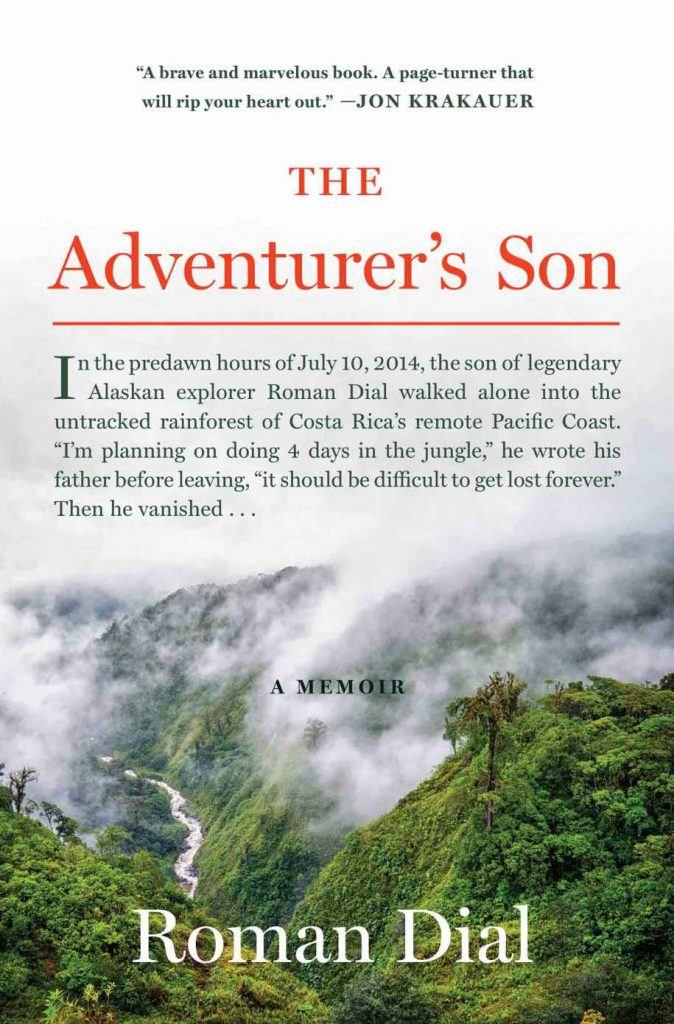 Roman Dial has written a great tribute to his son, indeed to his entire family, in his book The Adventurer’s Son. An adventurer and biologist, Dial writes movingly of his relationship with his only son, Cody Roman Dial in particular and of his accidental death while exploring the rainforests of Central America. Dial’s pride in his son and the pain and grief over his loss are palpable throughout the book. But as Dial himself acknowledges, ‘we never know the future’, and the death of his son at just 27 years old in 2014 is an event he could never have imagined when he began to introduce him to the joys and challenges of exploring the natural world.
The birth of Cody Roman was a celebratory moment for Dial, and he looked forward to establishing a deep father-son bond in a way that he and his father had not. For two decades and over five continents, the bond between the two deepened as they shared momentous times together exploring nature. Thus, Cody’s death at such an early age is a heart-breaking tragedy for Dial, his family and friends, but we learn from the book that Cody’s life was exceptional, rich and fulfilling, attributable to an adventurous and courageous father, and a mother who supported Dial’s aspiration to cultivate a respect and appreciation of the natural world in their son. Read more »
by Pranab Bardhan
 In coping with the dire economic crisis in the wake of the pandemic many developing countries have resorted to cash assistance to the poor for immediate relief. Beyond the relief aspect, many macro-economists have also pointed to the need for such programs to boost mass consumer demand in a period of one of the deepest slumps of general economic activity in many decades. As I have been an advocate for universal basic income (UBI) in poor countries for more than a decade now—my first published paper on the subject came out in India in March 2011 in the Economic and Political Weekly— I have often been asked if the widespread adoption of such cash assistance programs indicates that it is now a propitious time for UBI. While I have supported the cash relief programs in the context of the crisis (most of these programs have not been universal, mainly targeted to the poor) and consider the experience gained in this as generally useful, I think those who like me have supported UBI have usually thought about it in a longer-time framework and in the context of a more ‘normal’ state of the economy with appropriate institutions, political support base, and administrative structures in place. Of course, I’ll not object if in a post-pandemic world attempts are made to help the temporary crisis programs ultimately extend or evolve into a more general UBI program in poor countries.
A Bit of History
By now it is well-known that the idea of UBI or that of a guaranteed minimum income enabled by a public assistance program has a long history in western thought, going back about 500 years to Thomas More and his friend, Johannes Vives, or that over the years the idea has been supported (and also attacked) by people in the whole range of the political spectrum, by libertarians and socialists alike. On a practical level it has been tried on a large enough scale briefly in the beginning of the last decade in two countries, Iran and Mongolia, and for the last 4 decades in one US state, Alaska. In all these 3 cases the funding source has been the bounty from some natural resource (oil for Iran and Alaska, copper for Mongolia). For rich countries in general, many economists, even in cases when they are otherwise supportive, think that it is much too expensive for the Government to fund a UBI at a decent level. In recent years, however, additional support has come from people (including some from the techno-utopian entrepreneurs of Silicon Valley) who are worried about the work-displacement effects of automation and artificial intelligence in the near future. Inducements for automation may be reinforced if we have to live with the virus for quite some time, as there will then be attempts to avoid production conditions where lots of workers have to congregate.
In this essay I shall primarily talk about developing countries, where more than looming automation there may be some other special factors why UBI may be imperative, and also show that finding resources for a reasonable UBI supplement may be within the realm of fiscal feasibility. Read more »
by Eric J. Weiner
D: Well my name is Dick Doolittle and I’m a reporter from Grime magazine and we would like you to comment on the tragic riots—
B: Not a riot, it’s a rebellion
D: Well the tragic rebellion?
B: Man, tragic for who?
D: Well there’s havoc in the streets, the police have lost control over the People, criminals are running free from jail, and people are actually taking property from big businesses, it’s full of complete chaos
B: That’s not chaos, that’s progress
“The Coup,” from the album Kill My Landlord, The Coup
 What does it mean to be white in America in 2020?[1] As Boots Riley points out to Dick Doolittle in the opening exchange to the song The Coup, one of the things it means to be white in America is you have the power to define the terms of the debate. In this exchange, the rebellion is cast first as a riot and then a “tragic” rebellion until Boots checks the journalist. As people from across the racial spectrum rebel against police violence and systemic racism, the question, “What does it mean to be white?” is more than a question about unpacking the backpack of white privilege[2]; it requires a detour through the educational, cultural, and political apparatuses of our culture.
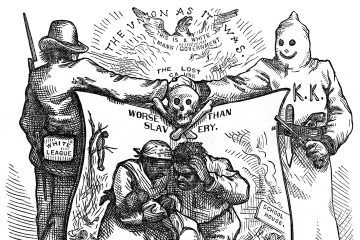
I am white and was educated from K-12 to never question the norms, values, and goals of white supremacy. I am being more than just provocative when I use the term “white supremacy” to describe my education. White supremacy should not be reduced to describing the most extreme forms of hatred and violence leveled against people of color. More inclusively, it is an ideological world view that makes whiteness a universal marker of innocence, excellence, power, beauty, intelligence, and progress. I think it’s important to reclaim the term from the referent of the Ku Klux Klan and other extreme right-wing terrorist groups because it gives us a way to think about the formative historical structures and systems that seed the soil for the emergence of white identity and consciousness in the United States. The construction of white identity is inseparable from its intimate association to the forces of colonization and the domination and exploitation of people of color. Read more »
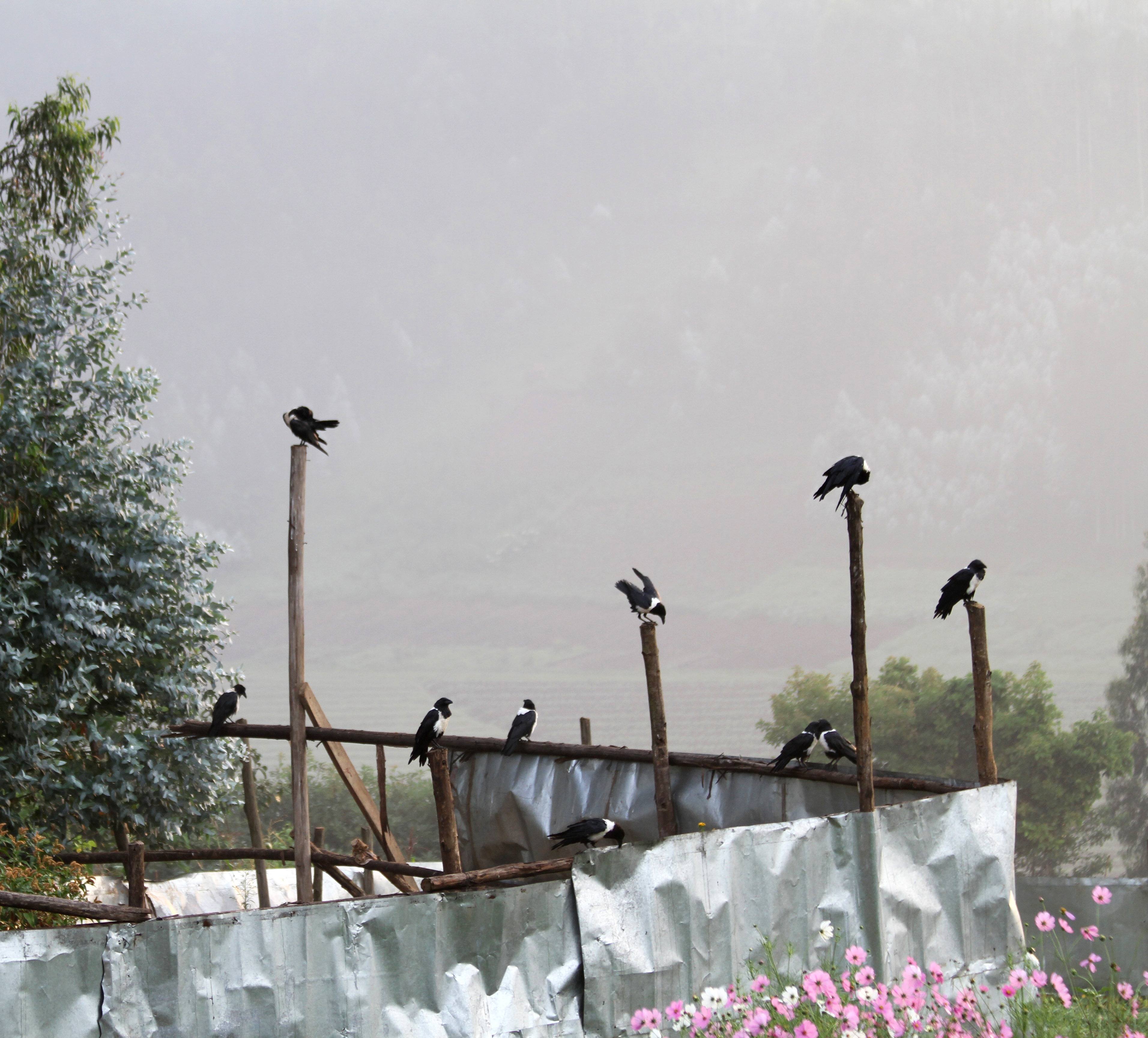
Sughra Raza. A Murder …. Rwanda, January, 2016.
Digital photograph.
Editor’s Note: This is a letter sent by Dr. Audeh to my sister about her recent book, The First Cell: And the Human Costs of Pursuing Cancer to the Last, and I am publishing it here as a review with his permission.
by M. William Audeh
 May 26, 2020
Dear Azra,
I am happy to inform you that upon the end our phone conversation, I opened your book, which had been on my Kindle since its publication, and read it over the long weekend.
My apologies for not having read it earlier, but I had my reasons, which I will explain below. However, let me begin by saying that I thoroughly enjoyed your book, not least because your passionate voice comes through the pages so clearly in your writing. I feel as if I have had the privilege of spending several evenings in your lucid company, discussing these fundamental scientific ideas and sharing the heartfelt sorrows. It is eloquent and wonderfully written; a deeply passionate yet sharply rationale argument and memoir. Congratulations!
I will confess, that although I was quite interested to read your book, having spoken with you about its inception, development and impending publication, I was ultimately hesitant. My reluctance stemmed from two regrettable impulses, about which I am not proud, but will readily admit to you, as a dear friend. One was simple jealousy, that you had written and published a book which expressed your long-held beliefs, and anger at myself, for not having found the time and energy to do so myself. Perhaps reading your book will now inspire me to write my own. The other source of my hesitancy was the belief, not entirely unfounded, that I would find myself disagreeing with you on many points of your discourse and did not want to experience that discomfort in relation to you as a friend and colleague. In truth, I am in agreement with you on so very many aspects of your book, that I feel foolish in having held that concern. However, now that I have read your work, and understand the manner in which you have chosen to lay out your argument, I would like to express my thoughts on what you have written. Read more »
by Ashutosh Jogalekar

“All experience shows that even smaller technological changes than those now in the cards profoundly transform political and social relationships. Experience also shows that these transformations are not a priori predictable and that most contemporary “first guesses” concerning them are wrong.” – John von Neumann
Is the coronavirus crisis political or technological? All present analysis would seem to say that this pandemic was a result of gross political incompetence, lack of preparedness and impulsive responses by world leaders and government. But this view would be narrow because it would privilege the proximate cause over the ultimate one. The true, deep cause underlying the pandemic is technological. The coronavirus arose as a result of a hyperconnected world that made human reaction times much slower than global communication and the transport of physical goods and people across international borders. For all our skill in creating these technologies, we did not equip ourselves to manage the network effects and sudden failures in social, economic and political systems created by them. An even older technology, the transfer of genetic information between disparate species, was what enabled the whole crisis in the first place.
This privileging of political forces over technological ones is typical of the mistakes that we often make in seeking the root cause of problems. Political causes, greatly amplified by the twenty-four hour news cycle and social media, are illusory and may even be important in the short-term, but there is little doubt that the slow but sure grind of technological change that penetrates deeper and deeper into social and individual choices will be responsible for most of the important transformations we face during our lifetimes and beyond. On scales of a hundred to five hundred years, there is little doubt that science and technology rather than any political or social event cause the biggest changes in the fortunes of nations and individuals: as Richard Feynman once put it, a hundred years from now, the American Civil War would pale into provincial insignificance compared to that other development from the 1860s – the crafting of the basic equations of electromagnetism by James Clerk Maxwell. The former led to a new social contract for the United States; the latter underpins all of modern civilization – including politics, war and peace.
The question, therefore, is not whether we can survive this or that political party or president. The question is, can we survive technology? Read more »
by Brooks Riley

by Joan Harvey
I learned in New Jersey that to be a Negro meant, precisely, that one was never looked at but was simply at the mercy of the reflexes the color of one’s skin caused in other people. —James Baldwin, Notes of a Native Son
I am invisible, understand, simply because people refuse to see me. —Ralph Ellison, Invisible Man
…American society is blind to hundreds, even thousands of murders perpetrated in its name by agents of governments. — John Lewis
I had begun thinking about how the coronavirus made very visible the shambles of our society, when the murder of George Floyd took place. Disasters pull aside the veil, and make an underlying reality more apparent. Already the coronavirus had exposed the reality of racism, capitalist economics, the weakness of our food system, our health care crisis, the extreme vulnerability of so many populations, and the built-in structural violence. The George Floyd murder, and the subsequent protests and riots, were police brutality made visible, and rage against the brutality made visible.
Activist and epidemiologist Gregg Gonsalves, referring to the way the virus has been mishandled, asks:
How many people will die this summer, before Election Day? What proportion of the deaths will be among African-Americans, Latinos, other people of color? This is getting awfully close to genocide by default. What else do you call mass death by public policy?
His comments apply equally to the public policy that allows so many to be killed by police. Writing in 2014, civil rights leader John Lewis mentions a recent study that reported that “one black man is killed by police or vigilantes in our country every 28 hours, almost one a day.” Read more »
by Maniza Naqvi
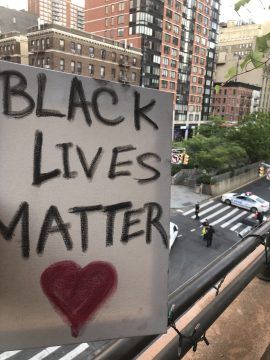 Have a look at the New York City Budget for the fiscal year 2020 and you will very quickly note the priorities (policing) for public expenditures and for cuts (social services of health, education and youth services). A quick back of the envelope public expenditure review reveals and illustrates the fiscal story for the fault-lines nourishing and giving free rein to the virility of both viruses of anti blackness and of the pandemic. And this is the story of masked interventions for maintaining inequity and cruelty in one of the great cities of the world, one of the so called most ‘progressive’ cities of the world.
About six years ago a colleague of mine and I visited the Human Services of New York City to learn about its Social Safety Net. As the presentation was made to us at City Hall, we found ourselves marveling at and impressed by the size of the City budget of nearly US$ 100 billion. As Development specialists, we were used to working in countries whose entire budgets were dwarfed compared to the New York City budget. However, we found ourselves exchanging glances of how the entire budget including the Human Services and benefits in the city seemed to be of a mindset that the resident beneficiaries have an existing or an expected record of criminality. Therefore a review and reallocation of funding must de-criminalize the orientation of the budget from policing both in percentage and absolute amounts. And every single line item of the budget should be expunged of its relationship to policing. Read more »
17 April 1958
Your Excellency,
thank you for the portrait
of Mustafa Kemal Ataturk who yanked
women of Turkey kicking and screaming
into the 20th century.
Please accept this modest shawl I promised.
Every stitch has been hand-embroidered
by the blessed women artisans
of Kashmir who have spilled their sadness
with threads and barbed wire, weaving
the wrath of history.
An iron necklace frames the square shawl.
Four doves with broken wings sit in corners.
Himalaya gallops the wind.
A river rises to discover clouds.
A moon in the center grins
back at a helmeted head
shooting at her, as you will see.
The blessed women artisans
of Kashmir convey best wishes
to the brave daughters of Turkey.
I hope Ankara undoubtedly supports
our right to self-determination. We
have been fighting long for freedom.
We thank you and your country
for the goodwill you have shown.
Yours faithfully, Mrs. Maryam Jan,
Katrina Bungalow, Pindi Point,
Murree, West Pakistan.
by Rafiq Kathwari / @brownpundit
by Charlie Huenemann
 In thinking about knowledge and consciousness, it is just about irresistible to distinguish between the basic facts of what we observe and interpretations or beliefs about those facts. You and I see the same glass of water – maybe our perceptions of the glass are nearly identical – and yet you see it has half full while I see it as half empty. We look at the same economic reports, and you find reason to celebrate while I find cause to worry. We see an artificial satellite in orbit, and you see it an incursion of government and industry into space while I see it as a glory of science and engineering. And so on – it seems obvious that there is a divide between what everyone can plainly see and what’s a matter of interpretation.
Descartes was scrupulous about this distinction as he inched his way through the Meditations, continually asking himself what he was really experiencing, as opposed to the judgments he was making about the experience. Do I experience my hands? Or do I only experience the visual and tactile data suggesting that I have hands? Can I infer the existence of the material world from what I experience, or are there other ways of interpreting the sensations that do not suppose there is an external world? Evil genius, anyone? Brain in a vat?
It’s this line of thought that led some philosophers to postulate sense data, or private mental packets of experience whose esse is their percipi, meaning that they don’t exist as anything other than sensations. You see the flower in the vase; I do too, but since I’m across the table from you, my sensations are different in some ways. The colors are the same, or close to the same, but the arrangement is different because of our different perspectives. Different perspectives yield different sets of sense data; that’s what makes them different perspectives. Read more »
by Andrea Scrima
Lydia Hamann and Kaj Osteroth have been working as a collaborative team since 2008. I got to know them in January and February of this year, when they began a year-long residency at the Villa Romana in Florence that was abruptly cut short in early March by the pandemic and the lockdown measures that followed. Hamann and Osteroth studied fine arts in Berlin; their collaborative works—conceptual, feminist, immersed in dialogue and rife with external reference, with one foot firmly planted in queer theory and the other in visual studies— have already acquired an encyclopedic character and have been shown internationally to great acclaim. Their Radical Admiration project spans an impressively prolific period of artistic cooperation that has gone beyond mere rediscovery to critically and convincingly revise historiography and correct the erasures of seminal women artists from the contemporary canon.
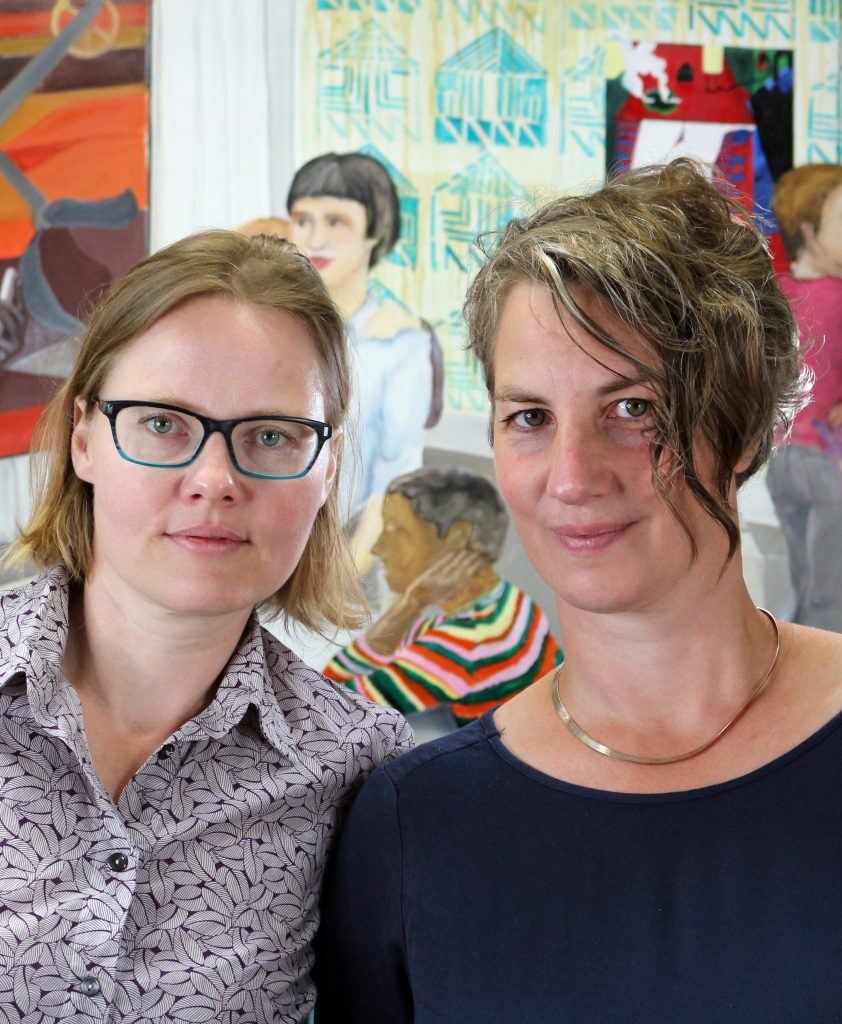
Andrea Scrima: Kaj, Lydia, the two of you have been working together on a long-term painting project commemorating a selection of contemporary women artists; over the course of the past thirteen years, a large body of work has evolved that’s attracted the attention of international curators. How did the idea of collaborating first come about?
Kaj Osteroth: The beauty about a long-term collaboration like ours is that the story has been re-written and adapted as we’ve gone along. And each of us recalls a slightly different version.
I like to remember the beginning as a tiny but sparkling, breathtaking first thought: ***this might work***!!! Which became a practice and an even more serious commitment towards one another. That was in 2007, when Lydia and Emma Williams were putting together a workshop for Lady-Fest and invited me to become part of the small initiating group. The idea of continuing to work together was born in never-ending summer talks between Lydia and myself, most likely involving many other people, almost all over Berlin. Today it feels as though we had been meandering and tingling all summer long, until I moved into Lydia’s shared studio space and we began to give our words visual shape. The fact is, we actually started painting much later, because in 2007 we were both still busy finishing university, writing and trying to satisfy the requirements of the academic system. Read more »

The Sanctuary of Madonna della Corona near the village of Spiazzi in Veneto, Italy, in June of 2020.
by Thomas O’Dwyer
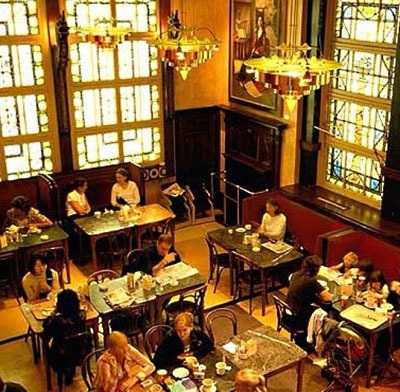
After suffering the injury of pandemic isolation for most of the year, the pride of Dublin city had insult added in May when a national treasure, Bewley’s Café, announced that its doors would be closed not just for the lockdown, but forever. Public outrage rippled out of the city and across the country. Newspapers, blogs and radio programmes lamented the passing of a legend. Bewley’s was the only café in Dublin whose aura, history, and place in people’s hearts could equal the legendary European coffee houses of Paris, Vienna and Venice. Public anger was especially sharp because vanishing customers did not cause the closure.
Bewley’s landlord, an unpopular property mogul, refused to give the café any relief on its annual rent of €1.5 million to ease it through the Covid-19 lockdown, forcing it to close and fire its 110 employees. Print media and the airwaves filled with hundreds of anecdotes and memories from the café’s golden days as “the heart and the hearth” of the city, as the magazine Journal called it. Bewley’s, the “legendary, lofty, clattery café” has always been associated with Leo Maguire’s song Dublin Saunter, a virtual anthem of the city:
“Dublin can be heaven
With coffee at eleven
And a stroll in Stephen’s Green…
Grafton Street’s a wonderland.
There’s magic in the air.
There’s diamonds in your lady’s eyes,
And gold dust in her hair.”
Bewley’s Oriental Café, on the city centre’s stylist Grafton Street, was founded by an English Quaker family who started by importing Chinese tea to Ireland in the 1830s. Ernest Bewley opened his first coffee shop in 1840, followed by a second one soon after on Westmoreland Street, boasting of coffee that was “rich, strong and aromatic, fresh roasted and ground daily on the premises.” Read more »
by Carol A. Westbrook
We think about our fathers during the month of June. Father’s Day is a time to remember these beloved men, especially those who have passed. We reflect on how remarkable their live were, and of so many questions we’d ask them if they were still alive. I’ ask my Dad what he would have done if we were living together at home during the Covid-19 epidemic.

Actually, I don’t need to ask him; I know exactly what he’d do. He’d have followed the guidelines to the letter. He would set the family rules: 1. Masks and gloves when we go out — and no more family drives for hot dogs, Italian beef, or ice cream cones. 2. Wash hands a lot. 3. (That’s me in 1956, doing the right thing!) Play only in our yard, and not with other kids–so no more wiffleball games in the alley, or running under the sprinkler on the front lawn. 4. Meals together, as usual. 5 Pray together as a family every night. For supplies, he’d take advantage of our well-stocked basement “bomb shelter” storage, pantry and deep freezer.
Dad would have obtained supplies for the lockdown using connections at his workplace, the Chicago Board of Education. In true Chicago style, he would call in favors or promise favors of his own, like a good word to a Department head for a city job. Or he could offer professional family portraits, or wedding photos. He also had gossip and information to share. Read more »