by David Kordahl
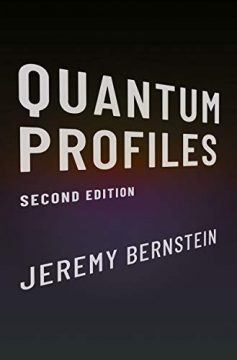 Physics writing, let’s face it, is usually pretty boring. In a recent essay for Tablet, Adam Kirsh diagnosed one reason for this. When physicists write non-technical literature, they often begin with the assumption that the world as revealed by physics is the real one, and that the job of physicists, when they speak to the poor math illiterates, is to show them how best to live with this tormenting truth. As Kirsh puts it, “Popular physics writing is best understood as therapy for this torment—as metaphysical self-help.”
Those of us who have spent time with physicists might question whether they (or we, if I include myself) are temperamentally suited, on average, to be therapists. We might also wonder if the world described by physics is the real one, though I’ll set that question aside for today. Today, I’m interested in a style that captures not the real world, whatever that is, but the real world of physics—or, more plainly, the social world of physicists.
To capture this world as it is (not, of course, as it should be) might require a certain anti-therapeutic nastiness. This possibility is on my mind because last month I read Quantum Profiles, Second Edition, by the physicist Jeremy Bernstein. Though Bernstein shares most of the baseline prejudices of his fellow physicists, he isn’t boring, and he certainly isn’t nice—after all, his subject is physicists, not just physics. The first edition of Quantum Profiles came out in 1990, and since then its size has nearly doubled, inflated with rants and investigations, a graveyard of settled scores. Read more »

 I have a friend who is a self-described “cop magnet.” He’s been arrested six or seven times, just standing there.


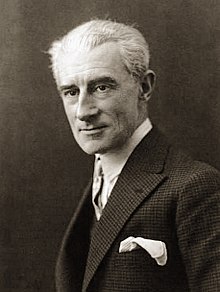 Lately I’ve been craving the music of French composer Maurice Ravel (1875-1937). As reality continues to be fraught, in the midst of a pandemic, social unrest, culture wars, and on and on, Ravel’s music offers an enticing escape. Described by his close friend, concert pianist Ricardo Viñes, as “inclined by temperament toward the poetic and fanciful,” Ravel created music that continues to captivate with its otherworldly beauty. Another reason for his appeal now, when the public health crisis has disrupted all of our quotidian rhythms, is that rhythm is the sine qua non of Ravel’s art. All you have to do is listen to
 Being Korean is a behavioral science all its own. There are formalities at all levels of society and potential affronts lurking in every social engagement. Ageism is set in stone, and in honorifics that define older or younger persons, friends, siblings and relatives, as well as differing levels of social standing. Personal humiliations are many and varied, some of them universally recognizable, some of them exclusive to Korea’s tight-knit family structures or evident hierarchies. It goes beyond how to address someone: How to drink soju, how to pour it for a superior, how to bow, when to bow, who to bow to, when to get down on your knees—the list goes on.
 Jeanine Cummins’ American Dirt is a string pulled so tightly it is on the verge, always, of snapping. It is like this from the first sentence, when our protagonist Lydia Quixano Alvarez’s 8-year-old son, Luca, finds himself in a rain of bullets while he uses the bathroom. By the second page, sixteen members of Lydia and Luca’s family are dead, murdered by the reigning drug cartel of Acapulco, Mexico.
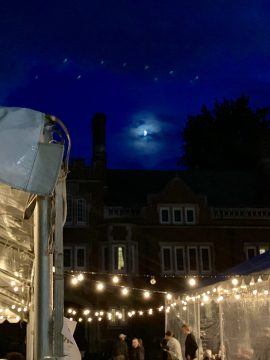 The language of light is compelling. The suggestions of light at daybreak are vastly different from twilight or starlight, the light of a firefly is not the same as that of embers or cat eyes, and light through a sapphire ring or a stained glass window is not the same as light through the red siren of an emergency vehicle or through rice-paper lanterns at a festival. It matters to writers if the image they are crafting of light is flickering or glowing, glaring or fading, shimmering or dappled. A writer friend once commented on light as a recurring motif in my poetry, and told me that I’d enjoy her son’s work as a light-artist for theater. The thought struck me that light in a theater has a great hypnotic, silent power; it commands and manipulates not only where the audience’s attention must be held or shifted, how much of the scene is to be revealed or concealed, but also negotiates the many emotive subtleties and changes of mood. The same goes for cinema, photography, and other visual arts. Light almost always accompanies meaning.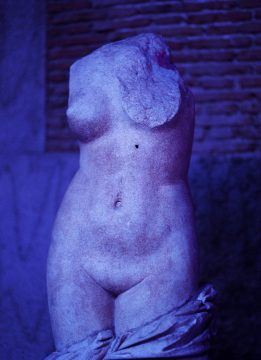

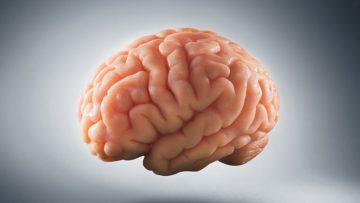 “I’ll just google it again”, said my daughter when I asked her to remember something. It was a very reasonable suggestion, but it led me down an interesting line of thought about the nature of knowing and its recent transformation. Much has been said and written about how the Internet has changed human knowledge, in both positive and negative ways. The positives are obvious. The magic of the Internet, the World-Wide Web, and utilities such as Google and Wikipedia, have put enormous knowledge at our disposal. Now any teenager with a smartphone has effortless access to far more information than the greatest minds of a century ago. Even more importantly, the Internet has opened up vast new possibilities of learning from others, and allowed people to share ideas in ways that were unimaginable until recently. Not surprisingly, all this has led to a great flowering of knowledge and creativity – though, unfortunately, not without an equally great multiplication of error and confusion.

 By 2025, protective living communities (PLCs) had started to form. The earliest PLCs, such as New Promise and New New Babylon, based themselves on rationalist doctrines: decisions informed by best available science, and either utilitarian ethics or Rawlsian principles of justice (principally, respect for individual autonomy and a concern to improve the lives of those most disadvantaged). Membership in these communities was exclusive and tightly guarded, and they had the advantage of the relatively higher levels of wealth controlled by their members.