by R. Passov
“In … economics we are faced with … a need for accurate forecasts, yet our ability to predict the future has been found wanting”
—Systems Economics: D. Orrell and P. McSharry, International Journal of Forecasting, Vol 25 (2009)
* * * *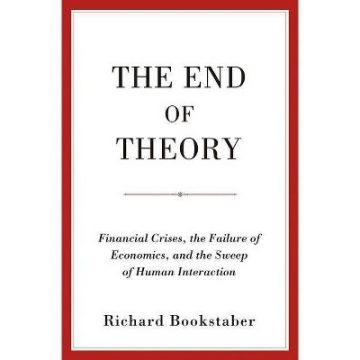
The Stanford Encyclopedia of the Philosophy of Economics (2018) stabs at a definition of the science:
… At first glance, the difficulties in defining economics may not appear serious. Economics is, after all, concerned with aspects of the production, exchange, distribution, and consumption of commodities and services. But this claim and the terms it contains are vague…
Stanford [] portrays economics as a new science only coming into its own under Adam Smith, whose work “… offers a systematic Inquiry into the Nature and Causes of the Wealth of Nations.
In Smith’s economics, an actor led by an “…Invisible Hand…intending only his own gain … gives rise to regularities …”
These “…regularities…” – the unintended consequences of individual choices – “…give rise to an object of scientific investigation.”
The individual choices, it can be argued, are the domain of contemporary Microeconomics while the regularities to which they give rise, might in some sense be our Macroeconomics.
* * * *
Smith, a jocular, bulbous-nosed Scotsman, after graduating from Oxford in 1748 parlayed a penchant for soap-box speeches into a professor-ship at the University of Glasgow. There he rose to Chair of Philosophy. Economics would wait until 1903 when, finally, Cambridge set it apart from the moral sciences.
In 1759 Smith produced a work entitled “A Theory of Moral Sentiments” in which he mused on “… how a man who is interested chiefly in himself [can] make moral judgements that satisfy other people.”
His answer: “When people confront moral choices they imagine an Impartial Spectator who … advises them…Instead of following their self-interest, they take the imaginary observer’s advice,” and in so doing, “…decide on the basis of sympathy, not selfishness.”
After publishing Moral Sentiments, Smith followed the money. For two years, he wandered through France tutoring the son of a gentlemen who, as the Chancellor of the Exchequer, devised the tax policies that sparked the Boston Tea Party.
During his wanderings Smith sought, among others, Hume, Voltaire and Benjamin Franklin. After exhausting his stipend, he spent a decade socializing at the Literary Club of London, turning his notebooks into The Wealth of Nations. The Impartial Spectator morphed into the Invisible Hand. Empathy turned into self-interest. Read more »

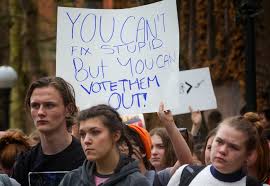 Some people whose political views are liberal and progressive say they will not vote in the 2020 US election. They detest Donald Trump and his Republican enablers like senate leader Mitch McConnell; they oppose Trump’s policies on most issues–the environment, immigration, health care, voting rights, police brutality, gun control, etc.; but they still say they won’t vote. Why not?
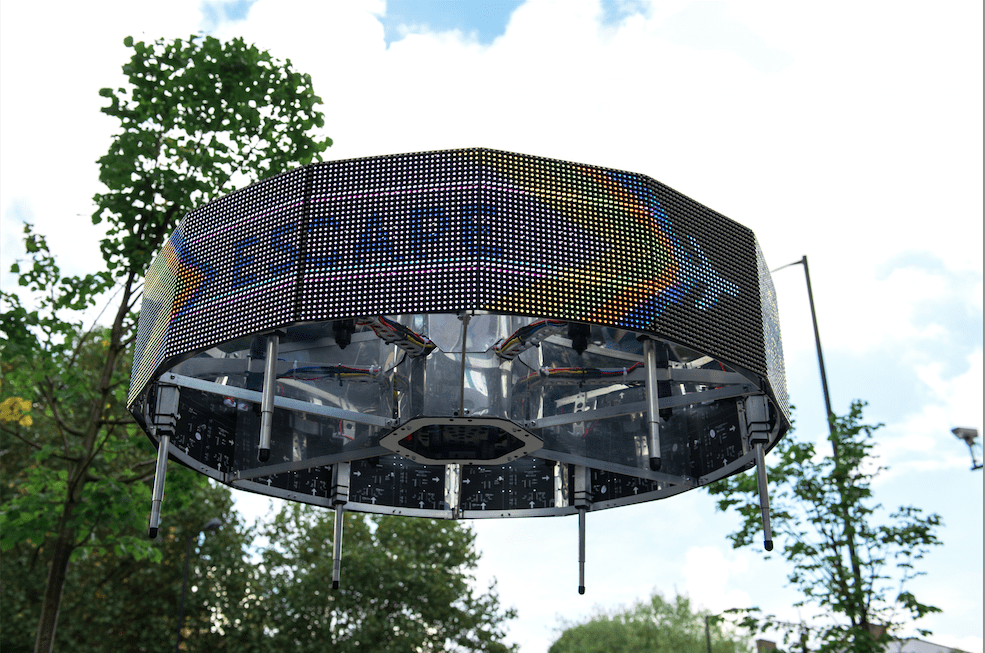
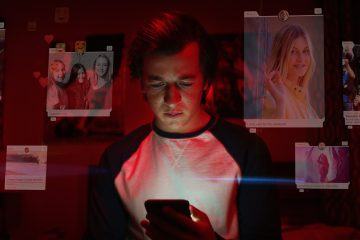 Last month’s most popular movie on Netflix is a horror show in the guise of a documentary. In 2020, reality has turned scarier than fiction, and The Social Dilemma expends more dread per minute than any episode of Black Mirror. It’s a timely, manipulative film, built for one purpose: to scare the f*ck out of everyday Americans.
 What did the wines that stimulated conversation in Plato’s Symposium taste like? Or the clam chowder in Moby Dick, or the “brown and yellow meats” served to Mr. Banks in To the Lighthouse? Or consider this repast from Joyce’s Ulysses:
 Today in the United States is Indigenous Peoples’ Day, a time to bear witness and remember the savagery of Christopher Columbus and other European explorers when they first encountered indigenous peoples throughout the Americas. It’s also a day to recognize and celebrate the courage, knowledges, and cultures of indigenous peoples throughout the world. It coincides with Columbus Day, a national holiday that triggers a day of protests and celebratory parades, rekindles debates about removing statues of Christopher Columbus from parks, squares and circles throughout the United States, and provokes critical discussions about the kind of stories we should be teaching the Nation’s children about his earliest encounters with indigenous communities.
 Although American history curriculum has always been a site of ideological struggle, historians, history teachers, and curriculum designers have done a good job over the past several decades to revise many historical inaccuracies, distortions, and lies that helped whitewash the historical record in the service of white, male, imperialistic, and neoliberal interests. But with Trump’s latest decree to create a “1776 Commission” charged to design a “pro-American” curriculum of American history coupled with his promise to defund schools that use the 1619 Project as well as other curricular platforms that bring attention to historical facts and truths that counter the “official” curriculum, the Nation’s collective historical memory is under siege with public schools at the center of the assault. Whether Trump and the GOP actually care about how American history is represented and taught in schools or whether they are just cynically using the issue to create a political wedge between people who may otherwise be allied to vote against Trump in November is irrelevant.
 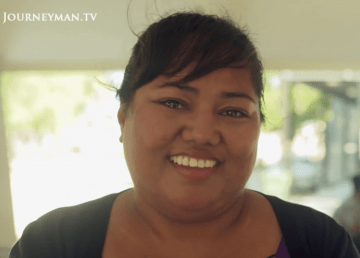 Tabea Bakeua lives in Kiribati, a North Pacific atoll nation. Her country is likely to be the first to disappear completely under the rising seas within a few decades. Asked by foreign documentary filmmakers if she “believes” in climate change, Bakeua considers and tells them, “I have seen climate change, the consequences of climate change. But I don’t believe it as a religious person. There’s a thing in the Bible, where they say that god sends this person to tell all the people that there will be no more floods. So I am still believing in that.” She smiles, self-consciously, as she continues. “And the reason why I am still believing in that is because I’m afraid. And I don’t know how to get all my fifty or sixty family members away from here.” She’s still smiling as tears fill her eyes. “That’s why I’m afraid. But I’m putting it behind me because I just don’t know what to do.” She turns, apologetically, to wipe away her tears. [from “
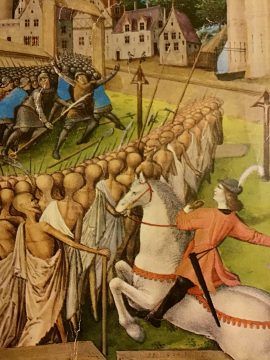 We live in The Year Of Overlapping Catastrophes. Oh 2020, we know ye all too well. The pandemic, our very own plague. Economic depression. A quasi-fascistic con man at the head of government. The discovery that perhaps forty percent of our fellow Americans are truth-hating dupes and low-information racists. (Brits too. Decline of the Anglophone empire?)
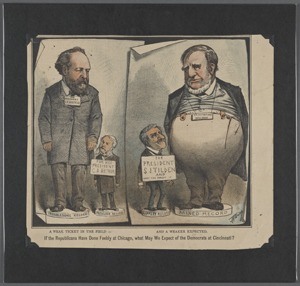 There are times where we are simply unable to surpass our elders.
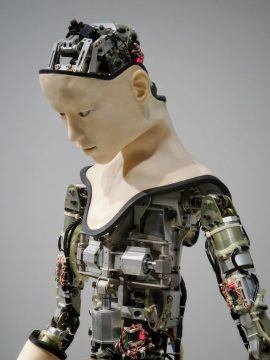
 A system update recently downloaded to my cellphone included artificial intelligence capable of facial recognition. I know this because, when I subsequently opened the “Gallery” function to send a photograph, I discovered that the refurbished app had taken it upon itself to create a new “album” (alongside “Camera”, “Downloads” and “Screenshots”) called “Stories”, within which I found assemblages of my own pictures, culled from all of those other albums and assorted thematically, evidently because they depicted identical, or similar, figures.
 FRONT PORCH