by Daniel Gauss
I waited until after Reddit’s 20th anniversary to post this article, hoping others might offer critical reflections on what the platform has become. Much of the “Reddit at 20” coverage, however, was somewhat fawning, as if many writers had received and worked from the same PR press kit.
In the interest of diversity of opinion and free, civil discourse, I’d like to offer a more critical assessment of a platform whose business model often amplifies impulsive reactions and group identity bias, rather than fostering the values that enable free expression or meaningful community engagement.
There are a number of criticisms of Reddit online already, yet I would like to focus more on the platform’s broader social consequences. I do not want to be contrarian or snide, but I want to trace how certain design choices and norms may be quietly cultivating values that undermine genuine discourse, empathy and moral engagement. I believe Reddit’s influence, however unintended, deserves a closer, more candid examination.
So, I’d like to contribute toward a more balanced view of this popular website and aspects of its design that hinder the kind of communication a democratic society depends on. It might seem overstated to suggest that Reddit carries democratic weight, but when millions rely on it to share news and opinions, and engage in civic discourse, it functions less like a website and more like a public square. Read more »
 Gozo Yoshimasu. Fire Embroidery, 2017.
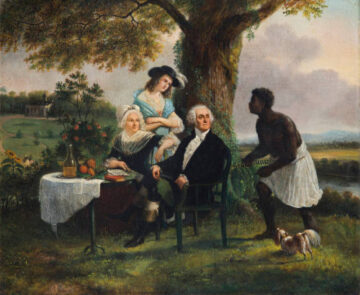



 In a culture oscillating between dietary asceticism and culinary spectacle—fasts followed by feasts, detox regimens bracketed by indulgent food porn—it is easy to miss the sensuous meaningfulness of ordinary, everyday eating. We are entranced by extremes in part because they distract us from the steady, ordinary pleasures that thread through our daily lives. This cultural fixation on either controlling or glamorizing food obscures its deeper role: food is not just fuel or fantasy, but a medium through which we experience the world, anchor our identities, and rehearse our values. The act of eating, so often reduced to a health metric or a social performance, is in fact saturated with philosophical significance. It binds pleasure to perception, flavor to feeling, and the mundane to the meaningful.
 Since 1914, the Federal Trade Commission ‘s mission has been to enforce civil antitrust and unfair competition/consumer protection laws. The question is whether this mission has been supplanted—whether the FTC under Trump 2 .0 is becoming the Federal Political Truth Commission.



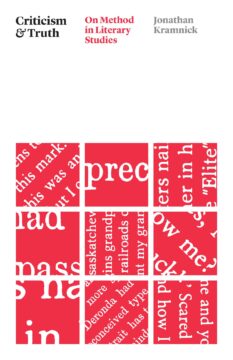 It is now close to 20 years since I completed my Ph.D. in English, and, truth be told, I’m still not exactly sure what I accomplished in doing so. There was, of course, the mundane concern about what I was thinking in spending so many of what ought to have been my most productive years preparing to work in a field not exactly busting at the seams with jobs (this was true back then, and the situation has, as we know, become even worse). But I’ve never been good with practical concerns; being addicted to uselessness, I like my problems to be more epistemic. I am still plagued with a question: Could I say that what I had written in my thesis was, in any particular sense, “true?” Had I not, in fact, made it all up, and if pressed to prove that I hadn’t, what evidence could I bring in my favour? Was what I saw actually “in” the text I was studying?


 Sughra Raza. Colorscape, Celestun, Mexico. March 2025.