by Claire Chambers

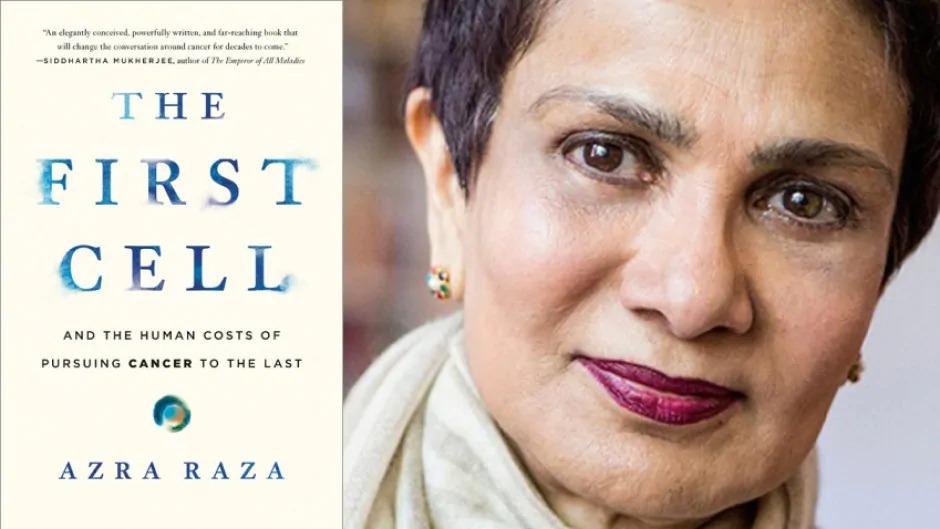
In my last post but one I pledged to continue my discussion of Benazir Bhutto’s two premierships and eventual assassination by examining the legacy she left behind for novelists to explore. Then, of course, the pandemic took hold, and I couldn’t not respond to the global health and welfare emergency. However, now the time seems right to keep my promise. The World Health Organization recently called for Pakistan to re-enter lockdown in some form following a terrifying upsurge of Covid-19 cases, an order that Imran Khan rejected on economic grounds. At a moment in history when Pakistan is crying out for decisive and empathetic leadership, let us consider the multilayered literary response to the country’s first and only female prime minister from three talented women writers.
In Maha Khan Phillips’ satirical novel Beautiful from this Angle (2010), the protagonist, Amynah, is a wealthy, well-educated socialite from Karachi. Amynah writes a scandalous gossip column, ‘Party Queen on the Scene’, but dreams of making a fortune through the publication of a fictional misery memoir about her oppression as a Muslim woman. Phillips intermixes reality and fabrication, as the novel culminates with Benazir Bhutto’s assassination on 27 December 2007. Read more »

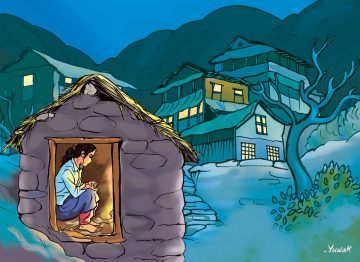 Now that we are witnessing a world that has withdrawn indoors, many people are reading plague literature, discussing Camus and Defoe, and reflecting on the nature of fear and contagion. But there is another kind of literature that lies neglected: stories that reflect the disconnect and dejection of seclusion -the literature of women’s isolation.
 When academics and journalists criticise technology today, they often assume the perspective of a bitter and desperate lover: intimately acquainted with the failings of technology, and vocal in pointing them out, but also too invested and unable to perceive the world without it.
 Gems carry a lure that is quintessentially primeval. Considered valuable throughout human history for obvious reasons such as rarity, durability and beauty, gems are inextricable not only from lore, art, architecture, culture, and craft, but also the aesthetics of language. Stories of different civilizations come to us carved in gemstones— Jade figurines of the Forbidden City in Beijing, lapis funerary masks of ancient Egypt, amber encrusted palaces in Moscow, the fabled and famously fought over “koh-i-noor” diamond, the emerald cups and diamond candlesticks of the Ottomans, the bejeweled “peacock throne,” the rubies of Ceylon— and stories manifold to these in words, from myths passed down via the oral tradition, to scripture, fairy tales, poetry and actual accounts of history, to science talk of archeology and gemology.
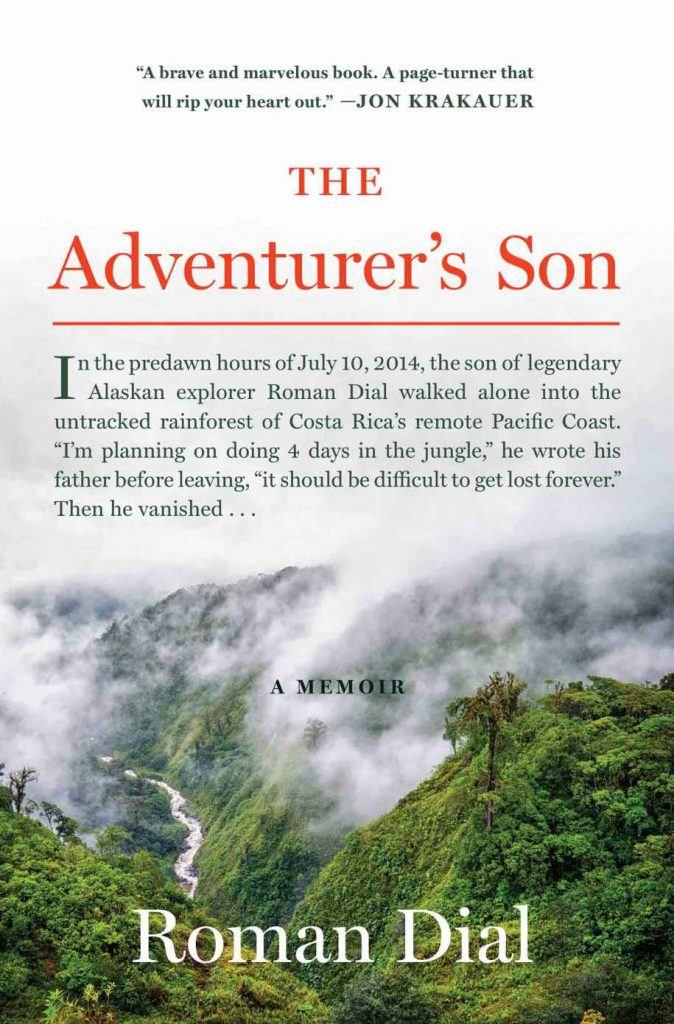 Roman Dial has written a great tribute to his son, indeed to his entire family, in his book The Adventurer’s Son. An adventurer and biologist, Dial writes movingly of his relationship with his only son, Cody Roman Dial in particular and of his accidental death while exploring the rainforests of Central America. Dial’s pride in his son and the pain and grief over his loss are palpable throughout the book. But as Dial himself acknowledges, ‘we never know the future’, and the death of his son at just 27 years old in 2014 is an event he could never have imagined when he began to introduce him to the joys and challenges of exploring the natural world.
 In coping with the dire economic crisis in the wake of the pandemic many developing countries have resorted to cash assistance to the poor for immediate relief. Beyond the relief aspect, many macro-economists have also pointed to the need for such programs to boost mass consumer demand in a period of one of the deepest slumps of general economic activity in many decades. As I have been an advocate for universal basic income (UBI) in poor countries for more than a decade now—my first published paper on the subject came out in India in March 2011 in the Economic and Political Weekly— I have often been asked if the widespread adoption of such cash assistance programs indicates that it is now a propitious time for UBI. While I have supported the cash relief programs in the context of the crisis (most of these programs have not been universal, mainly targeted to the poor) and consider the experience gained in this as generally useful, I think those who like me have supported UBI have usually thought about it in a longer-time framework and in the context of a more ‘normal’ state of the economy with appropriate institutions, political support base, and administrative structures in place. Of course, I’ll not object if in a post-pandemic world attempts are made to help the temporary crisis programs ultimately extend or evolve into a more general UBI program in poor countries.
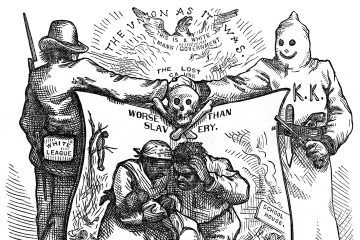 What does it mean to be white in America in 2020?
 May 26, 2020

 Have a look at the
  In thinking about knowledge and consciousness, it is just about irresistible to distinguish between the basic facts of what we observe and interpretations or beliefs about those facts. You and I see the same glass of water – maybe our perceptions of the glass are nearly identical – and yet you see it has half full while I see it as half empty. We look at the same economic reports, and you find reason to celebrate while I find cause to worry. We see an artificial satellite in orbit, and you see it an incursion of government and industry into space while I see it as a glory of science and engineering. And so on – it seems obvious that there is a divide between what everyone can plainly see and what’s a matter of interpretation.