by Carol A. Westbrook
We think about our fathers during the month of June. Father’s Day is a time to remember these beloved men, especially those who have passed. We reflect on how remarkable their live were, and of so many questions we’d ask them if they were still alive. I’ ask my Dad what he would have done if we were living together at home during the Covid-19 epidemic.
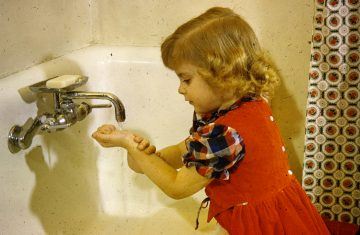
Actually, I don’t need to ask him; I know exactly what he’d do. He’d have followed the guidelines to the letter. He would set the family rules: 1. Masks and gloves when we go out — and no more family drives for hot dogs, Italian beef, or ice cream cones. 2. Wash hands a lot. 3. (That’s me in 1956, doing the right thing!) Play only in our yard, and not with other kids–so no more wiffleball games in the alley, or running under the sprinkler on the front lawn. 4. Meals together, as usual. 5 Pray together as a family every night. For supplies, he’d take advantage of our well-stocked basement “bomb shelter” storage, pantry and deep freezer.
Dad would have obtained supplies for the lockdown using connections at his workplace, the Chicago Board of Education. In true Chicago style, he would call in favors or promise favors of his own, like a good word to a Department head for a city job. Or he could offer professional family portraits, or wedding photos. He also had gossip and information to share. Read more »
 When I feel myself becoming irritable, disheartened, or just plain fed-up with life during the pandemic, I find it helpful to conduct a thought-experiment familiar to the ancient Stoics. I reflect on how much I have to be grateful for, and how things could be so much worse. That prompts the more general question: Who are the fortunate, and who are the unfortunate at this time?
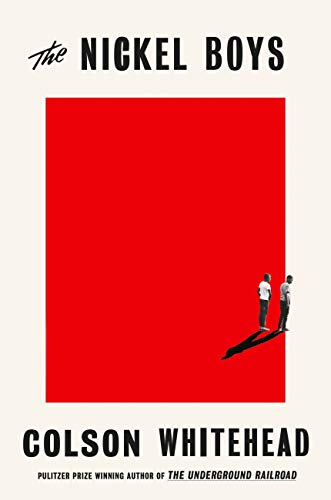 Colson Whitehead won his second Pulitzer Prize for The Nickel Boys in 2020, joining the ranks of three other writers recognized for the rare honor. His first was for another historical fiction The Underground Railroad in 2017. What are the odds of winning the Pulitzer for two books that deal with the same subject – the troubled race relations in America? Pretty good, I would say, if your second book is as brilliant as The Nickel Boys.
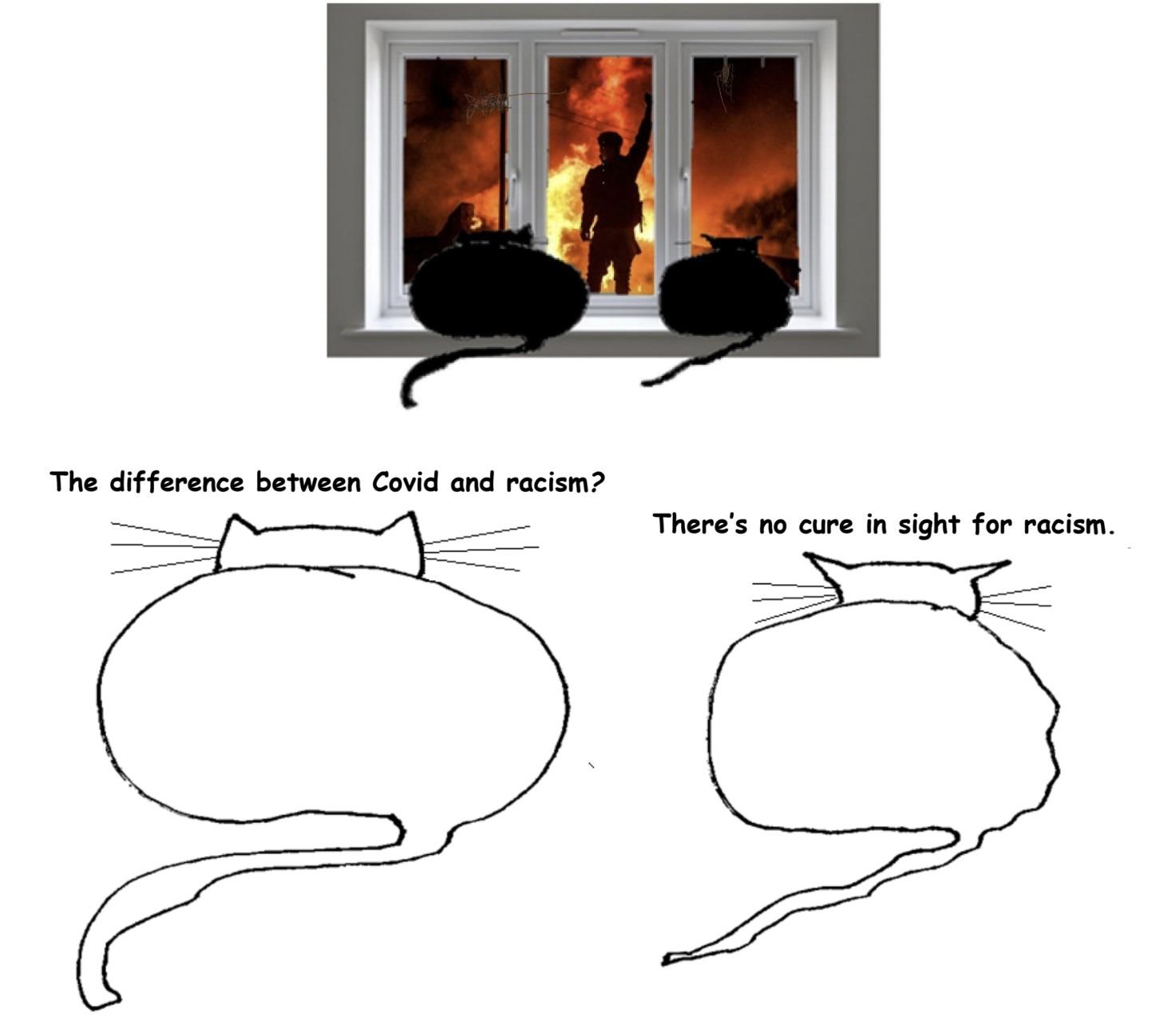
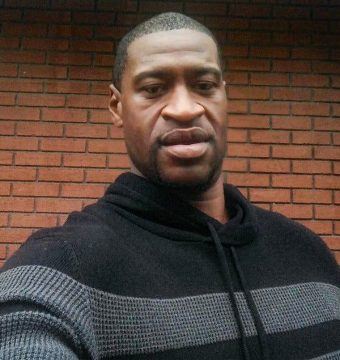 It feels impossible this week not to talk about George Floyd, and yet it feels as if talk has become egregiously cheap, less a mechanism for change than a means of resting in paralyses of complacency, disbelief, or comfort. When rage, grief, frustration, and loss take over communities, states, and entire countries as they have this week, words feel at once like our most important tool and a frantic means of filling what could otherwise be a devastating silence. How do we address a racism so deeply ingrained in society that it feels woven into every fiber of our country’s foundation—and, indeed, was there at the United States’ genesis, when black bodies bolstered a white economy at the expense of their lives, health, and humanity, and in the process built what we so misguidedly call the land of the free, the world’s first great democracy?
 My father had an immensely fat friend whom I often glimpsed filling a plate alone at the buffet table of the King Eddie’s restaurant as I walked past that grand hotel. This man himself had a father even then in those days a nonagenarian, whom he saw daily, devotedly, taking him to the pool for a swim. It turned out that, obesity or no obesity, the friend would outlive my own father by twenty years. Because I liked the man very much, his longevity does not strike me as an injustice. He had a snuffling voice, small but piercing eyes, a gigantic nose and a fund of forgiving affection, the kind dispensed even in the awareness that what was being forgiven might have been awful. He preferred not to know, though his ignorance was (if I may venture a paradox) well informed. My mother played matchmaker for decades in his behalf, possibly because she found him appealing. Her stratagems did not avail. His marvellous acquitting heart remained unpaired.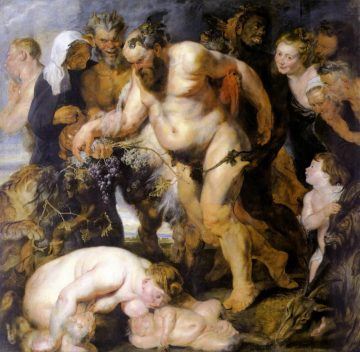
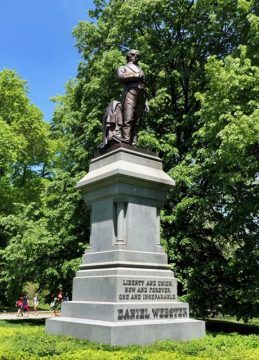 There is a statue of Daniel Webster in Central Park. It is tucked in at the intersection of West and Bethesda Drives, massive and unmoving, implacable and forbidding. Despite its size, it goes largely unnoticed, except as a meeting point.
 I’ve taught shittily these last two months. That’s nothing a teacher ever wants to admit and normally has no excuse for, but these are not normal times.