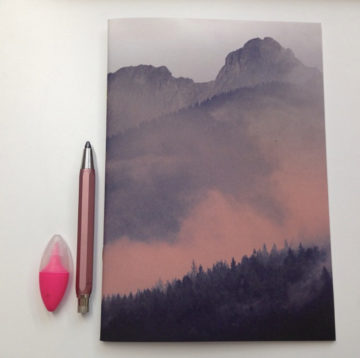
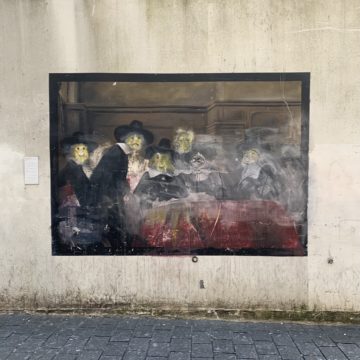
I shot this slow-motion video in January of 2017 in Vahrn, South Tyrol.
Maryam: David Barsamian and Rafiq Kathwari share family histories in an exchange of letters
Dear Rafiq,
I just received your new book of poems, “My Mother’s Scribe,” and was delighted to learn your mother’s name is Maryam.
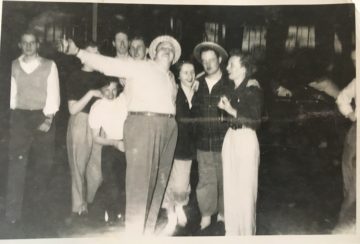
My maternal grandmother was named Maryam. My mother (Araxie, ten-years old) last saw her and her 3 younger brothers in Urfa on the Death March in 1915. They were in bad shape. Presumed dead. Her father, Giragos, my maternal grandfather, was killed in their village before the Death March began. My paternal grandfather, Barsam, was killed in a massacre in 1895, when my father was born. Araxie ended up in an orphanage in Aleppo where she was from 1915-1921, when she went to Beirut, where she met and married my father.
By ship to France and another ship to New York where they lived for the next many decades at 521 E. 87th St, between York and East End. Father had a grocery store; we lived three flights up in a railroad flat. My father, Bedros, 80-years-old, was hit by a car at 87th and First Ave, just a block and a half from their apartment, in late January 1975. It was a Saturday. The car was driven by (I later learned) a Turkish doctor!
My father had escaped from the Turks in 1912 when he was 17. He reached New York in 1914. Some of his fellow Villagers—he was from Nibishi in Palu district, were already in New York. One of them was his brother-in-law, Kevork Garabedian. His wife, my father’s sister, Anna, was still in the “old country.” Bedros would not see her again until 1921 when they, including Araxie, all met in Beirut. Read more »
You’ve Got Mail —Junk Mail, That Is
by Carol A Westbrook

There was a time when getting an email was a rare event, a special event. Remember the 1998 film, “You’ve got mail,” in which Meg Ryan meets Tom Hanks in an online chatroom? Not recognizing that they are business rivals, they eventually fall in love, in what is perhaps the first online romance. Email was still a novelty in 1998, since mail programs had only been around for a couple of years, and the world wide web itself had only been available for 6 years.
That was then. Now, there are over 200 unsolicited emails coming into my mailboxes each day–so many that I can’t find the ones from my friends or colleagues amid the mess. And due to my junk mail filter–a necessity nowadays–I risk missing e-bills and important notices. Amid this mess, so many of my friends have just stopped using email that I can’t be sure that a message I send will be read. I have to reach them by other methods, sometimes text or Instant Message, an even old-fashioned phone call!
What happened to email? Spam happened. Read more »
Monday, March 8, 2021
Hidden Worlds: Science, Truth, and Quantum Mechanics
by Jochen Szangolies

Hearing the words ‘quantum mechanics’ usually invokes images of the impossibly tiny and fleeting, phenomena just barely on the edge of existence, unfathomably far removed from everyday experience. Perhaps illustrated in the form of bright, jittery sparkly things jumping about in a PBS documentary, perhaps as amorphous, hovering blobs of improbability, perhaps, sometimes, by the confounding notion of a cat that’s somehow both dead and alive, yet neither of those.
This does the subject a disservice. It paints a picture of quantum mechanics as far removed from everyday experience, as something we need not worry about in everyday life, something for boffins in lab-coats to contend with in their arcane ways. Yet, we’re told of the fantastic properties of the quantum world: particles that can be in two places at once, or spontaneously erupt out of sheer nothingness; that can jump through walls and communicate with one another across great distances instantly; that seem to know when they’re being watched; that are somehow both wave and particle; and so on.
Quantum reality, then, is at once beyond our grasp and, apparently, a source of fantastical properties. This combination has always marked the arena of the mystical: something just out of reach, something fundamentally unknowable, that, nevertheless, holds the promise of opening the doors to a strange, new world—to powers far beyond those the mundane world holds in store. The quantum world is a hidden world, and, like other hidden worlds throughout history, access to it becomes a coveted resource—to the profit of those purporting to be able to grant it. Read more »
Piling “On Bullshit”
by Joseph Shieber

One of the most highly publicized philosophy papers of the 2000s was a paper that was actually written almost two decades earlier. Harry Frankfurt’s paper “On Bullshit” was first published in 1986, but some astute editor at Princeton University Press, noting its aptness for the George W. Bush era, reprinted the paper as a slim book.
The effect was electric. Frankfurt’s essay appeared in January of 2005 and was on the New York Times bestseller list for almost half of the year. Among Frankfurt’s many media appearances was a notable interview on The Daily Show with Jon Stewart about the book’s subject matter and its unexpected success (success so surprising that the Daily Show also interviewed a representative of Princeton University Press to discuss it).
According to Frankfurt’s discussion, “bullshit” refers to intentionally misleading communication in which “the bullshitter hides … that the truth-values of his statements are of no central interest to him; what we are not to understand is that his intention is neither to report the truth nor to conceal it. … the motive guiding and controlling it is unconcerned with how the things about which he speaks truly are.” Read more »
Monday Poem
9-Lived Cat
where?
where are you,
……….. on the willow-hung swing
……….. in a field of golden grass?
where,
……….. in the hemlock
……….. straddling the limb at top
……….. hands sticky with sap?
are you
……….. sitting on the well-house step
……….. with the lake at your back
……….. remembering a future of
……….. yes! or collapse?
are you
……….. on the topmost deck above the bridge
……….. gripping the cable-rail fast
……….. exhilarated at how the bow’s pitch feels
……….. spearing a new wave’s gut
……….. as green water breaks over steel
……….. and you feel on your face
……….. the meaning of. Splash! ?
where,
……….. among zucchini
……….. grubbing for those green and fat
……….. or off on a high in a twelve-string cage
……….. trying to strum the truth in that?
where, where?
……….. still tumbling up a shaft
……….. like a 9-lived cat
……….. ?
Jim Culleny
6/18/18
AI as Scientist, AI as Artist
by Robyn Repko Waller
We think of AI as the stuff of science, but AIs are born artists. Those artistic talents are the key to their scientific power and their limitations.
We often seem to conceive of artificial intelligence (AI) as implementing an abstract, advanced version of the scientific method. Think, for instance, of recent successes in utilizing machine learning techniques to identify potential effective in-use drugs for combating severe COVID in the elderly. Here a machine learning technique, auto encoder, analyzed large data sets of genetic expression and how these genetic expression patterns were impacted by available drugs as well as by SARS-CoV-2. With AI, the pace of clinical trials, and so the timing of life-saving treatment, is quickened.
Or take the recent application of machine learning, specifically deep residual neural nets, in astrophysics to datasets of known gravitational lenses as a method of locating previously unknown galaxies exhibiting gravitational lensing. Gravitational lenses are observable warping of spacetime in images of distant galaxies. Observation of these gravitational lenses is critical for furthering understanding of the fundamental nature of the Universe, including black matter, but are not easily detected despite powerful observational telescopes and spectroscopic technology. Such discoveries, made possible via the coordination of machine learning and other tech-driven astrophysics, have doubled the number of known gravitational lenses, significantly advancing our ability to understand the fundamental properties of spacetime.
These collaborations between machines and human scientists seem to be a good fit precisely because what the scientists aim to do — identify the underlying workings, patterns, and structures of observable phenomena of interest in our natural world. The power of human scientists, utilizing experimentation and sophisticated instrumentation, to fruitfully theorize about this underlying reality is great, but combined with the power of AI is exponentially greater. And faster. Read more »
Perceptions
The Great Erasure of (Special) Education
by Tamuira Reid

This is my son, Ollie.
This photo was taken five years ago. It’s one of my all-time favorites because of the look of absolute pride on his face. Hard-earned pride. I realize that pre-k graduation isn’t the most celebrated of milestones for a lot of families, but for us it was huge; Ollie was about to go mainstream.
Looking back at that little boy, and reflecting on the kid he is now, I feel lucky that we live in a city like New York. A city that has endless resources, creativity, spirit, hustle. The city that has taught us what it means to be humble, be grateful. A city that has afforded my disabled son access to an equal and appropriate education, and a public school with teachers who have loved and unconditionally supported him. A city that knows how to rally.
This is my son, Ollie.
Currently a proud in-coming fourth-grader, but with the same coke-bottle glasses and wide, generous smile. His backpack is usually absent-mindedly left open, and is stuffed with graphic novels, half-eaten bags of flaming hot Cheetos, a stress ball, and various contraband (slime, hotwheels cars, Skittles to share on the bus with potential friends, Pokemon cards to trade although he hasn’t figured out exactly how). As he passes you during drop-off, he will greet you with a “Good morning!”, maintaining direct eye contact, something that still feels, at times, unnatural to him.
Ollie Duffy doesn’t really walk from point A to point B, because the “electricity” running through his body, as he’d tell you, is hard to control. His movements are a little bit “more slippery” and unpredictable, like a sideways skip/grapevine type of thing, until he inevitably trips over his own feet. And even though he knows where he’s supposed to go, he often forgets mid-journey.
If Ollie sees your child crying, he will try to comfort them. Usually with a hug, sometimes with a Skittle. If that doesn’t work, he’ll sit nearby so they don’t feel alone. If Ollie is in class with a bully, he’ll feel sorry for them because being angry can mean you’re just frustrated, and he knows how that feels.
This is my son, Ollie.
Heart as big as the planet. Read more »
‘Consolation’: A poem for now
by Emrys Westacott
A friend, knowing that I’ve been learning German, recently sent me a volume of Theodore Fontane’s poetry. Fontane (1819-1898) is best known today for the novels that he wrote in the later part of his life. But some his poems have an affecting simplicity–a simplicity that is perhaps especially charming to those of us who are less than fluent in German. Here is one lyric that particularly caught my attention. It expresses a sentiment that seems most suitable to the present time as we approach the end of a bleak winter and, one hopes, of a devastating pandemic. Naturally, the translation takes some liberties in an attempt to retain something of the feel and spirit of the original.
Trost Consolation
Tröste dich, die Stunden eilen, Be comforted, the hours fly,
Und was all dich drücken mag, Like everything that’s sad and grey,
Auch das Schlimmste kann nicht weilen, Even the worst will pass on by,
Und es kommt ein andrer Tag. And there’ll come another day.
In dem ew’gen Kommen, Schwinden, In life’s eternal rising, falling,
Wie der Schmerz liegt auch das Glück, Happiness lies alongside pain,
Und auch heitre Bilder finden And, like the sunlight, brighter scenes
Ihren Weg zu dir zurück. Will find their way to you again
Harre, hoffe. Nicht vergebens Be patient, hopeful. It may help
Zählest du der Stunden schlag, To count the striking hours away.
Wechsel ist das Los des Lebens, One’s lot in life is always changing,
Und – es kommt ein andrer Tag. And – there’ll come another day.
The Never-ending Twists about ‘The French Disease’
by Godfrey Onime

I am reminded of an observation made by an African comedian at a wedding reception I once attended in Atlanta. He quipped that the English language tends to identify even the most hideous diseases by the most beautiful names. Names so lyrical, so poetic, so sensuous you almost wish to contract the disease. He rattled off some examples: Hepatitis. Cholecystitis. Syphilis. Cancer. “How beautiful!” he exclaimed.
The jokester contrasted this proclivity with some gruesome names Africans assign to even the most benign conditions, such as with the Yorubas of Nigeria — Lapalapa (for dermatitis); or jedijedi (for diarrhea). The comedian may romanticize the English names for diseases, but not so with most of my patients. Especially not so with the middle-aged woman whom I diagnosed with syphilis a few years back. “You mean my nose could fall off?” seemed to be her biggest fear, explaining that she once heard that syphilis could destroy the “snout,” as she put it.
I scrutinized the woman, taking in her straight nose and high cheekbones. Giggling, I said, “Maybe you get to go back in time and join the ‘No Nose Club’. Perhaps you could find out who Mr. Crumpton really was.”
“Mr. who?”
###
Beautiful or not, it turns out that the origin of the name for syphilis, ironically, came from a poem, written by Girolamo Fracastoro, an Italian physician, scholar and poet. The poem, Syphilis sive morbus gallicus (translated to Syphilis or The French Disease), tells the story of a shepherd boy named Syphilis who angered the Greek god Apollo and was given the disease bearing his name as punishment. Although the affliction was more colloquially called “The Pox,” the term syphilis stuck as the proper name. Read more »
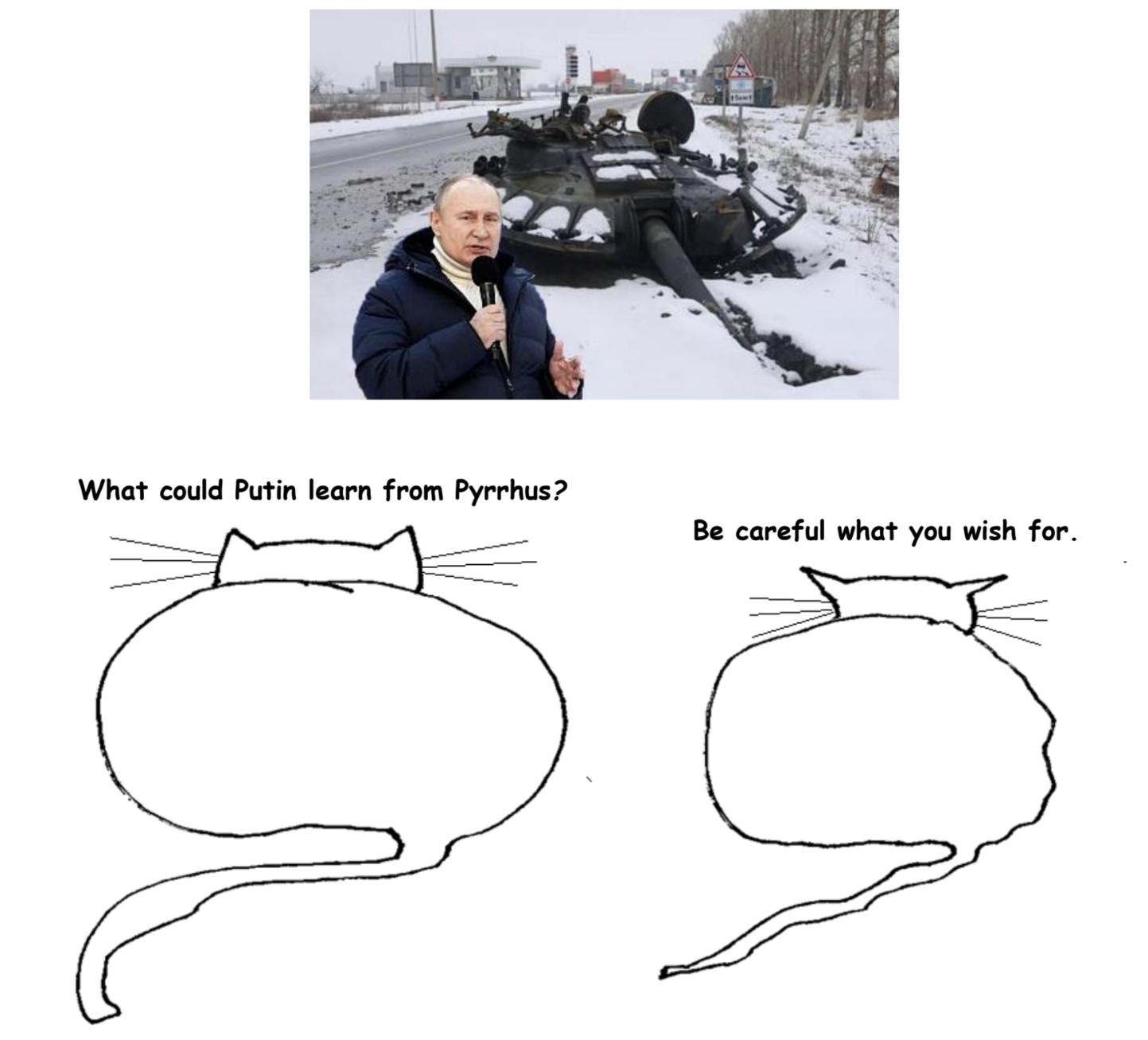
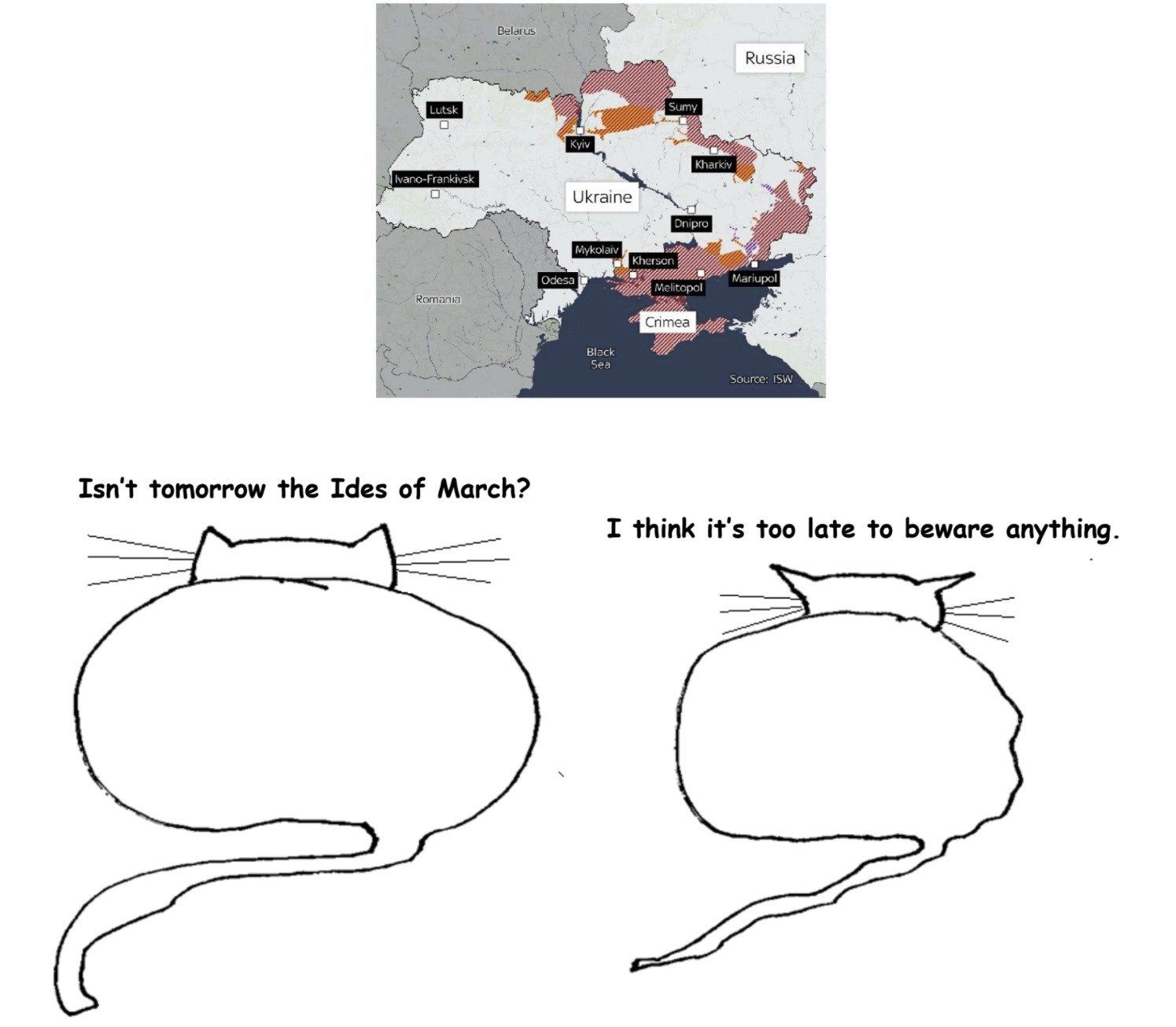
Catspeak
by Brooks Riley

A Voyage to Vancouver, Part Four
by Eric Miller

Discovery
Conditions on the ground, if you want the moral of a garden or this excursion right away, are widely discrepant from what they look like from afar. In this respect, naturalists concur with soldiers.
Linnaeus’s Philosophia Botanica, a manual for those with some interest in plant life, tells the eighteenth-century traveller to attend to everything, etiam tritissima, even the tritest, the most well worn, entirely commonplace things. Nowadays we use the word “non-descript” when we want to avoid talking about what is so boring there are no words for it but that adjective. Yet in Linnaeus’s day “non-descript” meant something no one had ever said a word about, in a particular way—a naturalist’s way. Times change but a botanical garden is about philosophy still, it is about discovery don’t you think? Discovery, collection, not to say exclusion are obvious topics once we consent to enter the precincts. How does discovery differ from inventing? Who discovered what? How we discover is naturally a dimension of what we discover. That revelation goes on. We discover meanwhile what we can, there is much we cannot, such is our constitution. Or we discover it, and we forget it. I could not even recount this experience had I not already substantially forgotten it. Obliviousness is the prerequisite of any chronicle. So welcome to Van Dusen Gardens, Vancouver.
Rules for visitors
Do you hear that, too? Could I be right? Yes, it is the voice of a daemon—the Genius of the Place. What could this Spirit be saying? Read more »
Not Even Wrong # 9: They marched us to a room with yellow walls
by Jackson Arn
They marched us to a room with yellow walls
and tables painted pink, like our uniforms
so we could sit and disappear. We wandered
by tiles and corners, carrying the stink
of desperation. A chair caught me,
because it thought I needed something old
to steady me, and it had the canniness
to offer me a book I used to read
before I got lost. Everything had changed
except the picture on page four, a trout
about to feed a mad king in a bath.
We’d stayed the same size: fish soon to be food,
globe-eyed babyish unthinking gusto,
and me, reading myself back to the flood.
Wine Appreciation, Irony, and a Game of Striving
by Dwight Furrow
For many wine lovers, understanding wine is hard work. We study maps of wine regions and their climates, learn about grape varietals and their characteristics, and delve into various techniques for making wine, trying to understand their influence on the final product. Then we learn a complex but arcane vocabulary for describing what we’re tasting and go to the trouble of decanting, choosing the right glass, and organizing a tasting procedure, all before getting down to the business of tasting. This business of tasting is also difficult. We sip, swish, and spit trying to extract every nuance of the wine and then puzzle over the whys and wherefores, all while comparing what we drink to other similar wines. Some of us even take copious notes to help us remember, for future reference, what this tasting experience was like.
In the meantime, we argue with each other on Twitter fighting over whether a wine is terroir-driven or a technological abomination, typical or atypical, over-oaked or under ripe. We scour Wine Spectator‘s Annual Top 100 looking for who’s up and who’s down and complain about inflated wine scores and overblown wine language.
In other words, we really seem to care about getting it right, identifying a wine’s essence and properly locating it in the wine firmament. We want our judgments to conform to the actual properties of a wine and its relations. Read more »
Monday Photo

At the deserted millennium-old abbey at Neustift in the South Tyrol a couple of days ago.
‘Coming 2 America’ Has Some Chuckles but Mostly Falls Flat
by Alexander C. Kafka
Covid has killed two and a half million people worldwide. A conspiracy-embracing, white-supremacist, fascist cohort of Americans are represented by opportunistic enablers in Congress. Texas diverts attention from its fatal mishandling of a winter storm by prematurely and irresponsibly declaring the end of the pandemic. And after a year, we’re all mostly still isolated at home — that is those fortunate enough to have a home in the wake of financial chaos.
I don’t know about you, but I could use a laugh.
Thus I was looking forward, beyond all measure, to the sequel to Coming to America (1988), that whimsical, goofy, good-hearted John Landis-helmed star vehicle for Eddie Murphy in his prime.
Its successor, Coming 2 America, is, alas, a forced, lavishly produced clunker that tries to make up in guest stars what it lacks in purpose. Directed by Craig Brewer, it has a few chuckles, eye-popping costumes by Ruth E. Carter, some moments of nostalgic glow around its multi-generational cast, and a reprise of amusing prosthetic-job character bits for Murphy and Arsenio Hall. But it mostly wastes its stars’ talents in an overworked and uninspired script. Read more »
Monday, March 1, 2021
Pragmatism as philosophical tool design
by Dave Maier
One problem plaguing contemporary anti-Cartesians (pragmatists, Wittgensteinians, hermeneutic philosophers, etc.) is that it can seem that we are competing against each other, trying to do better than everyone else what we all want to do: get past the dualisms and other infelicities of the modern picture while at the same time absorbing its lessons and retaining its good aspects. We waste our time fighting each other instead of our common enemy. Why is it so hard to see ourselves as all on the same team?
One reason is that when push comes to shove, or even before that, we simply follow traditional philosophical practice by providing arguments to show that we are right and they are wrong, thus construing the differences among our views as constituting differences in belief rather than, for example, the practical differences between different tools or perspectives. It is as if we have internalized the traditional criticisms: that we have abandoned objective truth and the objective world it represents in favor of our own subjective purposes. No, we say, watch us talk among ourselves! We care about truth just as much as you! Phenomenology is false and pragmatism is true, as my fully rigorous and entirely professional argument shows! Assent is required, on pain of irrationality!
Even when we’re not fighting among ourselves in this way, that same metaphilosophical ideal can still cause trouble. For instance, I have chosen to present my particular brand of anti-Cartesianism as a characteristically pragmatist philosophy. Naturally I draw inspiration and/or ideas from philosophers who do not identify as pragmatists (after all, we all reject the Cartesian mirror of nature). But in practice this can lead to some discomfort. If while pushing a pragmatist line I help myself to a Wittgensteinian (or Davidsonian or Nietzschean) insight, the question will naturally arise: what entitles me to enlist these people in my cause? Am I saying Wittgenstein or Davidson was a pragmatist? What should I make of the differences between these very different philosophers? Read more »
Why we need Virtue Ethics
by Martin Butler

For many years I taught ethics to 16-19 year olds, and was often struck not only by how strongly certain ideas resonated with the students, but how unfamiliar they were with these big ideas, the product of hundreds of years of western culture. Kant and virtue ethics in particular seemed to chime with them. It made me think that these ideas should not be restricted to the narrow group of individuals who happen to have chosen to study philosophy. They are not academic curios but immensely influential and should surely be part of any ethical education. I believe that a knowledge of virtue ethics in particular could help today’s young people navigate the complex and often frightening world that they face.
Traditionally religious education has been the arena where ethical topics are covered, usually with the focus on ethical dilemmas such as euthanasia, abortion, and the status of animals. These are important and interesting topics that need to be discussed but they don’t provide the kind of ethical framework I have in mind. The treatment of ethics at this level can often produce a kind of paralysis of neutralism, a kind of ‘some people say this and others say that – take your pick’ approach, though there are areas where a more assertive line is taken.
No one denies, for example, that we really do have certain rights, this is beyond opinion. In the UK recently there has also been a push to include in the curriculum what are described as ‘British values’ (I have never been quite sure why they are distinctly British.) These comprise the rule of law, tolerance, democracy, and individual liberty. Other values such as equality, respect, diversity, inclusivity are also often given prominence. All of this is important but not enough. It is quite impersonal and abstract and hardly helpful to someone seeking a more direct guide on how their lives might be led. These ethical ideas are also quite static. You either accept them or you don’t, and there is no developmental dimension that could connect with someone wanting to improve their life both ethically and psychologically. Religious belief can give this more personal kind of guidance but there should surely be something that fills this role for those who are not religious. Read more »
“Indians – A brief History of a Civilization” by Namit Arora
by Ruchira Paul
Travelers to India came from all corners of the world through the ages for different reasons. The very first modern humans probably came there in order to escape harsh climate conditions elsewhere in the world. Latter day visitors arrived with varied objectives in mind. Some came seeking material fortune, some for spiritual enlightenment and others merely out of curiosity. A few who came, took what they wanted and left. Others came to conquer and decided to stay and make India their home. Then there were mercenary visitors who looked at India as a vast revenues source for enriching themselves and their own native lands while also seeing an opportunity to instill their religious and “civilizing” values on a foreign nation. They too decided to stay but never thought of India as home. India still attracts visitors from across the world. Most come as tourists to check out its numerous and varied natural and historical vistas (there is always the Taj Mahal). Some may be enticed by more quirky and personal adventures such as chasing the monsoon or seeking the ever elusive spiritual and emotional fulfillment. Scholarly pursuits and business opportunities attract others to the second most populous nation in the world which defines itself as a multi-cultural modern day free market democracy with an ancient checkered past that is a palimpsest of layers upon layers of human foot print left by visitors who crisscrossed its landscape in all directions for many thousands of years.
The author of “Indians…” Namit Arora is a visitor in his own land. Born and educated in India, Arora left for foreign shores to pursue higher education and later a career as an engineer in Silicon Valley. After two decades of living abroad, in 2013 he returned to India to settle there permanently. This book is the record of his travels through India to the same places first in 2006 and a return visit in 2019. The author speaks both as an insider familiar with India as also an outsider who can examine the country of his birth through the lens of a global perspective. Arora is an enthusiastic and informed world traveler and photographer who periodically took time off from work to visit many far corners of the world. Read more »