by Rafaël Newman
 It’s been 40 years this past month since the election of François Mitterrand as President of France. Today, June 21, is the day chosen by his first Minister of Culture for the Fête de la Musique: what has come to be known as “World Music Day” in the English-speaking countries that have since, along with scores of others, enthusiastically adopted the annual festival.
Mitterrand was the first Socialist in the history of the Fifth Republic to attain the office of president, and his term, historic as well for its unprecedented (and still unrivalled) duration, was characterized among other things by grand gestures of support for culture, both classical and popular, focused not only on Paris but increasingly on the cities and towns of the traditionally underserved French provinces. Following a nation-wide study of amateur musicianship commissioned by Culture Minister Jack Lang, which found that one out of two young people in France play a musical instrument, Mitterrand’s government in 1982 initiated the annual Fête de la Musique, to be held on the day of the summer solstice, and to feature multiple, simultaneous public performances by musicians, both amateur and professional, playing for crowds of varying dimensions, from busker’s circle to stadium-sized audience.
Although Mitterrand’s cultural policy was in some respects a continuation of his predecessor’s efforts at modernization and opening, Giscard’s patrician air had lent his presidency the cast of a bygone era, and it was left to Mitterrand, the former Vichy functionary and perennial also-ran, to reap the benefits of a sea change in French public affairs, symbolized in part by the Fête, an annual celebration of a vital, and vitally homespun, national creativity. The Fête was thus effectively part of an image campaign: a rebranding, or, less cynically and more in keeping with the cultural theory of the era, a re-imagining of the French community, and a libidinous recommitment to its revolutionary pillars of liberté, égalité, and fraternité. Read more »


 When we were young, most of us indulged in the speculation, “What do I want to be when I grow up?” Many of us said things like a firefighter, a doctor, a nurse, or a teacher. As children, we instinctively looked at the world around us and recognized the careers that seemed to have purpose and meaning, and that seemed to make the world a better place. I can’t imagine that many 5-years olds dreamed of being paper pushers or spending their days doing data entry. But we grow up. People around us have expectations for us; we have expectations for ourselves. We might have academic challenges, financial needs, family obligations. We see the world and the careers open to us as more diverse and as more challenging than the Fisher-Price Little People figures that characterize the world for a child. And so, many of us lose that childhood idealism and just get a job, get on the career ladder, put our noses to the grindstone.
 The desire to turn failure into a learning opportunity is often generous, and an important way of dealing with the trials and tribulations of life. I first became aware of it as a frequent trope in start-up culture, where, influenced by practices in software development where trying things out and failing is the quickest way to get to something of value, we are constantly subject to exhortations to “fail fast and fail forward”. Many workplaces now lionise (whether sincerely or not is another matter) the importance of learning through failure, and of creating environments that encourage this.
 If you’d like to start at the beginning, read
 ‘
‘ In
In 
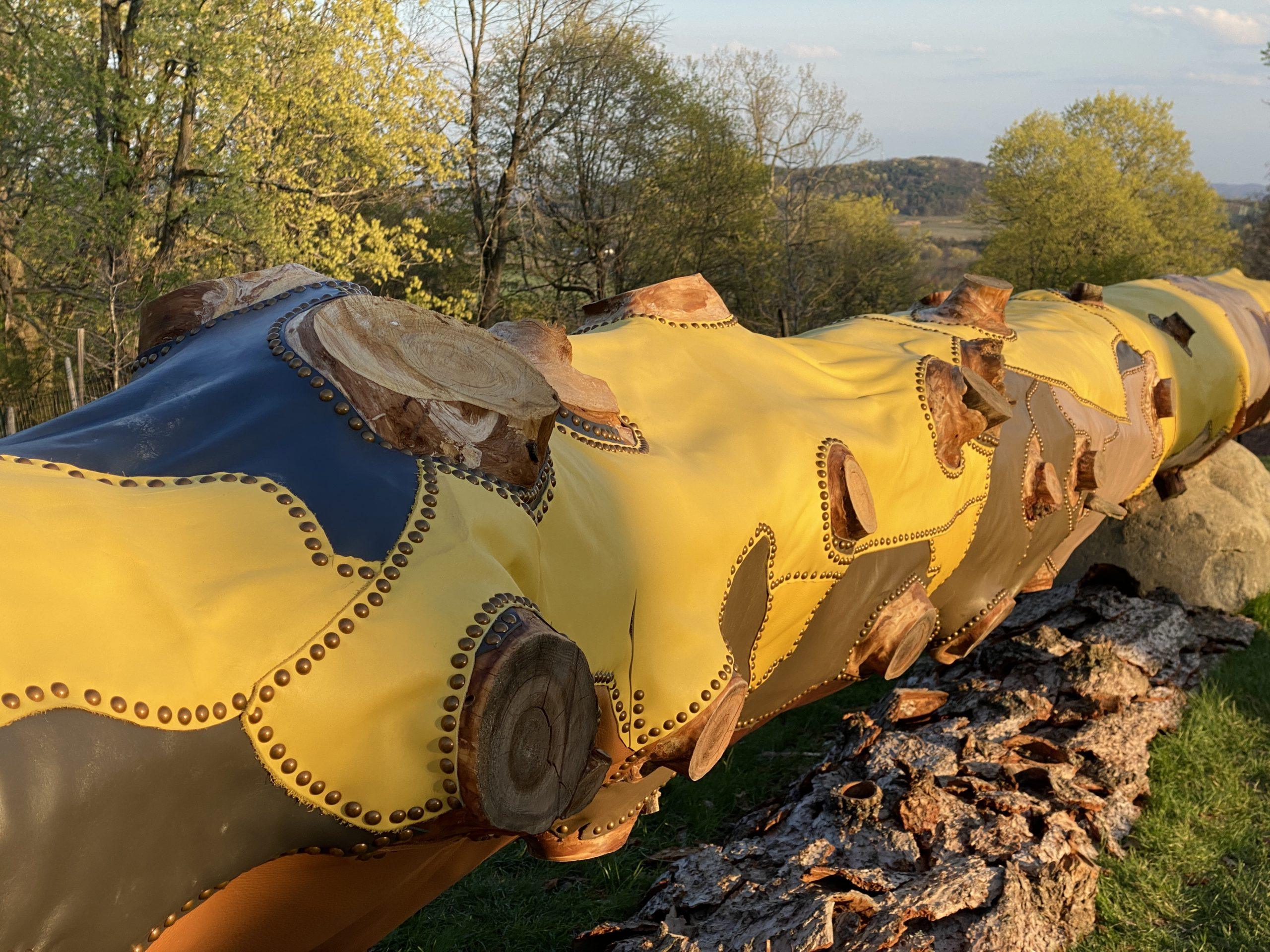 Jean Shin. Fallen. Installation at Olana State Historic Site, New York.