
by Rafaël Newman
History is the one true fatality: you can re-read it as much as you like, but you can’t re-write it. —Laurent Binet
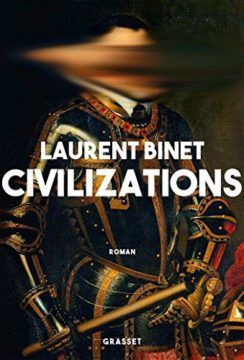 One of my oldest friends, an economic historian who serves as the Academic Director of a museum of Jewish life in northern Germany, is, like me, a child of May; and, during our recent birthday month, as is our custom, we exchanged gifts by post. Since we also share a love of books and history and a taste for grand, occasionally outlandish theory, as well as an abhorrence for futuristic science fiction, the novels we sent each other were in equal measures fantastical and backward-looking: examples of counterfactual historical fiction, what has come to be known as uchronia, the imaginative remaking of a bygone era that is the temporal counterpart to utopian geography.
The birthday book I received from my friend, Der Komet (2013), by Hannes Stein, a German foreign correspondent in the US, re-imagines the 20th century without the colossal conflicts that grew out of the assassination of Archduke Franz Ferdinand in 1914. “One billiard ball clicks against the next,” Stein writes, in an appendix detailing the events elided (or avoided) by his alternative history: “The shots fired in Sarajevo >> the First World War >> the Second World War >> the end of the colonial empires, since imperialism had become too costly for the colonial powers.” Stein’s intricate, multi-character novel is set in an Austro-Hungarian Empire still in existence in the year 2000, one in which the Polish and Ukrainian questions have been settled in a series of minor skirmishes and peaceful negotiations, and assimilated Jews pursue their careers unmolested by a fringe party of anti-Semites. Stein mingles nostalgia for the Habsburgs with an implicit and rueful recognition of the progress that was in fact born of war in the actual 20th century: not only the waning of colonial domination, which in Stein’s world is still carried out only by the “barbarian” Japanese in China, but also the spread of pan-European female suffrage, which in Der Komet has only come, with veritably Swiss tardiness, following the revolts of 1968.
Der Komet’s resuscitation of vanished empires is reminiscent of the encomia for imperial cohabitation that appeared in some otherwise liberal quarters when the USSR was disintegrating, and Yugoslavia was going up in smoke, in the 1990s. The Ottomans and the Habsburgs may have been bigoted and repressive, the argument ran, but at least they (and, in their image, the regimes of Gorbachev and Tito) had kept the inter-ethnic peace. And indeed, Stein, a naturalized American and right-of-center moderate who switched his party affiliation from Republican to Democrat only with Trump’s rise, has one of his novel’s more sympathetic characters preemptively eulogize the Austro-Hungarian Empire (spoiler alert!) as “reactionary, progressive, and humane”. Read more »

 It wasn’t effortless but we managed to mollify, sidestep and defy enough authorities to be legally resident in Finland for the month of July. Never mind shoes and belts off and toothpaste in a plastic bag. No, do mind; do that too. But add PCR test results, Covid vaccination cards and popup, improvised airport queues. And a novel Coronavirus variant: marriage certificates on demand.
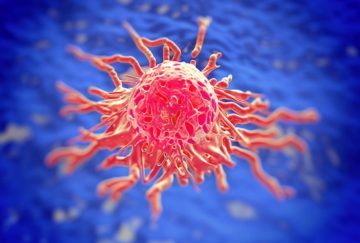 Cancer has occupied my intellectual and professional life for half a century now. Despite all the heartfelt investments in trying to find better solutions, I am still treating acute myeloid leukemia patients with the same two drugs I was using in 1977. It is a devastating, demoralizing reality I must live with on a daily basis as my entire clinical practice consists of leukemia patients or leukemia’s precursor state, pre-leukemia. My colleagues, treating other and more common cancers, are no better off. I obsess over what I have done wrong and what the field is doing wrong collectively.
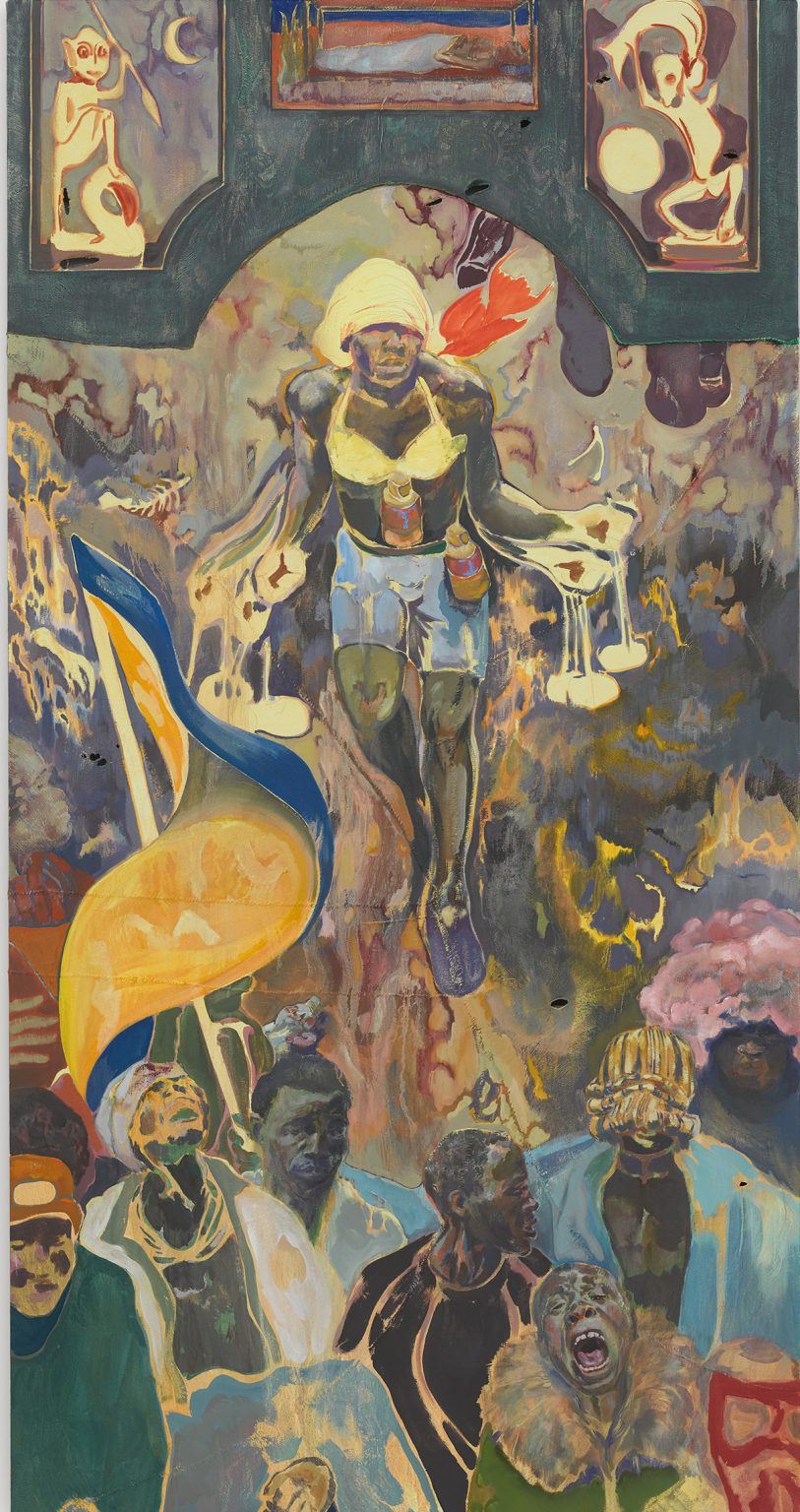
 Covid-19 has led to various reactions akin to the various phases in the process of grieving.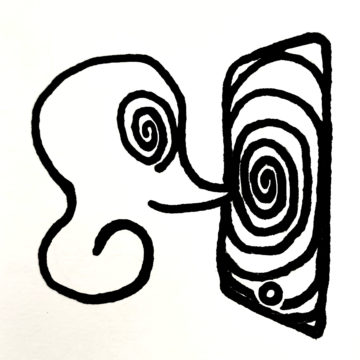
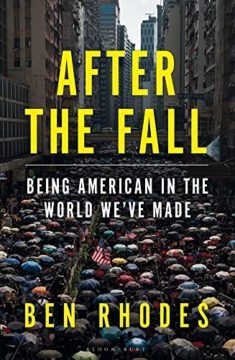 Many of us read with interest Ben Rhodes’ insider account of his time as a speech writer and advisor to Barack Obama during that historic presidency in his book The World as It Is: Inside the Obama White House. There were suggestions of his displeasure at some aspects of US politics in that publication, as for example the racism he thought Obama was subjected to while in office. His new book After the Fall: Being American in the World We’ve Made, goes further and is a clearer articulation of his concern about US and international politics. The conclusions he draws could be viewed as a personal coming of age in his understanding of the impact of American foreign policy on the world, and indeed experiencing and confronting more realistically, the ‘darker’ angels in US domestic politics.
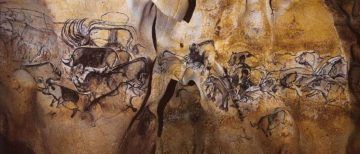 In 1994, Chauvet cave was discovered near the township of Vallon-Pont-d’Arc in southern France. The cave is a
 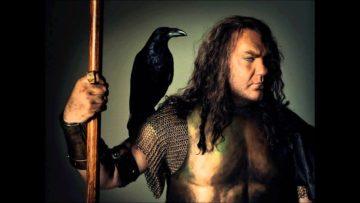 One day, I used to say to myself and anyone else who’d listen, I’m going to write a book called ‘everything you know about these people is wrong’. I have given up on the idea, and I expect anyway that someone else has already done it. What prompted the repeated thought was the way in which so little of what well known thinkers and artists did or said is actually reflected in public consciousness,

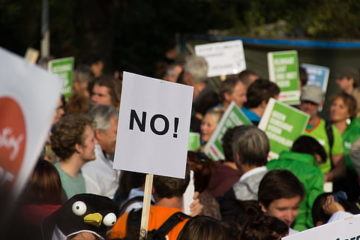 You may know everything that you need to know about the on-going “Critical Race Theory” debate. Indeed, you might have concluded that actually there is no such
  Where I live in Colorado there are unstable elements of the landscape that sometimes fail. In severe cases, millions of tons of rock, silt, sand, and mud can shift, leading to massive landslides. The signs aren’t always evident because the breakdown in the structural geology often happens quietly underground. The invisible changes can take hundreds or thousands of years, but when a landslide takes place, it is fast and violent. And the new landscape that comes after is unrecognizable.