by Jeroen Bouterse
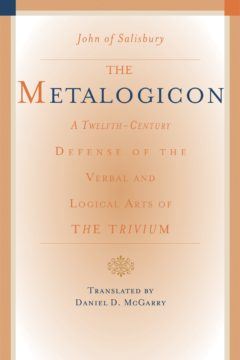 “I am by nature too dull to comprehend the subtleties of the ancients; I cannot rely on my memory to retain for long what I have learned; and my style betrays its own lack of polish.”[1] Among the benefits that reading the twelfth-century philosopher John of Salisbury’s Metalogicon has brought me were the pleasure of finding a witty and humane voice to introduce me to the new and faraway world of 12th-century learning (of which voice I intend to give plenty of examples below), and the fact that he helped me quit Twitter (again, more to follow). Apart from those, however, a major one was certainly the consolation of seeing an unquestionably capable thinker express his intellectual limitations in terms that seem genuine, going further than what perfunctory modesty would have required.
There have surely been thinkers who were more emphatic about their natural flaws, but there is a fine line between the comforting and the disturbing. When the 20th-century Dutch philosopher Leo Polak dreaded his approaching inaugural address, he wrote in his diary: “I came to nothing […] I have been of no value, for my family or for other people, or even simply done my duty. My pathological lack of memory my only excuse, but it is also partly laziness and sloppiness (no card system) and having whiled away my time, having flattered myself with undeserved success.”[2] That, too, resonates, but not in the uplifting way that John’s confessions do.
John has already implicitly abstracted from his own feelings of inadequacy, and has learned to look kindly upon them; he feels his lack of powers acutely, but he asks and thereby gives sympathy. “Would it not be unjust”, at his age and with all the distractions of his responsibilities, “to expect of me the mental spryness of youth, the quick comprehension of glowing natural talent, and an exact memory, always sure of itself?”[3] John makes himself small, but by connecting his own stature to the universal human condition, he also shows us how to feel small without self-hatred. Read more »

 On August 17, 1977, I stopped in as usual at our neighbors’ house, to while away the summer day with my younger brother and sister until our mother’s return home from the university. Our friends – two sets of twins and one singleton – were home-schooled by their mother, and we were all having a summer staycation in any case, so there was always somebody at their house, and a reliably lively time to be had. What met me when I walked into the kitchen that morning, however, was an unaccustomed stillness. All five young people were hovering around the door to the living room while their mother sat at the kitchen table, hunched over a newspaper. “Elvis is dead,” whispered the singleton. Presley had died the day before, in Memphis, in the early afternoon of August 16; but the headlines, and President Carter’s address, would be that day’s news, on the outskirts of Vancouver as elsewhere around the world.


 The gully cricket I played in my neighborhood also had a tournament, where different neighborhoods of north Kolkata competed. I once played in such a tournament which was being held in the far north of the city, some distance from my own neighborhood. I don’t now remember the game, but I met there a savvy boy, somewhat older than me, who opened my eyes about Kolkata politics. When he asked me which locality I was from, he stopped me when I started answering with a geographic description. He was really interested in knowing which particular mafia leader my neighborhood fell under. Finding me rather ignorant, he went on to an elaborate explanation of how the whole city is divided up in different mafia fiefdoms, and their hierarchical network and different specialization in different income-earning sources, and their nexus with the hierarchy of political leaders as patrons at different levels. After he figured out the coordinates of my locality he told me which particular mafia don my neighborhood hoodlums (the local term is mastan) paid allegiance to. I recognized the name, this man’s family had a meat shop in the area.
 On May 31st, 2021, I sent an email to John Pawelek, Senior Research Scientist at Yale University, requesting a zoom meeting. When a week went by without a response, I decided to call. Searching for his number, I came across his Obituary instead. John Pawelek died on May 31st, 2021. Alas, I missed my chance to speak to a knowledgeable and accomplished scientist.
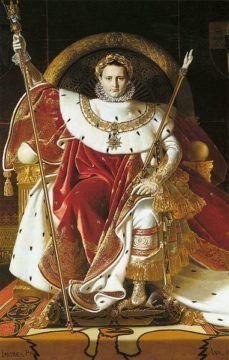 This year marks the 200th anniversary of Napoleon Bonaparte’s death in exile on the island of St Helena. And it was 206 years ago last June that his career came to a bloody end at Waterloo, with defeat at the hands of an allied army led by Britain’s Wellington and Prussia’s Blucher. But while the Emperor himself is dead and gone, the Napoleon Myth marches on, and is celebrated in some unlikely quarters.

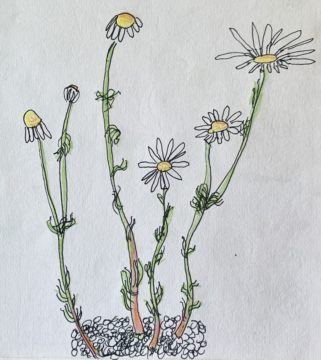
 Sughra Raza. HAPPY BIRTHDAY JIM CULLENY!
 A few years back,
 There are momentary flashes in the aesthetic life of an individual which can’t be explained away by the exigencies of personal taste or the broader parameters of gender-biased inclinations. These random epiphanies may or may not have their roots in a psychologically identifiable pantheon of ‘likes’, but when they occur, they yank us from our routine expectations of a work and catapult us into a recessive-compulsive emotional terrain resembling infatuation—with a breathlessness induced by the sudden recognition of something strikingly familiar and yet completely unrelated to us.
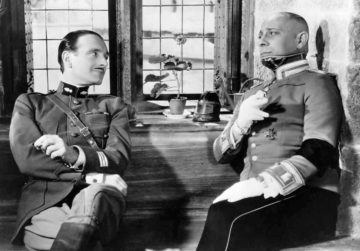 Not long ago, watching an emotional scene between two male Korean detectives in Beyond Evil, I was suddenly transported to Jean Renoir’s anti-war masterpiece