by Akim Reinhardt

I was about 10 miles up the road in Long Beach visiting my sister’s family when word came of last week’s massive oil spill in Huntington Beach, Orange Co., California. We were actually headed over to that very beach when my brother in law checked the conditions.
Uh oh.
Ten or twenty years ago I might’ve made some tired, easy joke about how this state is a tragicomic carousel of disasters. Earthquakes, mudslides, droughts, riots, etc. Just add this oil spill to the list. But now it’s the entire nation that resembles a bad joke with punchlines you can smell long before they arrive.
And if this state is a microcosm of the larger nation, with about 12% of the U.S. population within California’s badly angled borders, then perhaps it has something to do with how money both creates and sorta solves problems, at least for some people. The wealthiest state in the world’s wealthiest nation, and neither can get out of their own way. They both stumble about, knocking everything over amid their ravenous search for profits, and then turn to the “regular people,” the actual workers with sigh-inducing lives and miserable commutes, and even the less fortunate, to foot the bill and clean it all up.
America, can’t abide by simple rules designed to keep a pandemic in check because you’re susceptible to the propaganda actively or passively spewed by profiteering TV networks and digital media? Then just spend lavishly to hog the world’s vaccine supply and ride out the worst of it while maintaining your freewheeling ways.
California, don’t have enough water to support both, 40 million people and an enormous, misguided agribusiness complex in a state that’s mostly desert or near-desert? Then spend decades building and maintaining massive hydro reallocation projects that wreak ecological devastation for hundreds of miles around. Read more »
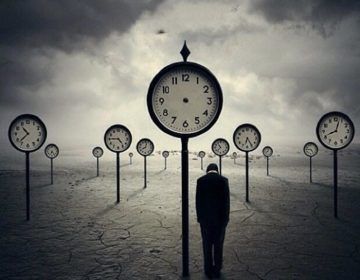
 What is the present? When did it begin? Stoics simply consult the calendar for an answer, where they find each new span of 24 hours reassuringly dubbed Today. Archaeologists speak of “Years Before Present” when referring to the time prior to January 1, 1950, the arbitrarily chosen inauguration of the era of radiocarbon dating following the explosion of the first atomic bombs. And the Judeo-Christian West makes of the present age a spatio-temporal chronotope, a narrative rooted in the time and place of birth of a particular figure, whose “presence” as guarantor is inextricable from the dating system, whether the appellations used are the frankly messianic Before Christ and Anno Domini, or the compromise variations on an ecumenical “Common Era”.
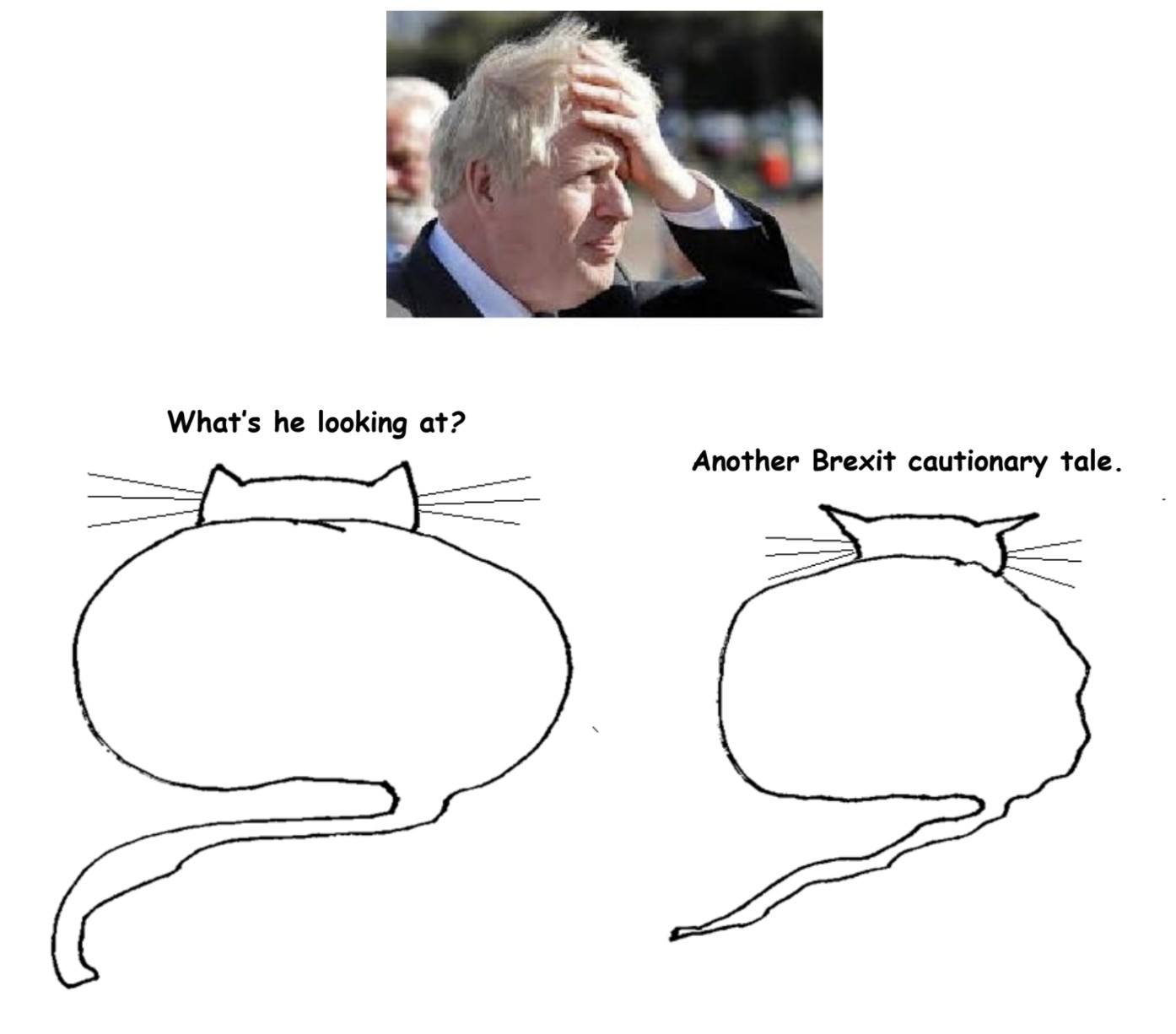
 I recently spent a few weeks in the UK, which is suffering from a labor shortage post lockdown like the US. Though, unlike the US, some of the UK’s problems are self-inflicted Brexit wounds. The shortages are rippling through every sector, and as in the US, that includes hospitality. Coming out of lockdown, no doubt initiated by hygiene concerns, some restaurants I visited in New York used QR codes instead of handing out menus.
  Shortly after my arrival at Cambridge I struck up a warm friendship with a very bright young faculty member, Jim Mirrlees (who was to get the Nobel Prize later), recently returned from a stint of research in India. (Although he was a high-powered theoretical economist, he had what seemed to me an almost religious/moral fervor for doing something to help poor countries). Even more than Frank Hahn, he got involved in the theoretical analysis in my dissertation, and helped me in making some of the proofs of my propositions simpler and less inelegant.
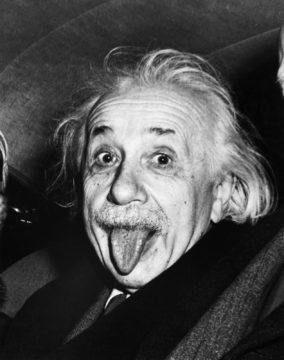 Considered the epitome of genius, Albert Einstein appears like a wellspring of intellect gushing forth fully formed from the ground, without precedents or process. There was little in his lineage to suggest genius; his parents Hermann and Pauline, while having a pronounced aptitude for mathematics and music, gave no inkling of the off-scale progeny they would bring forth. His career itself is now the stuff of legend. In 1905, while working on physics almost as a side-project while sustaining a day job as technical patent clerk, third class, at the patent office in Bern, he published five papers that revolutionized physics and can only be compared to Isaac Newton’s burst of high creativity as he sought refuge from the plague. Among these were papers heralding his famous equation, E=mc^2, along with ones describing special relativity, Brownian motion and the basis of the photoelectric effect that cemented the particle nature of light. In one of history’s ironic episodes, it was the photoelectric effect paper rather than the one on special relativity that Einstein himself called revolutionary and that won him the 1922 Nobel Prize in physics.
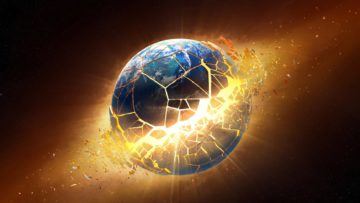 For my whole life, the world has been ending. For various alleged reasons. . . but always there’s been an overhang of dread and fear, the end times already here, human cussedness and sinfulness and greed at work in every moment, everywhere, eating away at what’s left of goodness and preparing the Day of Wrath, the horror, the tribulation, the Last Conflict, the End.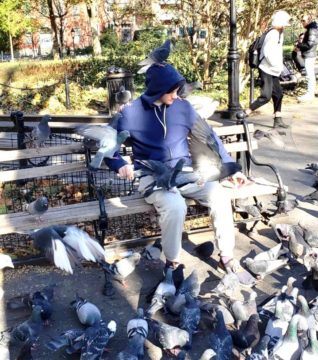
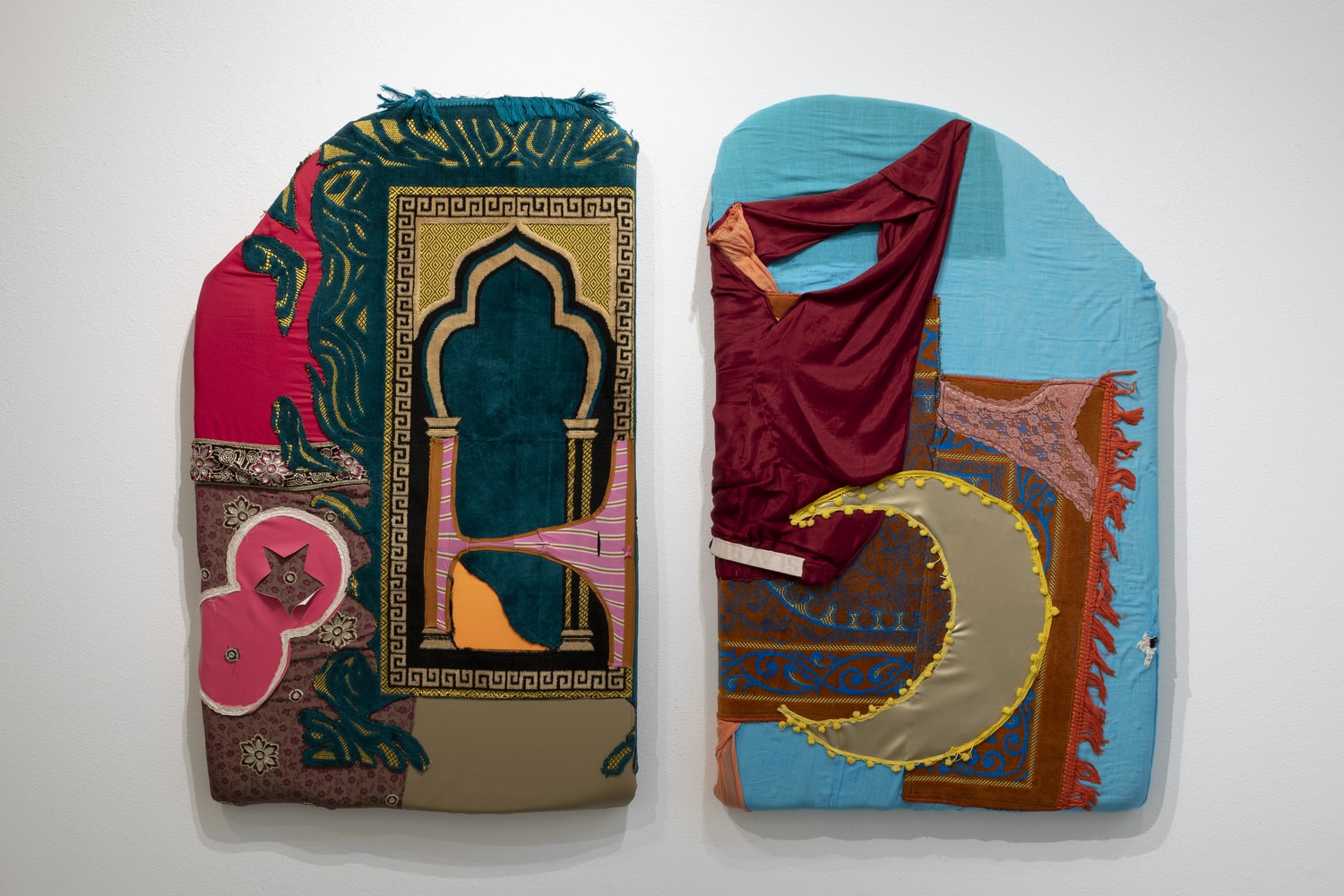 Baseera Khan. A New Territory, 2021.
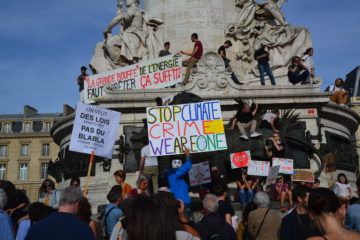 If we take action now to mitigate global climate change, it might make life a little worse for people now and in the near future, but it will make life much better for people further in the future. Suppose, for whatever reason, we do nothing.
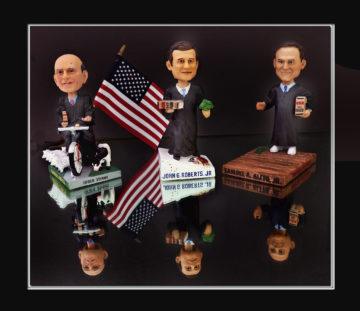 As a consequential Supreme Court term gets underway, with potentially large consequences for women’s autonomy and health, it’s worth thinking about the ways in which judges do or do not consider the real world consequences of their decisions.