by Michael Liss
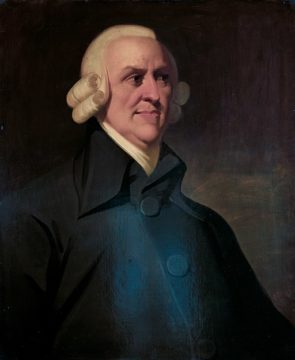
Nearly 250 years is not quite Shakespeare, but if The Wealth of Nations were a play, we would say it has had a pretty good run. Is it a dusty old warhorse, to be read while sitting in a winged-back chair with a snifter of brandy, or still relevant today? Can it solve the (deep) problems of the present and future? Is our almost faith-bound devotion to market forces still justified, or are new approaches needed?
A heavy topic requires heavyweights, and I found them at this past November’s “Center on Capitalism and Society,” at Columbia University’s 20th Anniversary Conference. The topic: Economy Policy and Economic Theory for the Future
The two-day event assembled a formidable crew of speakers, headlined by three Nobelists for Economics: Joseph Stiglitz (2001), Eric Maskin (2007) and Edmund Phelps (2006). They were joined by a “supporting cast” of 15 others, also heavyweights in their field, including the sociologist and urbanist Richard Sennett, the financial journalist Martin Wolf, Finnish philosopher Esa Saarinen, Ian Goldin of Oxford, economists Roman Frydman and Jean-Paul Fitoussi, Carmen Reinhart of the World Bank, and Jeffrey Sachs of Columbia and the UN.
In short, there were a lot of credentials in the room (either in person or remotely) and a number of extremely compelling presentations, but it is Sachs whom I want to talk about. He spoke first, after opening remarks by the extraordinary Ned Phelps (nearing 90, still writing, still speaking, and still mentoring and inspiring), and I assume that the choice was a tactical one. The organizers clearly anticipated that Sachs would do what Sachs does: devote his time to lobbing a little hand grenade into the proceedings: Capitalism, to his way of thinking, particularly the Anglo-Saxon version of Capitalism practiced in the United States, was no longer capable of taking on the big, global challenges. Read more »




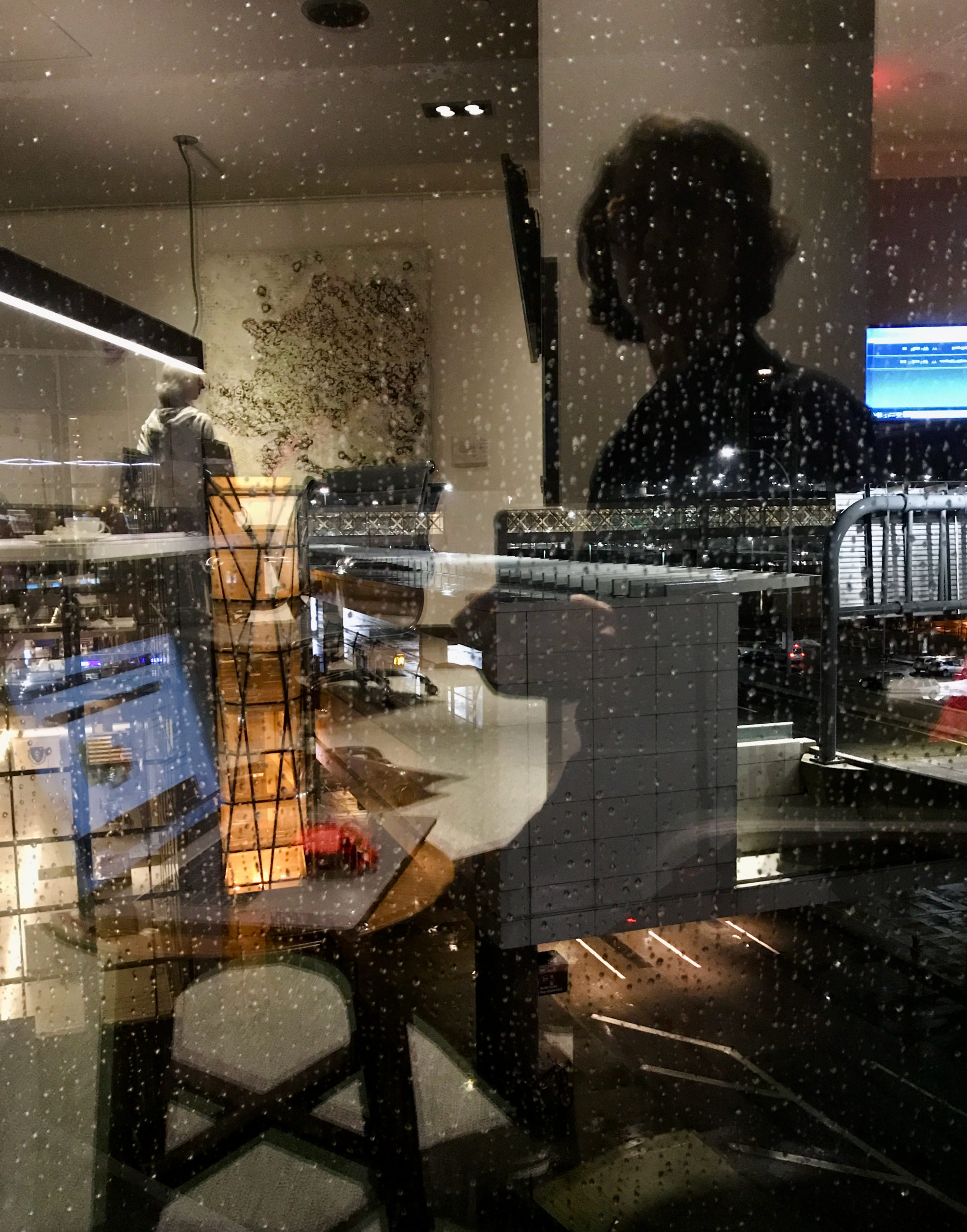 Sughra Raza. Rainy Reflection Self-portrait for 2022.
 January, 2022. East End, Long Island, NY. It’s getting colder. I just recovered from a bout with COVID. I am sitting around the fire pit sipping tequila, drinking homemade bone broth from a mug, and watching lists of very important dead people, ripped from various newspapers and magazines, burn in the fire. Life is good.
 Three things we know about #BLM, two obvious, one a bit more subtle.

 2022 is alive, a babe come hale and hollering to join its sisters 2020 and 2021, siblings bound by pandemic. Everybody stood to see off 2022’s older sister 2021, like we all did 2020 before her. Out with the old. Quickly, please.
 At my ISI office there were several good economists. Apart from TN, there was B.S. Minhas, Kirit Parikh, Suresh Tendulkar, Sanjit Bose (my friend from MIT days), V.K. Chetty, Dipankar Dasgupta, and others. Of these in many ways the most colorful character was Minhas. A shaved un-turbaned Sikh, he used to tell us about his growing up in a poor farmer family in a Punjab village, where he was the first in his family to go to school. He went to Stanford for doctorate, before returning to India. He relished, a bit too much, his role as the man who spoke the blunt truth to everyone including politicians, policy-makers and academics. He illustrated his Punjabi style by telling the Bengalis that he had heard that in Bengal when a man had a tiff with his wife, he’d go without food rather than eat the food his wife had cooked; he said at home he did quite the opposite: “I go to the fridge, take out my food and eat it; then if I am still upset, I go to the fridge again and take out my wife’s food and eat it all up—serves her right!”
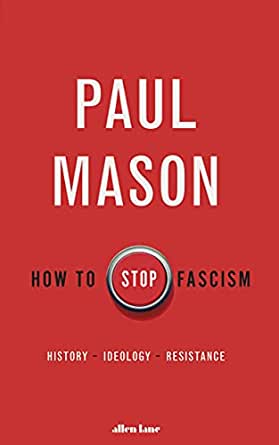 In today’s political world where liberal democracy is purported to have triumphed and ‘the end of history’ is supposed to be with us, many people might be content to rest on their laurels that fascism has been confined to the dustbin of political history, and at most its supporters on the fringe of contemporary politics. Not so however, for Paul Mason. For him ‘fascism is back’ and poses a real threat to democracies. Indeed, so convinced is he of his argument that fascism is emerging as a force to be reckoned with, his recent book How to Stop Fascism: History, Ideology, Resistance is a call to arms for greater understanding of its modern manifestations, and to resist its influence in politics.
 In
In 
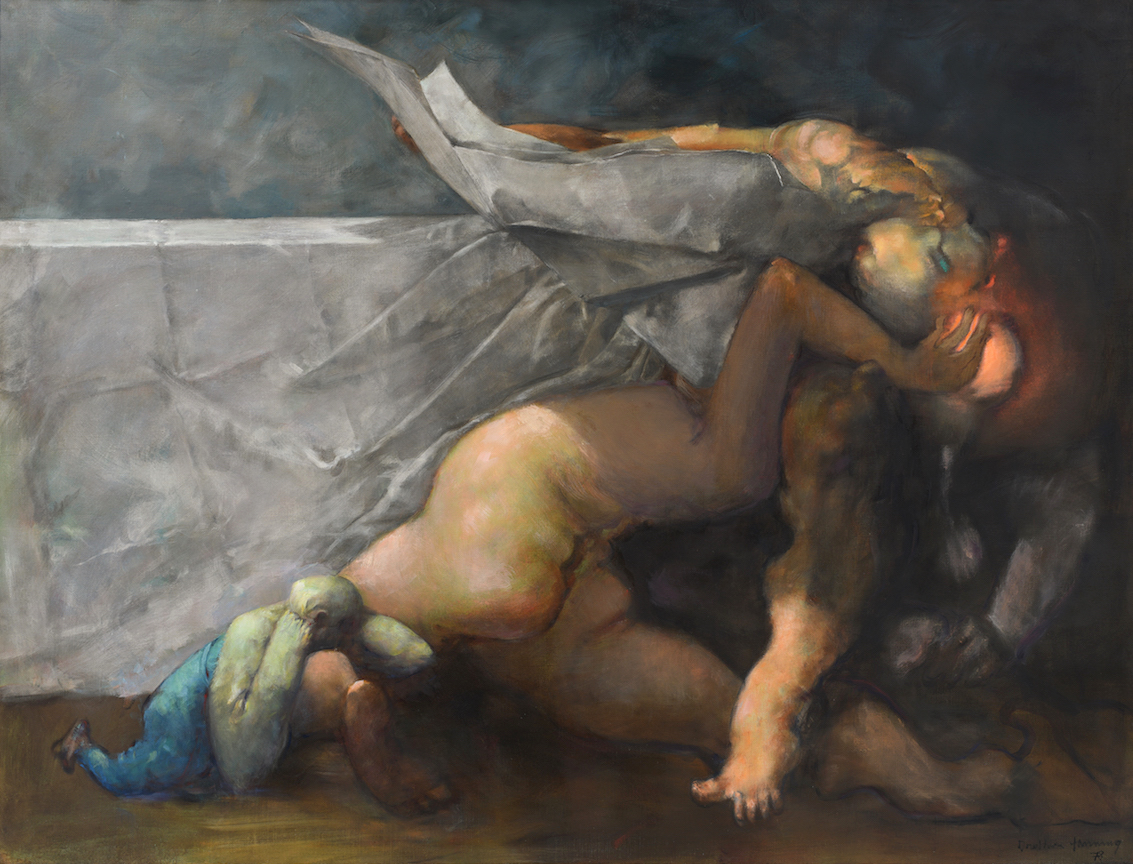 Dorothea Tanning. Notes for An Apocalypse, 1978.