by Pranab Bardhan
All of the articles in this series can be found here.
 After my several visits to Kerala, I wrote up an article, “On Life and Death Questions in India” for EPW, where I highlighted the welfare and demographic achievements of Kerala, the most advanced region in India in terms of many indicators of social democracy. Soon Raj and his colleagues (including my friend, T.N.Krishnan) produced a large, quantitative report for the United Nations Development Program, which brought to international attention the so-called Kerala model of development.
Back to Delhi, I was soon after invited to two conferences which were somewhat different from the usual specialized technical conferences I was used to. One was a conference organized jointly by the World Bank and the Institute of Development Studies at Sussex on the general theme of how to achieve fair distribution and economic equality without sacrificing economic growth in developing countries. The emphasis was not so much on paper presentation with specialized research but more on thinking aloud on big issues. The conference was held in the grand surroundings of Villa Serbelloni, the conference center at Bellagio on a hill facing the beautiful blue Lake Como in Italy (the Villa’s history goes back a few centuries: it is claimed that Leonardo da Vinci was a guest there).
At this conference I met a number of important development economists, who became long-term friends; these included Albert Fishlow and Irma Adelman (both of whom were later my colleagues at Berkeley) and Lance Taylor (later at New School of Social Research), apart from Montek Ahluwalia (later a top economic-bureaucrat in Delhi) and Clive Bell (later a professor at Heidelberg), who were among the conference organizers and the editors of a subsequent volume titled Redistribution with Growth (for which they commissioned me to write a short section). Read more »

 that this Group
  that these signatories include 17 members of Imperial’s own Faculty, Faculty at 11 other universities and research institutes, 19 Fellows of the Royal Society as well as several members of comparable overseas bodies, 4 Sirs, a Nobel Prize winner (

 Sughra Raza. Bey Unvaan. February, 2022.

 Why do I have to help?
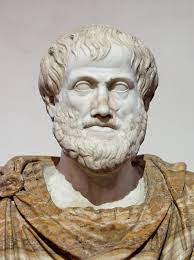 Among the ideas in the history of philosophy most worthy of an eye-roll is Aristotle’s claim that the study of metaphysics is the highest form of eudaimonia (variously translated as “happiness” or “flourishing”) of which human beings are capable. The metaphysician is allegedly happier than even the philosopher who makes a well-lived life the sole focus of inquiry. “Arrogant,” self-serving,” and “implausible” come immediately to mind as a first response to the argument. It’s not at all obvious that philosophers, let alone metaphysicians, are happier than anyone else nor is it obvious why the investigation of metaphysical matters is more joyful or conducive to flourishing than the investigation of other subjects.
 In late January the United States Senate Health, Education, Labor and Pensions (HELP) Committee released a draft discussion of its COVID-prompted public health bill titled, “Prepare for and Respond to Existing Viruses, Emerging New Threats, and Pandemics Act” (


 Sughra Raza. Kaamdani, Approaching Santiago, Chile, 2017.