by Eric Bies
 Everyone is talking about artificial intelligence. This is understandable: AI in its current capacity, which we so little understand ourselves, alternately threatens dystopia and promises utopia. We are mostly asking questions. Crucially, we are not asking so much whether the risks outweigh the rewards. That is because the relationship between the first potential and the second is laughably skewed. Most of us are already striving to thrive; whether increasingly superintelligent AI can help us do that is questionable. Whether AI can kill all humans is not.
So laymen like me potter about and conceive, no longer of Kant’s end-in-itself, but of some increasingly possible end-to-it-all. No surprise, then, when notions of the parallel and the alternate grow more and more conspicuous in our cultural moment. We long for other science-fictional universes.
Happily, then, did the news of the FDA’s approval of one company’s proprietary blend of “cultured chicken cell material” greet my wonky eyes last month.
“Too much time and money has been poured into the research and development of plant-based meat,” I thought. “It’s time we focused our attention on meat-based meat.”
When I shared this milestone with my students—most of them high school freshmen—opinions were split. Like AI, lab-grown meat was quick to take on the Janus-faced contour of promise and threat. The regulatory thumbs-up to GOOD Meat’s synthetic chicken breast was, for some students, evidence of our steady march, aided by science, into a sustainable future. For other students, it was yet another chromium-plated creepy-crawly, an omen of more bad to come. Read more »

 Sughra Raza. NYC, April 2023.
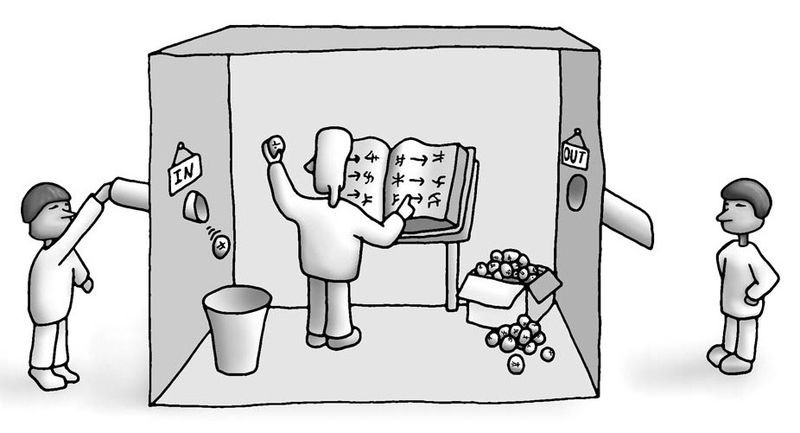 Despite many people’s apocalyptic response to ChatGPT, a great deal of caution and skepticism is in order. Some of it is philosophical, some of it practical and social. Let me begin with the former.


 How intelligent is ChatGPT? That question has loomed large ever since
 Environmentalists are always complaining that governments are obsessed with GDP and economic growth, and that this is a bad thing because economic growth is bad for the environment. They are partly right but mostly wrong. First, while governments talk about GDP a lot, that does not mean that they actually prioritise economic growth. Second, properly understood economic growth is a great and wonderful thing that we should want more of.
 Sughra Raza. Untitled. April 1, 2023.