
by Michael Liss
Although Mother and Father were not much alike, both were revolted by vulgarity, boastfulness, conniving, and flattery. There was a family understanding that defeat was preferable to viciousness, that one’s achievements must be gained honorably.
—Isaac Bashevis Singer

I think we would all agree that Singer’s parents had all the right values . . . . and would have made terrible politicians.
“Fortunately,” we voters are not burdened with too many of the moral, upright types (Gresham’s Law applies to politics as well as economics). We might be “troubled” by vulgarity, boastfulness, conniving, and flattery, but if it comes from our side, not excessively so. This allows us to focus on the more important things, like whether there is a disqualifying, empirically absolute limit to repulsiveness directed at the other side, or a disqualifying, empirically absolute limit to the repulsiveness of the behavior or ideas of one of our own.
In the 2022 Midterms, we are going to put those “character” questions to the test to a degree not seen in our lifetimes. While we are doing that, we will also be applying some very traditional metrics (like Presidential approval ratings), mixed with newly gerrymandered Congressional Districts where incumbency might not be as meaningful, a thicket of voter-suppression schemes (not all of which may act exactly as intended), and the distinct possibility of a considerable amount of outright cheating. Finally, we will be doing this in an environment of rising skepticism in the ability of our system to survive. The Right has its phalanx of Election Deniers eager for power at any price, the Left the growing sense that it will not be permitted to win (by Secretaries of State, by state legislatures and Governors, and by judges facilitating outcomes), even if it can convince a majority of the electorate.
Before we get to the Good, the Bad, and the Ugly, let’s check in on Joe Biden, the incumbent on trial. First, a little bit of history. When Presidential approval is low, the voters take it out on the President’s party in the Midterms. It’s remarkable how short Presidential honeymoons are. Part of the problem, especially for first-termers after a party change, is that they come into the job burdened with the mess for which their predecessors were voted out. Then they get new messes that inevitably come with the job. Finally, they create some of their own out of ambition and a sense of duty to their party. The “vision thing” is often the hubris thing. Read more »
 Sughra Raza. Shadows on Beech Trunk, May 21, 2022.
 Not
Not 
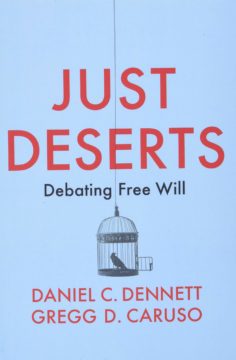 “The constant direct mode of address was a chore. No one will enjoy having this read to them.” Quoting from a referee report on the Nicomachean Ethics misses the point of James Warren’s hilarious



 Lanchester’s square law was formulated during World War I and has been taught in the military ever since. It is marginally relevant to the war in Ukraine, particularly the balance between the quantity and quality of the two armies’ weapon systems.
 I regret not having children younger. Like, much younger. I was thirty-six when my first child, now four, was born; thirty-eight when my second was born. I wish I had done it when I was in my early twenties. This is an unpopular perspective. I know this because when I’ve raised this feeling with friends, many of whom had children similarly late in life, I’ve been met with a strong resistance. It’s not just that they don’t share my feelings, that their experience of having children later in life is different to mine, it’s that they somehow mind me feeling the way that I do. They think that I am wrong – mistaken – to feel this way. It upsets them.
  The dandelion is thousands of miles from home. It has been in America learning about the world beyond and perhaps it wants to return. It has lived thousands of sad lives. Finally after 300 years, a seed clings to an old man’s jacket as he boards a plane, and happens to land in a small patch of dirt right by the Charles de Gaulle airport; the dandelion is welcomed home graciously, and they share the stories of what has happened in its absence. They notice little differences to him. He has mutated slightly; the increased sun in America has made his petals more yellow; the lawn mowers have made him shorter; the pesticides have made him stronger. They don’t talk to him about the sun or the lawn mowers or the pesticides, though. They talk about their shared home in France.