by Mary Hrovat
When the city of Melbourne set up email addresses for trees so that people could report problems, the trees received affectionate fan mail as well as messages about dangling limbs or other hazards. Here are some letters I’d write to trees, if I could.
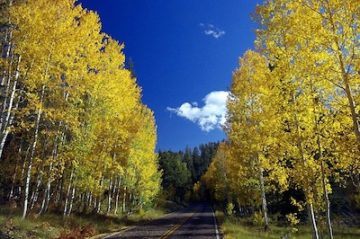
To the aspens in Hannagan Meadow
I saw you in fall 1979; I’d been married to my first husband for only a few months. We traveled a lot that fall, scouting out places we might like to live out our back-to-the-land dreams and raise a family.
I was only 18, and I’d never lived in the country. I wasn’t sure I was ready for life with cows and chickens and a big garden. Sometimes, especially when we were driving at night through what seemed like the lonelier corners of Arizona, I was frightened at what I’d gotten myself into. Maybe my husband and I both were, but we couldn’t tell each other.
When I saw you, we were halfway up the Coronado Trail Scenic Byway from Clifton to Springerville, in eastern Arizona. This highway covers only 129 miles, but it’s a slow, dramatic drive, up and down through the White Mountains along curves and switchbacks.
We stopped at Hannagan Meadow for a break. You were probably the first stand of aspens I’d seen in fall colors, tall and slender with yellow leaves against beautiful white bark. I loved your brilliance and the movement of your glowing leaves against a more somber backdrop of tall evergreens. I didn’t know much about aspens, but I wonder now if all of you, the aspens I saw that day, are part of a single clonal community.
The sight of you in that meadow, tall and bright in the sunshine, dazzled and comforted me. You called me out of myself and my worries. Among all the beautiful things I saw that fall, you’re the one that has remained most vivid in my memory. I hope you’re still there. I’d like to see you again someday. Read more »

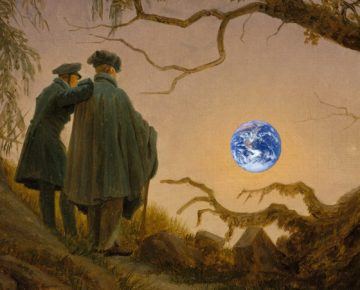 The first full moon I saw after the procedure looked as if it might burst, like a balloon with too much helium. It was just above the horizon, fat and dark yellow —moving slowly upward to the firmament where it would later appear smaller and take on a whiter shade of pale. I could distinguish its tranquil seas, the old familiar terrain coinciding with a long abandoned memory.
 Even before the bandage came off, the implant’s ID card seemed to confirm it: I am a camera—with a new Zeiss lens made in Jena. Jena is back in my life.

 In the middle 1990’s along with journal-editing I did another job in Berkeley which was even more arduous, but also in some ways quite exciting and instructive. I was invited by the campus academic senate to serve for 3 years in a high-powered committee that decided on all appointments, promotions, salaries and merit payment increases for all Berkeley faculty (then roughly about 2,000 in size). This committee is called the Budget Committee in Berkeley; technically it advises the Chancellor, but the latter took our advice in 99% of cases—in the less than 1% cases when the Chancellor did not follow our advice, the rule was that the Chancellor was obliged to meet us in a special session of the committee and explain why he/she would not follow our advice (most often this involved some legal issues) and we had a chance to rebut their arguments.
 In his book
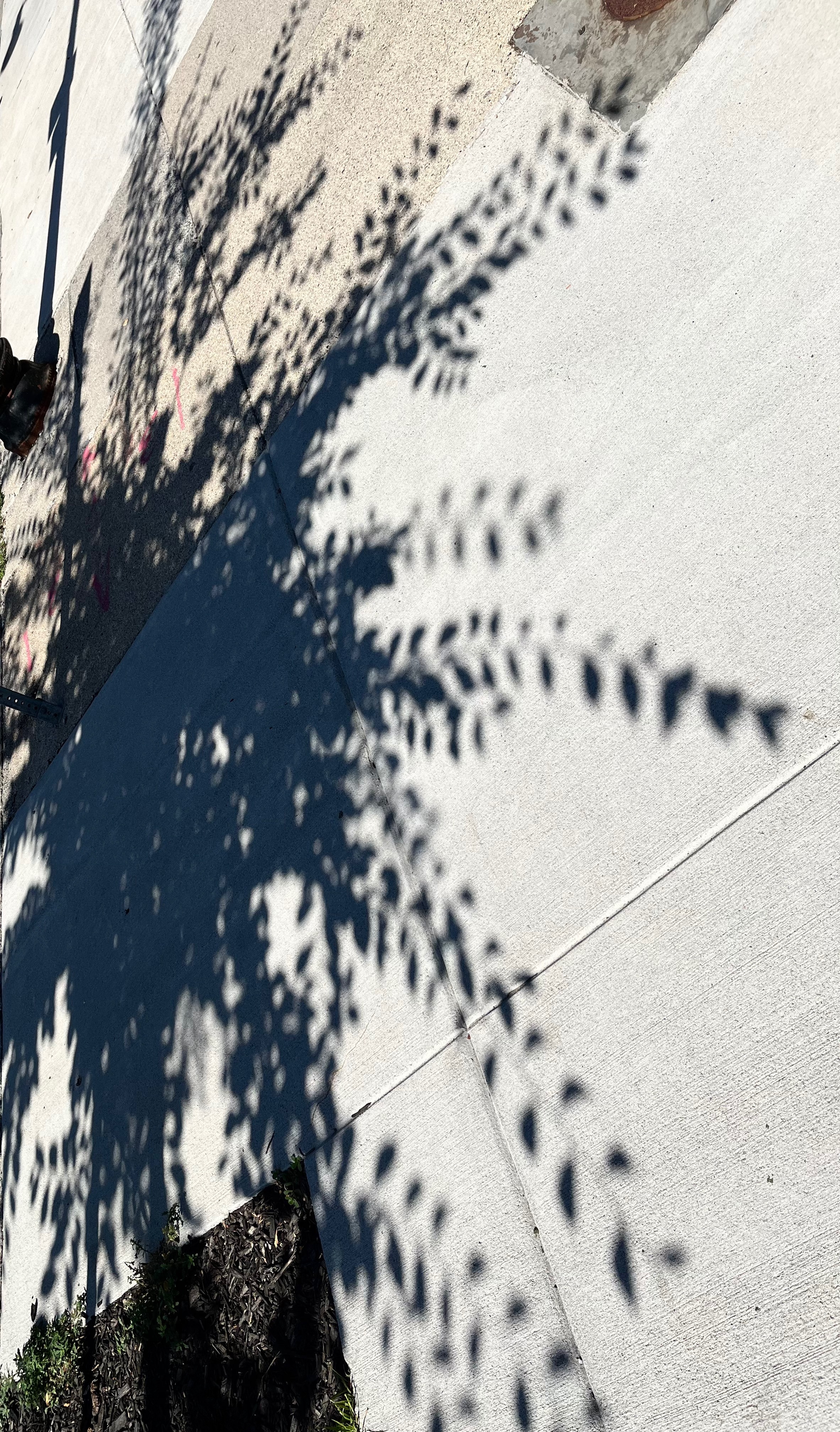 Sughra Raza. This Moment … late June 2022.
 I know