by Brooks Riley
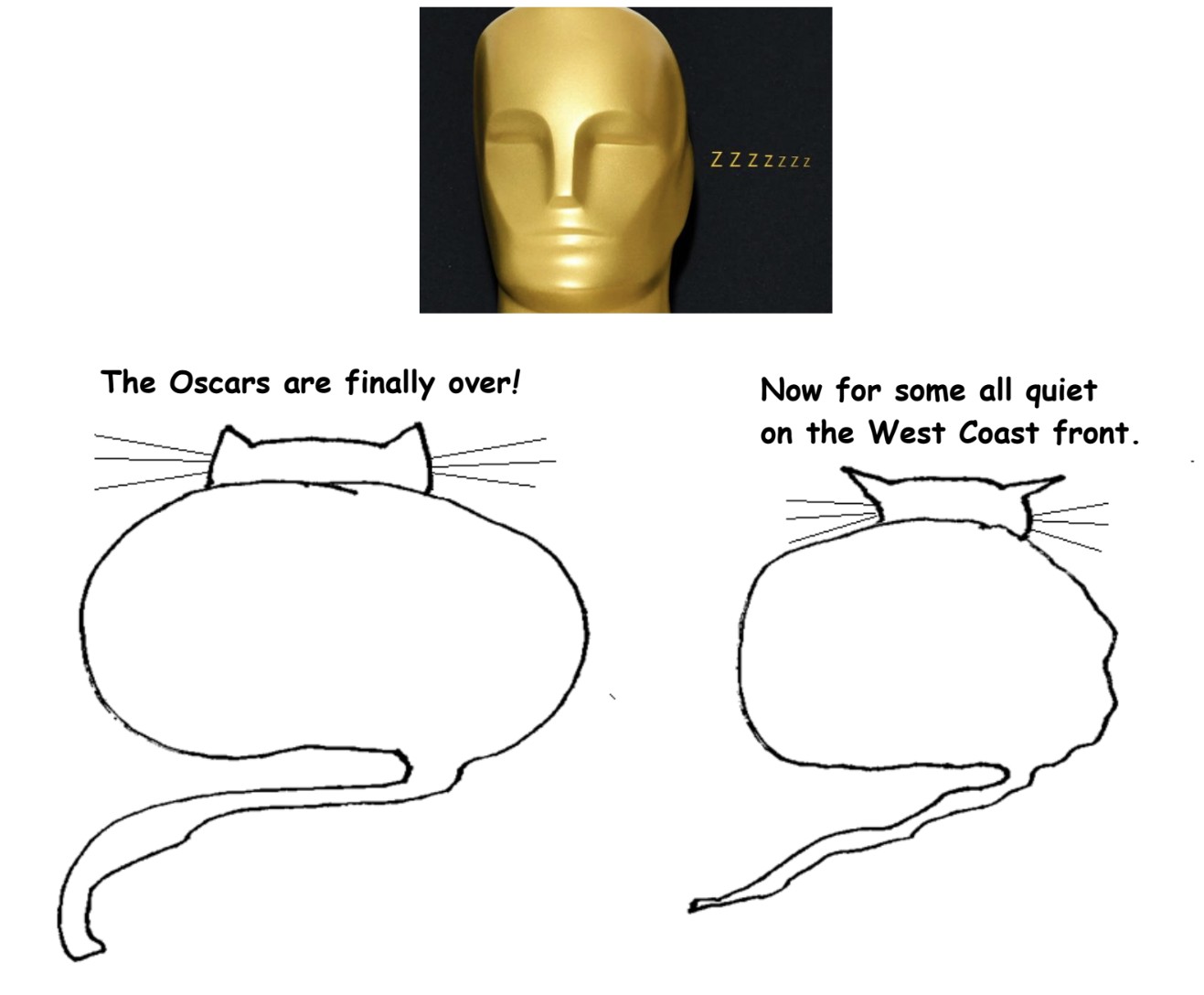

by Brooks Riley

by David J. Lobina
In this misguided series of posts on large language models (LLMs) and cognitive science, I have tried to temper some of the wildest discussions that have steadily appeared about language models since the release of ChatGPT. I have done so by emphasising what LLMs are and do, and by suggesting that much of the reaction one sees in the popular press, but also in some of the scientific literature, has much to do with the projection of mental states and knowledge to what are effectively just computer programs; or to apply Daniel Dennett’s intentional stance to the general situation: when faced with written text that appears to be human-like, or even produced by humans, and thus possibly expressing some actual thoughts, we seem to approach the computer programs that output such prima facie cogent texts as if they were rational agents, even though, well, there is really nothing there!
Naturally enough, many of the pieces that keep coming out about LLMs remain, quite frankly, hysterical, if not delirious. When one reads about how a journalist from the New York Times freaked out when interacting with a LLM because the computer program behaved in the juvenile and conspiratorial manner that the model no doubt “learned” from some of the data it was fed during training, one really doesn’t know whether to laugh or cry (one is tempted to tell these people to get a grip; or as Luciano Leggio was once told…).[i]
More importantly, when people insist that LLMs have made passing the Turing Test boring and have met every challenge from cognitive science, and even that the models show that Artificial General Intelligence is already here (whatever that is; come back next month for my take), one must at least raise one eyebrow. Here’s a recent, fun interaction with ChatGPT, inspired by one Steven Pinker (DJ stands for you-know-who):

So, no, LLMs definitely don’t exhibit general intelligence, and they haven’t passed the Turing Test, at least if by the latter we mean partaking in a conversation as a normal person would, with all their cognitive quirks and what not. Read more »

A view of the river Eisack flowing through Franzensfeste, South Tyrol.
by Mike Bendzela
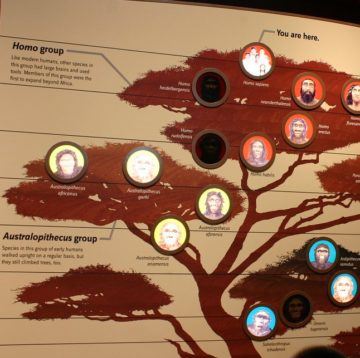
Narrative is the elucidation of backstory. Thus, narrative partakes of other stories, is composed of them. There is no infinite regress of narratives, though. At the end lies a cosmology, which I use here to mean a master story, or, “a doctrine describing the natural order of the universe.” This the ground of all narrative. Our stories must in some way enact a cosmology.
Until recently, cosmologies have not been based on empirical observation and evidence—because they couldn’t be. What did we know? How could we even know that we didn’t know? Instead, we relied on revelation and tradition. Such narratives deprived of a factual backstory may speculate about the causes of action, but such stories would be shams. When our backstory is wrong, our story is absurd, but we have had no way of knowing this—until now. Read more »
by Carol A Westbrook

I admit it. I am a breakfast skipper.
I’m not ashamed of it, and I don’t force myself to eat a morning meal just because it’s the societal norm. Sometimes, for the sake of sociability and good conversation, I’ll sit down to breakfast and pretend to nibble at a piece of dry toast, or push eggs around my plate. The fact is, I just don’t feel hungry at breakfast time.
About 10% of adults are like me. Their inherent biorhythms dictate that they are not hungry at breakfast time. I could never understand why the other 90% regard breakfast as the most important meal of the day, or why it is good for a person’s health to eat breakfast. The classical American breakfast of 2 eggs, bacon, and toast with butter and jam has almost 600 calories, 30 g of fat, and 1.4 g of salt! That’s hardly a nutritious start to the day. Fortunately, surveys have shown that most people prefer a bowl of cereal and milk, which has only about 250 calories.
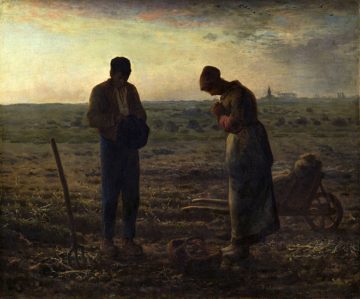
In the US, most people eat breakfast before they begin their day, but that was not true for most of humanity through the ages. Although the ancient Greeks ate 3 meals each day, including a breakfast of bread soaked in wine at the very start of the day, early breakfasts did not continue through the Middle Ages. In the Middle Ages, the serfs started their day without food, since they were not allowed to eat before daily Mass. After Mass, they ate a large meal to supply the calories they would need for their upcoming manual labor. This meal was called the “break-fast meal” or just breakfast. Read more »
Transcribed by Rafiq Kathwari
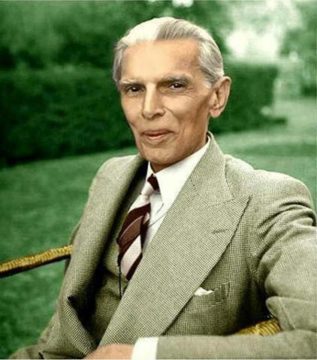 Mohammed Ali Jinnah’s Last Visit to Kashmir 10 May – 25 July 1944
Tue 9 May 1944
Mr. Jinnah was to arrive today, but he had sent a telephone message last evening that as he was tired, he could not make the journey in one day. In the evening, there was a public meeting held at Amira Kadal. Sheikh Abdullah addressed the public and exhorted them to give a right royal reception tomorrow to Mr. Jinnah.
Wed 10 May 1944
Quite an excitement from morning about Mr. Jinnah’s arrival today at 1:30 p.m. Without lunch went with G.M. Bakshi to Qazi Gund to receive the Quaid-e-Azam there. Enroute everywhere people waiting to receive the Qaid-e-Azam: at Khanabal, a large gathering. Had a little meal at Qazi Gund.
Mr. Jinnah arrived at about 4 p.m. There was some disturbance as he reached quite abruptly, and he started off. With him in other cars were Chaudry Gulam Abbas, Maulvi Yusuf Shah, and others of that group. Read more »
by Paul Braterman
UPDATE (March 13, 2023, 8 AM): Gary Lineker has been reinstated, and has reaffirmed his position:
A final thought: however difficult the last few days have been, it simply doesn’t compare to having to flee your home from persecution or war to seek refuge in a land far away. It’s heartwarming to have seen the empathy towards their plight from so many of you.
The first part of Attenborough’s series was broadcast in BBC1 TV last night to general acclaim. There is no further word from the BBC as to why the last part will not be shown except on iPlayer.

The BBC is currently under pressure over its pro-Government bias, as a result of two separate episodes. One of these has drawn enormous publicity, while the other has been barely noticed outside a handful of the more serious newspapers. Yet I consider the latter to be the more serious by far, and not just because I consider the environment more important than football.
Let me start with an episode that has led former BBC Director General Greg Dyke to say that the BBC has undermined its own credibility because it will be viewed as having bowed to government pressure, while Roger Mosey, a former head of BBC TV News, has said that BBC chairman Richard Sharp has damaged the corporation’s credibility and should stand down. Mosey, incidentally, is now Master of Selwyn College, Cambridge, where the current Director General, Tim Davie, was an undergraduate – a reminder of the narrowness of the base from which the U.K.’s ruling classes draw their talent. Read more »
by Kenneth J. Pienta
 No metaphor for cancer does it justice. As a medical oncologist and cancer researcher, I struggle constantly with how people perceive cancer. Until a person suffers from it or sees a loved one suffer from the devastation of this disease, cancer remains an abstract term or concept. But it is an abstract concept that kills 10 million people around the world every year. Ten million people every year. How do we get people to understand that this is a lethal disease that deserves attention. That deserves more funding. That deserves more minds thinking about how to stop the continual suffering that metastatic cancer causes.
I believe that part of the problem stems from the fact that we have no adequate way to communicate the suffering that cancer causes. It remains too abstract. We have used analogies to explain cancer that make the disease more palatable than it should be.
Cancer researchers often describe cancer as a “wound that does not heal”. This analogy was first forth by Harold Dvorak in 1986 because tumors grow and remodel the organ they are growing in much like wounded skin does. Similarities between tumor stroma generation and wound healing.[i] The difference is that a normal wound scars over and cancer simply does not. Tumors do not have a negative feedback growth loop that says to stop growing and scar over. Cancer just keeps growing. Read more »
by Martin Butler
 Ideas often become popular long after their philosophical heyday. This seems to be the case for a cluster of ideas centring on the notion of ‘lived experience’, something I first came across when studying existentialism and phenomenology many years ago. The popular versions of these ideas are seen in expressions such as ‘my truth’ and ‘your truth’, and the tendency to give priority to feelings over dispassionate factual information or even rationality. The BBC is running a radio series entitled ‘I feel therefore I am’ which gives a sense of the influence this movement is having on our culture, and an NHS trust has apparently advertised for a ‘director of lived experience’.
But what exactly is ‘lived experience’ and how does it differ from simple ‘experience’? The idea of experience is of course central to the empiricist philosophical tradition. All our ideas and knowledge, Locke argues, come from experience. But the empiricist notion of experience is a rather anaemic, disembodied and depersonalised affair, something we just passively receive through the senses. The notion of lived experience, on the other hand, recognises that we are embodied beings who actively engage with the world and those around us as we go about our lives. It takes into account our feelings, fears and anxieties, the dilemmas we face, and the opportunities and constraints we encounter. Crucially it recognises personal differences, differences which may be conditioned by who we are and how others treat us. My lived experience of parenthood and family life, for example, is no doubt very different from many others. Similarly, the lived experience of a youth from a deprived background when dealing with the police or government officials will probably be very different from that of a well-heeled business person.
Clearly, an individual’s account of their lived experience provides something that data and bald empirical facts cannot provide. When discussing data collection with my students I used to give them an exercise where they compared the knowledge gained from a first-hand description given by a victim of domestic violence with a table from a research study showing the number of incidents and types of domestic violence recorded over a given period of time. The conclusion was that we undoubtedly learn something from the first-hand account that not even the most comprehensive set of statistics can possibly reveal. Read more »
—on a thought of Maurice Sendak
I’ll sob my way to the grave
as the world disappears one friend at a time,
but especially where you’re concerned,
the old man said.
So, there is a bit of joy
in the thought of leaving first
since I won’t have to sob
until the end of time
at the loss of you
Jim Culleny
© 9/3/14
by Rebecca Baumgartner

A few years ago when I was working at a large corporation, I walked into the lobby one morning in March, bleary-eyed and clutching a thermos of coffee, and was startled to see an enormous pink banner covered in flowers, proclaiming in a swirling cursive font that the company was “honoring women” as part of International Women’s Day (IWD).
The aesthetic of the banner was less “recognition of female professionals” and more “eight-year-old girl’s diary.” It would be hard to come up with a display that was more alienating and patronizing to a group of adult women.
In a piece in Feminist Current called “No more cupcakes! A call to action on International Women’s Day,” Natalie Jovanovski and Meagan Tyler discuss how this is not a coincidence. They refer to this infantilizing way of honoring women as “cupcake feminism” and discuss it in the cultural context of employers’ penchant to trivialize IWD under the assumption that “women = frivolity.”
That Infamous Pink Banner stayed up there all month, because it was Women’s History Month. So every morning for a month, the first thing I saw upon arriving at work was a reminder that my employer wanted me to feel appreciated by showing me a vision of hyper-femininity that – even as a cis, straight woman – does not come even remotely close to how I see myself or present myself to others in my personal life, much less at work, where women have fought for decades to be taken seriously. Read more »
 Sughra Raza. Pavement Expressionism. June 2014.
Digital photograph.
by Joseph Shieber

There is something very intuitive about the idea that people should get what they deserve – so intuitive, in fact, that the claim “people should get what they deserve” sounds almost like a tautology.
The intuitive plausibility of that idea, however, should not fool us into thinking that we can use the notion of desert to develop a workable framework for distributing resources justly. At least, that’s how it appears to me after reading Richard Marshall’s thought-provoking interview with Thomas Mulligan. Mulligan seems to me to have offered one of the strongest defenses of desert-based justice; his book, Justice and the Meritocratic State, is available open access.
In the interview, here’s how Mulligan glosses his theory of desert-based justice, which he terms “meritocracy”:
Meritocracy is a theory of distributive justice. It holds that justice is a matter of giving people what they deserve, and that this happens when there is equal opportunity and people are judged on their merits.
As that initial definition indicates, Mulligan’s framework is noteworthy in that it involves not only merit, but also equality of opportunity. Read more »
by Jochen Szangolies
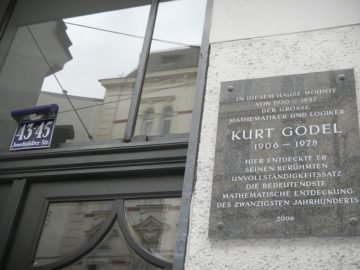
The previous column left us with the tantalizing possibility of connecting Gödelian undecidability to quantum mechanical indeterminacy. At this point, however, we need to step back a little.
Gödel’s result inhabits the rarefied realm of mathematical logic, with its crisply stated axioms and crystalline, immutable truths. It is not at all clear whether it should have any counterpart in the world of physics, where ultimately, experiment trumps pure reason.
However, there is a broad correspondence between physical and mathematical systems: in each case, we start with some information—the axioms or the initial state—apply a certain transformation—drawing inferences or evolving the system in time—and end up with new information—the theorem to be proved, or the system’s final state. An analogy to undecidability then would be an endpoint that can’t be reached—a theorem that can’t be proven, or a cat whose fate remains uncertain.
Perhaps this way of putting it looks familiar: there is another class of systems that obeys this general structure, and which were indeed the first point of contact of undecidability with the real world—namely, computers. A computer takes initial data (an input), performs a transformation (executes a program), and produces a result (the output). Moreover, computers are physical devices: concrete machines carrying out computations. And as it turns out, there exists questions about these devices that are undecidable. Read more »
by Brooks Riley
by Mike O’Brien

Living next to the United States, Canadians can develop a warped sense of normality. It is similar to living with an alcoholic; sure, you may drink a bit much from time to time, but compared to their whirlwind of self-intoxication, is it really so bad? Of course, your liver function isn’t graded on a curve, so such comparisons can dangerously trivialise the harms of objectively excessive and destructive behaviour.
This warping of perspective is obvious when comparing Canada’s laws to those of the USA, on one hand, and the EU, on the other. (Confusingly, French Canadians refer to the United States by the initials “É.-U.”, for “États-Unis”. Why must they be so difficult?) Our labour laws sometimes hew closer to the stingy, even brutal, labour regime of our southern neighbour, where legally protected paid sick leave or parental leave is viewed as some kind of Communist science fiction. Compared to the more robust worker protections of many European countries, Canada’s weaker rules seem deficient and outdated. But compared to the cruel feudal hellscape of the USA, it’s practically a worker’s paradise.
This is but one example of our (federal, provincial and municipal) governments’ laxity in pursuing their mandate to uphold peace, order and good government against the constant, avaricious wheedling of capital interests. It doesn’t help that the vast ecosystem of improper moneyed influence down south is able to cross our borders seamlessly, offering strategic advice and resources to Canada’s own environmental ruiners in the energy, mineral and agribusiness sectors. With barely a 10th of the USA’s population, and much less of its economic and cultural might, our sovereignty over our own material affairs is tenuous, especially when it conflicts with Uncle Sam’s desire for “security”, be that in the form of abundant energy supplies or a socialism-free continent. Read more »

Apartment building in Brixen, South Tyrol.
by Derek Neal
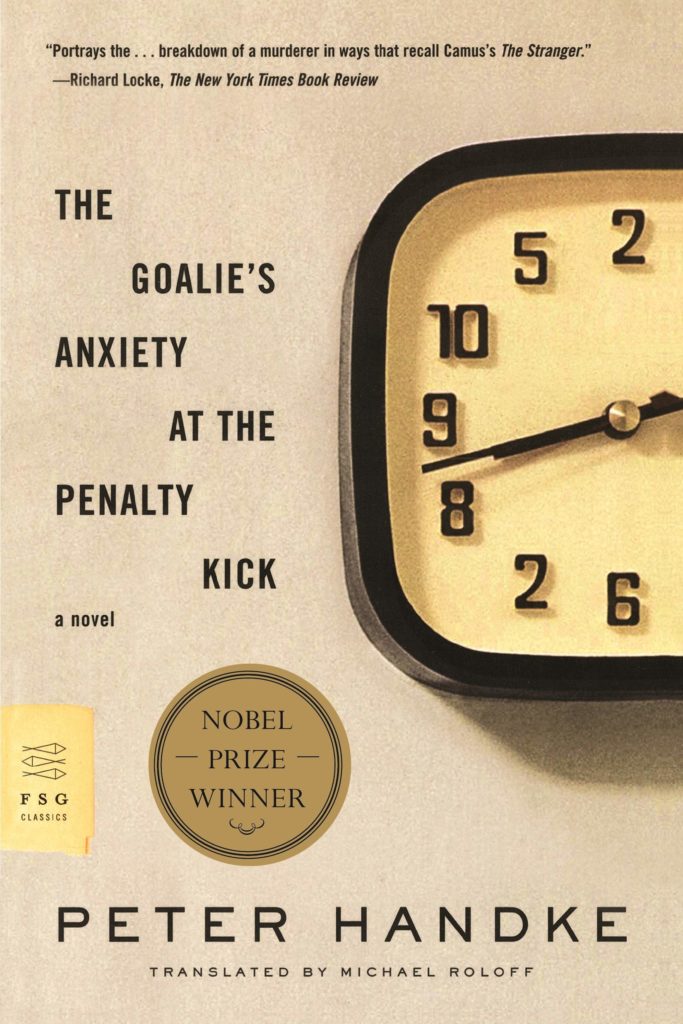 A few months ago, I wrote about Karl Ove Knausgaard’s Spring and how his focus in this book is the examination of two worlds: the physical world that exists apart from us (the outside world), and the world of meaning and significance that is overlaid on top of this world through language and consciousness (the inner world). Knausgaard’s main goal seems to be to shock us out of our habitual, unreflective existence, and to bring about an awareness with which we can experience our lives in a different way.
Since reading Spring, I’ve picked up a few other books from the Knausgaard “tree,” by which I mean books by authors who’ve influenced Knausgaard. One is The Goalie’s Anxiety at the Penalty Kick by Peter Handke, published in 1970, and the other is Pan by Knut Hamsun, published in 1894. I know these authors influenced Knausgaard because he says so himself in his My Struggle series. Reading them after having read Knausgaard is sort of gob smacking. What I thought were inventions by Knausgaard, or keen, unique insights into the human condition, are already present in Hamsun and Handke. This isn’t a knock on Knausgaard, but more of a criticism of myself, to think that someone could create something out of nothing, forgetting that every book or piece of art has a lineage and a history within which it exists. Isn’t the joy of discovery always tempered by the realization sometime later that someone, somewhere, has already done the thing you thought was new? Read more »
by Michael Liss
In the America I see, the permanent politician will finally retire…. We’ll have term limits for Congress. And mandatory mental competency tests for politicians over 75 years old. —Nikki Haley, age 51, announcing her candidacy.
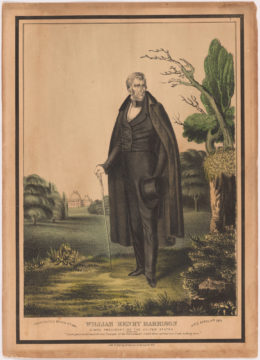
Yes, she did. Nikki Haley went there. Of course, her ostensible target is America’s best-known octogenarian (the guy with the malaprops and the Ray-Bans), but it could not be ignored that Former President Donald Trump tips the chronological scales at 76. Twenty months from now, shortly after the 2024 election, Joe will either be a jubilant 82-year-old; a grim, packing-the-china 82-year-old; or a wistful I-could-have-won-if-I-ran 82-year-old. Trump will be a 78-year-old Donald Trump—with title, without title, still a Donald Trump. In November of 2024, barring anything traumatic, these two will be whatever luck, genetics, and environmental factors cause them to be. If one of them also happens to be President-elect, then their issues will become our issues through 2028. That is something to ponder.
Haley may have been a bit blunt, in the process angering not only Former Guy, but perhaps potential supporters in Congress (roughly 1/3 of the Senate is at least 70), but the discussion of whether Dad should still be driving at night (or riding on Air Force One) is not an unreasonable one. We aren’t some sleepy principality somewhere, ruled by a hereditary monarch whose most impactful decisions involve whether we should subsidize domestic clock-making. This is a challenging world, and Dad needs to be up to it. There’s a terrific Ron Brownstein interview in The Atlantic of Simon Rosenberg of the New Democratic Network. Rosenberg notes, “But with China’s decision to take the route that they’ve gone, with Russia now having waged this intense insurgency against the West, the assumption that…[Western democracy] is going to prevail in the world is now under question…. [I]t’s birthing now… a different era of politics, where we must be focused on two fundamental, existential questions. Can democracy prevail given the way that it’s being attacked from all sides? And can we prevent climate change from overwhelming the world that we know?”
Those are big questions to answer, and most of us, unless our politics occupy a fringe, should be deeply invested in the answers. They are also truly multi-generational, with the biggest stakeholders being the younger cohorts. My Boomer generation can offer something in the way of experience and expertise, but we’ve had a lot of time to work on solutions, and our results speak for themselves—we absolutely must give multiple seats at the table to younger voters. And, at some point, and that point may have already been reached, my Boomer Generation needs to follow Nancy Pelosi and to give way entirely. “Senior leadership” does not automatically mean “Senior” leadership. Read more »
by Akim Reinhardt and GPTChatbot
 A couple months back, I wrote an open letter to fellow professors. Don’t panic, I said. Yes, new crops of student plagiarism bound are sprout in the fertile fields of free, online AI software. But it’ll be alright. Here’s how to adjust.
Then it occurred to me: Why should students have all the fun? I can now plagiarize just as easily as they can. So I decided to have the GPT Chatbot write my monthly 3QD column and see what we get.
First I established that the chatbot could identify 3QD, and me as one of its contributers. It thinks I’m a writer (yes), journalist (eh), and editor (not really). No mention of me being a historian, a professor, or man of dubious character. It claims I’ve written for the Washington Post and the Guardian; the truth is I’ve been interviewed by those news outlets, but never written for them.
Then I asked it to write a thousand word essay. Not counting its disclaimer, the GPT Chatbot pumped out just over half that (590 words). That essay follows. I graded it and have marked it up [my comments are red and in squared brackets, like so]. Let’s see how we did.
Prompt: Write a 1000 word essay in the style of 3 Quarks Daily writer Akim Reinhardt
Response: Note: As an AI language model, I can generate text in the style of Akim Reinhardt, but the content and opinions expressed in the essay are purely generated by AI and do not reflect the views of any human writer.
The Uncertain Future of Democracy in the United States
The United States of America has long been regarded as a beacon of democracy in the world, a shining example of a free and open society that values individual rights and liberties [By some; others have long criticized it for not living up to its vaunted values. Also, a punchier lede would help]. However, recent years have seen a troubling erosion of democratic norms and institutions in the country, raising questions about the future of democracy in the US. [Does it represent an absolute descent or a regression to the norm? In retrospect, 1968–2000 may have been a highpoint for U.S. democracy, preceded and now proceeded by numerous attempts, both legal and corrupt, to limit the franchise and thwart the will of the majority.] Read more »