
by Scott F. Aikin and Robert B. Talisse

In a democracy, political decisions are typically made by way of elections. In winner-take-all systems, elections produce winners and losers. It seems natural, then, that in the United States our talk about democracy tends to focus on the competitive aspects of politics. For example, processes for filling political offices are called “contests” and “races”; candidates for such offices are called “contenders” and “hopefuls”; and electoral wins are called “victories,” while losses are called “defeats.” When a candidate loses especially decisively, we reach for stronger language; we sometimes say the candidate was “trounced” or side was “clobbered.” Our popular political vocabulary closely resembles the way we talk about sports. So, in addition to wins, losses, and races, there are cases of running up the score, playing out of bounds, and even spiking the political football.
Seizing on this, candidates and commentators tend to proceed as if political wins are deeply like sports victories. Winners present themselves not only as having prevailed against the other candidates, but also as having defeated everything the opposing side stands for. The team that wins the World Series is thereby the champion, and there’s nothing for the other teams to do other than begin training for next season; similarly, winning candidates tend to proceed as if those they prevailed against are relegated to a similar status: they must reconcile themselves to their losses, step aside, and look towards the next election.
Of course, part of the reason why the sporting vernacular is so prominent in our politics is that it indeed captures fundamental features of how democracy in the United States works. As we noted at the beginning, our winner-take-all elections really do produce winners and losers. So, that similarity is not an illusion. However, the similarity with sports goes only so far, and it is shallower along other lines than its prominence may suggest. Read more »

 Now there is a
 “Mankind was first taught to stammer the proposition of equality” – “Everyone is equal to everyone else” – “In a religious context, and only later was it made into morality,” Nietzsche wrote. Elsewhere, he called “human equality,” or “moral equality,” a specifically “Christian concept, no less crazy [than the soul],” moral equality “has passed even more deeply into the tissue of modernity…[it] furnishes the prototype of all theories of equal rights.”
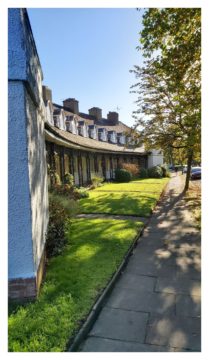 Port Sunlight was a model village constricted in the Wirral, in the Liverpool area, by the Lever brothers, and especially under the inspiration of William Lever, later lord Leverhulme. Their fortune was based on the manufacture of soap, and the village was built next to the factory in the Victorian/Edwardian era, for the employees and their families. It’s certainly a remarkable place, with different houses designed by various architects, parks, allotments, everything an Edwardian working class person might want. An enlightened employer, Lever was still a paternalist: he claimed his village was a an exercise in profit sharing, because “It would not do you much good if you send it down your throats in the form of bottles of whisky, bags of sweets, or fat geese at Christmas. On the other hand, if you leave the money with me, I shall use it to provide for you everything that makes life pleasant – nice houses, comfortable homes, and healthy recreation.” Overseers had the right to visit any house at any time to check for ‘cleanliness’ and that the rules about who could live in which house were observed (men and women could only share accommodation if they were in the same family). Still, by the stands of the day it was quite progressive – schools, art gallery, recreation of all sorts for the employees were important.
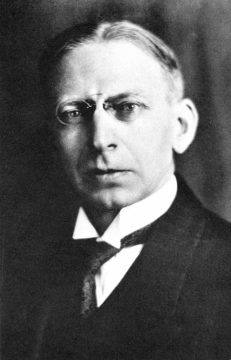 In 1930, the German anthropologist Berthold Laufer published a monograph on the phenomenon of people eating dirt.
 My grandmother’s bird of choice is the rooster. She was raised in rural Kentucky and now lives in rural Wisconsin. She collects all sorts of roosters (and, by extension, some hens): wall art, printed dish towels, ceramic statues as small as a pinky and as large as a lamp, coin bowls and blankets and something nostalgic in each one.
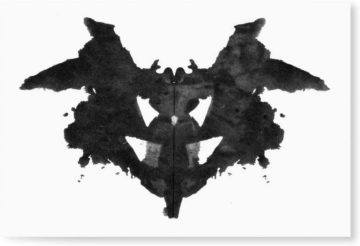
 Sughra Raza. Shadow Self-Portrait in a Reflection of a Window in a Window.
  A couple of years ago I briefly became famous for hating Vancouver. By “famous” I mean that a hundred thousand people or so read

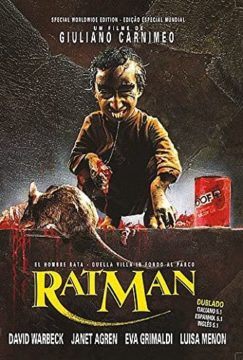 It was announced last week that scientists have integrated neurons from human brains into infant rat brains, resulting in new insights about how our brain cells grow and connect, and some hope of a deeper understanding of neural disorders.