
by Sarah Firisen
 Who doesn’t love a three-day weekend? If an extra day to relax isn’t good enough, the following week always seems to go quickly, making a Memorial Day, Labor Day, or a bank holiday in the UK, the gift that keeps on giving. Of course, most of us should consider ourselves lucky only to have to work a 5-day week. No law of the universe says a work week has to be 5 days. In fact, the concept of a 40-hour workweek is relatively new; it was only on June 25, 1938, Congress passed the Fair Labor Standards Act, which limited the workweek to 44 hours, and two years later, Congress amended that to 40 hours.
However, there’s now a growing dialog about the efficacy of moving towards a 4-day work week of 32 hours. The idea of a 4-day work week has been gaining momentum in recent years, with more and more companies experimenting with this alternative schedule. The theory is, perhaps counterintuitively, that reducing the number of workdays can lead to increased productivity and that it definitely leads to better work-life balance and overall employee satisfaction.
Conversations about the future of work were thrown into a global, real-time social experiment with the COVID-19 lockdowns. Suddenly, every white-collar worker was remote, and every prediction made by skeptical bosses about productivity losses if workers weren’t in the office was mostly proven incorrect. Indeed, companies found that their employees were even more productive while working remotely than in the office. This was partly due to fewer distractions, such as meetings and office chatter, and the ability to work flexible schedules that accommodated their personal needs. In fact, as many of us experienced, when freed from a daily commute and the structure of an office, we often found ourselves working more hours than ever. Read more »
 In the 1960s, when I was a boy growing up on the west side of Montreal, whenever my father needed a hit of soul food — a smoked-meat sandwich, some pickled herring, or a ball of chopped liver with grivenes—he would head east (northeast, really, in my hometown’s skewed-grid street plan) to his old neighborhood on the Plateau. He would make for Schwartz’s, or Waldman’s, to the shops lining boulevard St.-Laurent, once known as “the Main” in memory of its service as a major artery through the Jewish part of town before the district changed hands: or rather, reverted to majority rule. On weekends my father would travel a little farther, in the direction of Mile End, to either of two places, St. Viateur Bagels and Fairmount Bagels, each located on the street from which it took its name and each, as its name candidly proposed, a baker and purveyor of bagels.

 In the movies the mathematician is always a lone genius, possibly mad, and uninterested in socializing with other people. Or they are
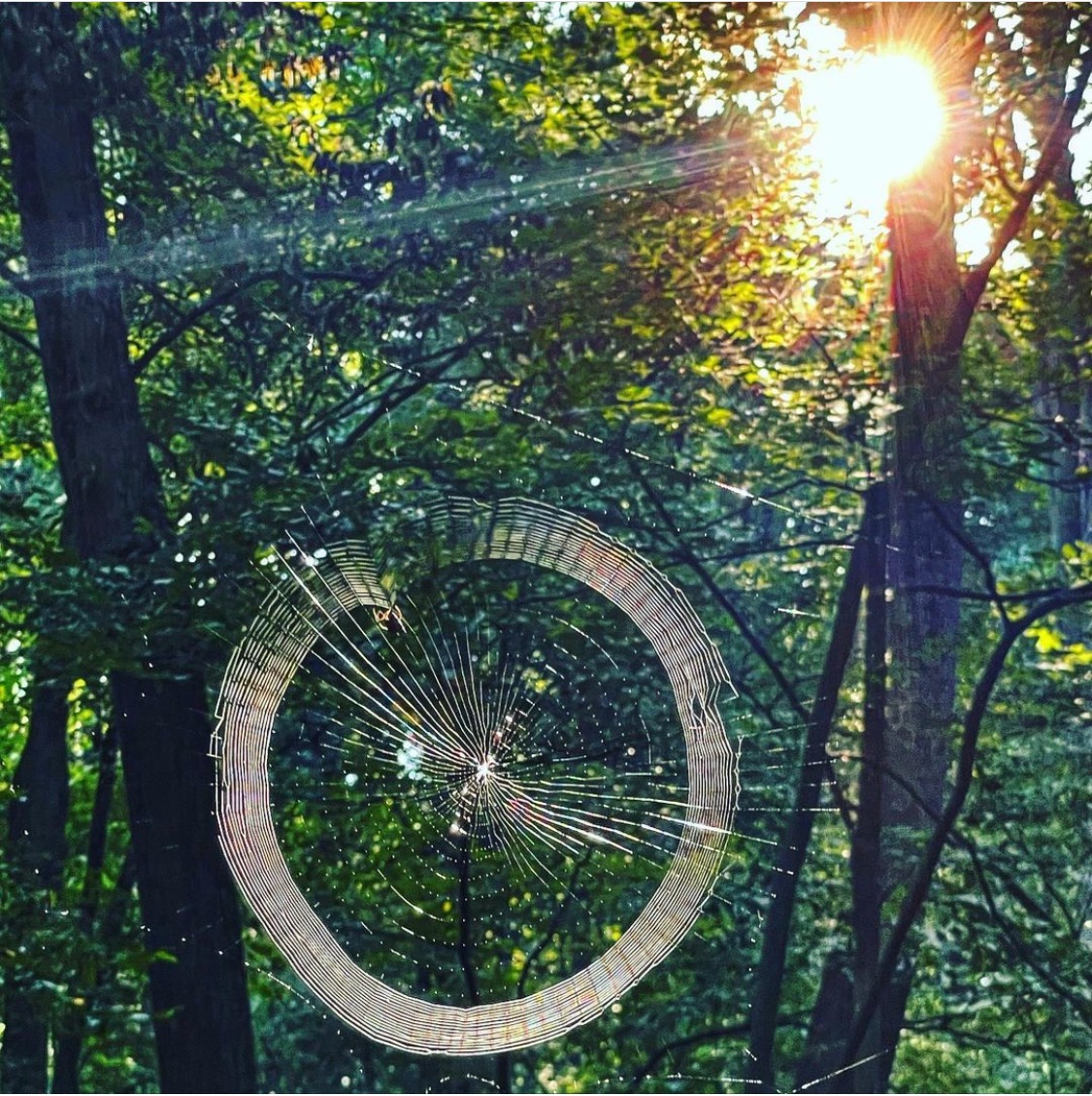 Zaneb Beams. Untitled, 2022.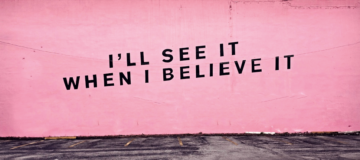


 ‘Wenn möglich, bitte wenden.’
 Everyone is talking about artificial intelligence. This is understandable: AI in its current capacity, which we so little understand ourselves, alternately threatens dystopia and promises utopia. We are mostly asking questions. Crucially, we are not asking so much whether the risks outweigh the rewards. That is because the relationship between the first potential and the second is laughably skewed. Most of us are already striving to thrive; whether increasingly superintelligent AI can help us do that is questionable. Whether AI can kill all humans is not.
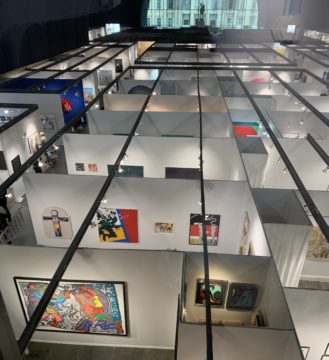
 Sughra Raza. NYC, April 2023.