
K Austin Collins in Slate:
 Dana, you’re absolutely right to wonder what happened to The Tale; it’s exactly the kind of movie I have in mind, underseen despite tackling one of the most urgent subjects of our moment. I may have seen better movies overall this year, but I don’t think any of them had a conceit that shook me as deeply as this one. It all comes down to a simple, harrowing thing that Jennifer Fox does to depict how the heroine of the film, also named Jennifer Fox (and played by Laura Dern), remembers a sexual relationship she had with her tennis coach as a teenager. She initially remembers herself as confident and sexually self-possessed; she remembers herself, in other words, as a young woman somewhat in control of what happened to her, and, as the movie reveals, this has led her to remember what happened as a more consensual affair, rather than as abuse.
But then comes the moment that we see Fox correct her memory, replaying the same flashbacks using a teen actress closer in demeanor and body type to the scared girl Fox actually was, rather than the woman she supposed she was. It’s shattering—an exceptional feat of writing, and of course, Dern kills the performance. It’s not an easy scene to watch, but The Tale is an easy film to see and has been for most of the year—it’s right there on HBO! But short of the ability of Oscar attention to revive discussion about that film, the full-fledged online discussion cycle for it has come and gone. It’s bewildering.
More here.
 Peter Carruthers, Distinguished University Professor of Philosophy at the University of Maryland, College Park, is an expert on the philosophy of mind who draws heavily on empirical psychology and cognitive neuroscience. He outlined many of his ideas on conscious thinking in his 2015 book The Centered Mind: What the Science of Working Memory Shows Us about the Nature of Human Thought. More recently, in 2017, he published a paper with the astonishing title of “The Illusion of Conscious Thought.” In the following excerpted conversation, Carruthers explains to editor Steve Ayan the reasons for his provocative proposal.
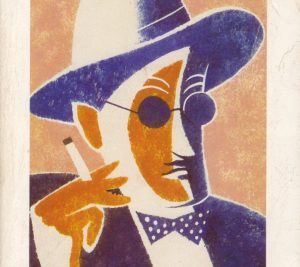 “Are we all Joyceans here, then?” the young professor asked, poking his head into the classroom doorway.
 Media coverage of uncontacted tribes often delights in painting indigenous groups as people out of time, hunter-gatherers in the age of Seamless. In November, an American missionary was killed trying to reach North Sentinel Island in the Bay of Bengal, home to a remote tribe thought to number about 100 people. Grainy images shot from a helicopter in 2004 of naked islanders brandishing spears flooded the internet. But when they first appear in Piripkura, Pakyî and Tamandua offer a different kind of spectacle. What is striking about them is not their timelessness, but rather their very modern resolve to persist against the odds, to be free from the outside world.
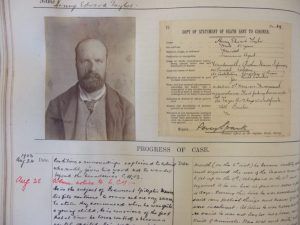 Nearly two decades ago, photo historian Douglas Nickel observed that traditional art history had not yet developed the tools for handling non-art photographs.
 Rooney’s second novel, “
 Hundreds of doctors packed an auditorium at Memorial Sloan Kettering Cancer Center on Oct. 1, deeply angered by revelations that the hospital’s top medical officer and other leaders had cultivated lucrative relationships with for-profit companies. One by one, they stood up to challenge the stewardship of their beloved institution, often to emotional applause. Some speakers accused their leaders of letting the quest to make more money undermine the hospital’s mission. Others bemoaned a rigid, hierarchical management that had left them feeling they had no real voice in the hospital’s direction. “Slowly, I’ve seen more and more of the higher-up meetings happening with people who are dressed up in suits as opposed to white coats,” said Dr. Viviane Tabar,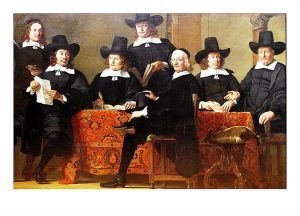

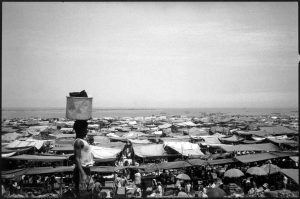

 “I’m on a roadside perch,” writes Ghalib in a letter, “lounging on a takht, enjoying the sunshine, writing this letter. The weather is cold…,” he continues, as he does in most letters, with a ticklish observation or a humble admission ending on a philosophical note, a comment tinged with great sadness or a remark of wild irreverence fastened to a mystic moment. These are fragments recognized in Urdu as literary gems because they were penned by a genius, but to those of us hungry for the short-lived world that shaped classical Urdu, those distanced from that world in time and place, Ghalib’s letters chronicle what is arguably the height of Urdu’s efflorescence as well as its most critical transitions as an elite culture that found itself wedged between empires (the Mughal and the British), and eventually, many decades after Ghalib’s death, between two countries (Pakistan and India).
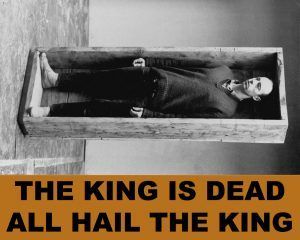 Robert Morris died last month on November 28th at the ripe old age of 87. Very ripe indeed. If he was a fig he’d have been all jammy inside, dribbling the honeyed sugars of maturation. But he’s dead, and I’m glad he’s dead. Let me step back before explaining why – this isn’t an exposition, this is an obituary; I’m grieving; this is diffused ramblings at a podium. I went to Hunter College for undergraduate philosophy and flirted with the art department quite a bit. Morris’ legacy loomed large and hard over the department as he had both attended grad school and taught there. Any course in the art department was bound to encounter his work or his writings. I must have been assigned “Notes on Sculpture” a dozen times. Morris was, and still is, a great artist. His was a scholarly brand of art; neither annoying like Joseph Kosuth, nor dehydrated like Hans Haacke. No, Morris was a genuine student of art and thought. He studied its history, wrote about it emphatically, and contributed to its heritage. It is not difficult to view him as one of the several pillars that contemporary art stands upon today, and feel indebted to his legacy. One of his first well regarded artworks was Box for Standing, which was a handmade wooden box roughly the size of a coffin that fit Morris neatly. How fitting then, that his exit from this life should perhaps be in a box bespoke for his corpse, roughly the same size as his original Box? His expiration has a funny effect on that work, Box for Standing, where his actual death gives the work one last veneer of meaning to stack upon all the other layers. One might have seen similarity between the Box for Standing and funerary vessels before Morris died, but afterward it would be reckless not to see it. The work goes from being a sparse theatrical gesture contained in minimal sculpture, to something like a pragmatic Quaker coffin, verging on bleak humor.
  JOHN MCDONNELL IS CAGEY
 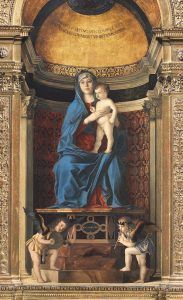 Bellini was probably even younger than Mantegna when he first saw his new relative’s Presentation of Christ in the Temple – art historians will never stop worrying about his exact birthdate. (He may have been Jacopo Bellini’s illegitimate son. Records are scarce. Mantegna was the child of a carpenter, from a very ordinary village. His birthdate is also unknown.) When Bellini turned back to The Presentation of Christ in the Temple twenty years later he was the master of a new style, and dialogue with Mantegna had established itself as an aspect of that mastery – his great Agony in the Garden, done in response to a panel by his brother-in-law, lay behind him. It is hard, therefore, not to see the redoing of The Presentation of Christ in the Temple as some kind of contest as well as homage. But I found myself as I looked convinced that for Bellini what counted most was the opportunity, within the confines of someone else’s invention, to reflect on – to discover – what his own art most deeply consisted of. Oil paint versus tempera made many things clear. And, further, coming to terms with the true nature of one’s art – one’s necessary medium – meant coming closer to the mysteries enounced in Luke’s text.
 In Western democracies, literature no longer matters to politics. Once, literature and politics could co-exist on the same typewriter or in the same person: George Orwell in Britain, André Malraux in France. But that was a long time ago. Still, the powers of politics remain linguistic, whether bureaucratic or rhetorical: the war criminal at his desk, the elected representative on her Twitter. Amos Oz, the Israeli novelist who died today aged 79, was living proof of the political powers of literature. In Israel, which is a Western democracy most of the time, Oz is seen as a great writer but a failed politician. In the West, he is seen as the still-living conscience of a political failure. Nothing shows us both sides of a story so well as a novel. And nothing occludes the quality of literature like politics.
 Hans Rosling
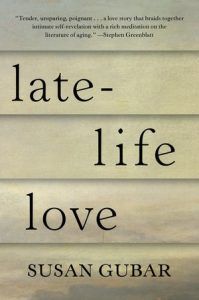 My parents’ generation, lucky enough to pass the biblical three score and 10, would describe themselves as living on “borrowed time.” Susan Gubar has been granted a longer credit line than most. In 2008, in her mid-60s, she learned she had ovarian cancer. It spread. After the cruelties of chemo, she was subjected to “debulking” — surgical evisceration. Gubar described the procedure unflinchingly in her 2012 book,
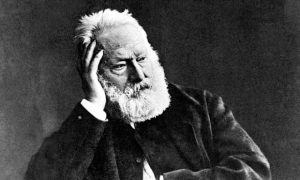 Victor Hugo