
Patrick Kingsley in The New York Times:
 Jan Mattlin was having what counts as a bad day in Kauniainen. He had driven to the town’s train station and found nowhere to park. Mildly piqued, he called the local newspaper to suggest a small article about the lack of parking spots. To Mr. Mattlin’s surprise, the editor put the story on the front page. “We have very few problems here,” recalled Mr. Mattlin, a partner at a private equity firm. “Maybe they didn’t have any other news available.” Such is the charmed life in Kauniainen (pronounced: COW-nee-AY-nen), a small and wealthy Finnish town that can lay claim to being the happiest place on the planet. Finland was named the world’s happiest country by the United Nations Sustainable Development Solutions Network in April, based on polling results from 156 nations. And a second survey found that Kauniainen’s 9,600 residents were the most satisfied in Finland, leading the local mayor, Christoffer Masar, to joke that theirs was the happiest town on earth.
…Kauniainen’s blandly named Adult Education Center, a tall building on the edge of town, did not sound promising. But it was here, not the bar, where large numbers of residents were having fun that evening. In the basement, they were weaving carpets on vast looms, and making pottery. On the ground floor, a choir was singing. On the floors above, others were painting replicas of Orthodox Christian icons — or practicing yoga. Subsidized by both the state and the city, the center offers cheap evening classes to residents “in basically anything that people might be interested in,” said Roger Renman, the center’s director.
More here.
 In reviewing “Intimations of Ghalib”, a new translation of selected ghazals of the Urdu poet Ghalib by M. Shahid Alam, let it be said at the outset that translating classical Urdu ghazal into any language – possibly excepting Persian – is an almost impossible task, and translating Ghalib’s ghazals even more so. The use of symbolism, the aphoristic aspect of each couplet, the frequent play on words, and the packing of multiple meanings into a single verse are all too easy to lose in translation. And no Urdu poet used all these devices more pervasively and subtly than Ghalib, and even learned scholars can disagree strongly on the “correct” meaning of particular verses. As such, Alam set himself an impossible task, and the result is, among other things, a demonstration of this.
 In 2018, Earth picked up about 40,000 metric tons of interplanetary material, mostly dust, much of it from comets. Earth lost around 96,250 metric tons of hydrogen and helium, the lightest elements, which escaped to outer space. Roughly 505,000 cubic kilometers of water fell on Earth’s surface as rain, snow, or other types of precipitation. Bristlecone pines, which can live for millennia, each gained perhaps a hundredth of an inch in diameter. Countless mayflies came and went. As of this writing, more than one hundred thirty-six million people were born in 2018, and more than fifty-seven million died.
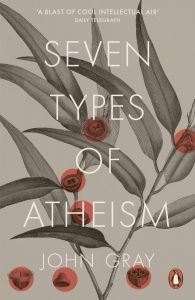 It is simultaneously awkward and exciting to read about your own consciously and responsibly adopted beliefs as something to be anatomized. It is also something atheists are not always much disposed to. On the contrary, perhaps: many forms of atheism present themselves as a consequence of free thought, of emancipation from tradition. The internal logic of their arguments prescribes that while religious beliefs, being non-rational, are in need of cultural or psychological explanation, atheism is really just what you will gravitate towards once you finally start thinking. One question here will be whether this is necessarily the case.
 Certain phrases choke us with their ubiquity at some point:
 As we approach the end of the year, it’s that time again. Not to flip the page to the next month, but to buy a new calendar. (Who am I kidding? It’s probably only me and your grandmother who still uses paper wall calendars…) And also to reflect.
  Guinea and Redhead were part of a large food chain. Beyond campus’ freshly-baked sidewalks, a Cowboy Mafia ferried contraband from the south. They landed small prop planes on ranch land outside of town, cut powder with dental anesthetics and broke up the bales. Their wares clumped on our cafeteria trays and glinted in tiny screw-top bottles. The capo, a local big-hat business man,who ran a palatial kicker-dance hall and owned the ranch. That legit business and his crew’s discipline kept them out of jail. Maybe a hat full of cash in the bargain.
 The new year approaches and with it comes our annual habit of self-promises in the form of New Year’s resolutions. Statistically speaking, though, 2019 won’t be your year. While many of us start strong, we tend to flounder come February, and studies cite the failure rate to be anywhere from 80 to 90 percent.
 The ongoing three-way public-relations car wreck involving Washington, Facebook, and

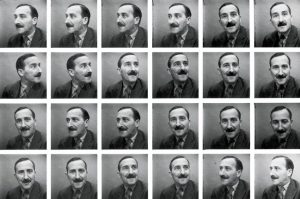 On February 22, 1942, the Austrian writer Stefan Zweig and his second wife went to the bedroom of a rented house in Petrópolis, Brazil. They lay down—she in a kimono, he in a shirt and tie—after taking an enormous dose of barbiturates. When news of their suicides broke, it was reported as a matter of worldwide significance. The New York Times carried the news on its front page, alongside reports of the rout of Japanese forces in Bali and of a broadcast address by President Roosevelt. An editorial the next day, titled “One of the Dispossessed,” saw in Zweig’s final act “the problems of the exile for conscience sake.” Zweig, a Jew, had left Austria in 1934, living in England and New York before the final move to Brazil, and his work had been banned and vilified across the German-speaking world. In his suicide note, he spoke of “my own language having disappeared from me and my spiritual home, Europe, having destroyed itself.” He concluded, “I salute all my friends! May it be granted them yet to see the dawn after the long night! I, all too impatient, go on before.”
 I am glad,’ wrote the acclaimed American philosopher Susan Wolf, ‘that neither I nor those about whom I care most’ are ‘moral saints’. This declaration is one of the opening remarks of a landmark essay in which Wolf imagines what it would be like to be morally perfect. If you engage with Wolf’s thought experiment, and the conclusions she draws from it, then you will find that it offers liberation from the trap of moral perfection. Wolf’s
  Over the weekend, the New York Times Book Review