by Rafaël Newman
 I’ve been visiting Ontario this month. Which is a wildly non-specific thing to say, since the province of Ontario, though only the second largest of Canada’s constituent divisions, boasts a surface area greater than those of Germany and Ukraine combined. But while I would normally designate as my destination the city in Ontario in which I mean to stay during my annual visit to my home and native land—as for instance Toronto, the provincial capital, where I went to high school and university; or Kingston, once Canada’s Scottish-Gothic capital, where my brother has settled with his family—the particular reason for this year’s sojourn, which began with a brief visit to relatives in Montreal, was my niece’s wedding, on August 12, celebrated at her fiancé’s family home in Frankford, with guests put up in the towns surrounding that hamlet on the River Trent, in Hastings County, the second largest of Ontario’s 22 “upper-tier” administrative divisions. Which all feels to me quite uncannily foreign, not to say unutterably vague. Hence simply: I’ve been visiting Ontario this month.
Ontario at large, small-town Ontario, Ontario beyond “the six,” Toronto without its vast suburbs, so-called for its prestigious area code, feels foreign to me because it first came to my attention, when I was around eight years old, as a vast, unknowable hinterland, the beginning of Canada proper, somewhere to the west of the province of Quebec, whence my entire immediate family hales—more to the point, to the west of the city of Montreal, where I was born, and which seemed to me, in my early years, the only real place in the country: Montreal, with its distinctive rows of duplexes, its outdoor staircases, its smoked meat sandwiches, its bagels, its maple-sugar holidays and its antiquated French dialect. “Ontario,” generally, had no culture, no flavor, no flair; it was too Anglo, too American, too goyish. Read more »
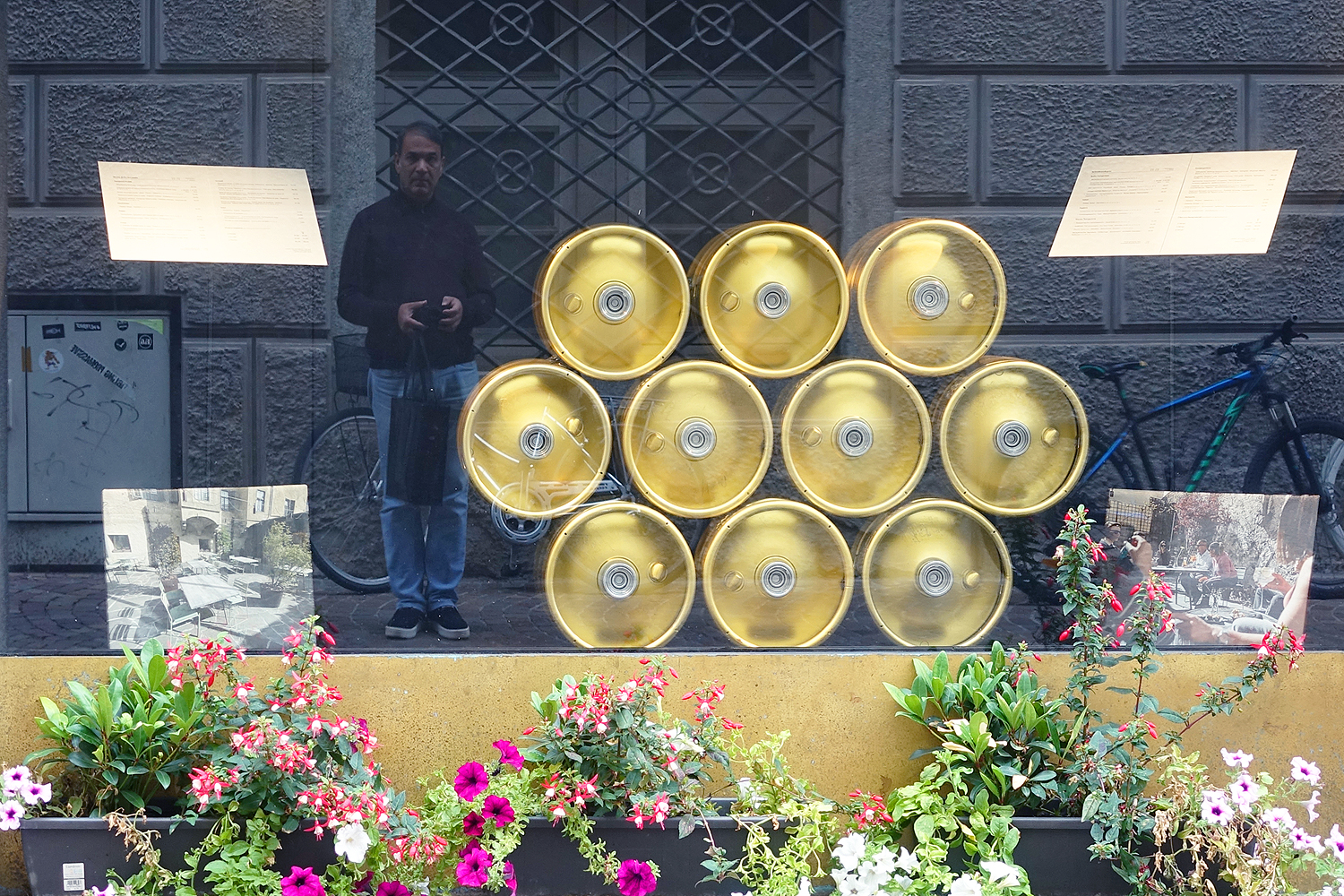
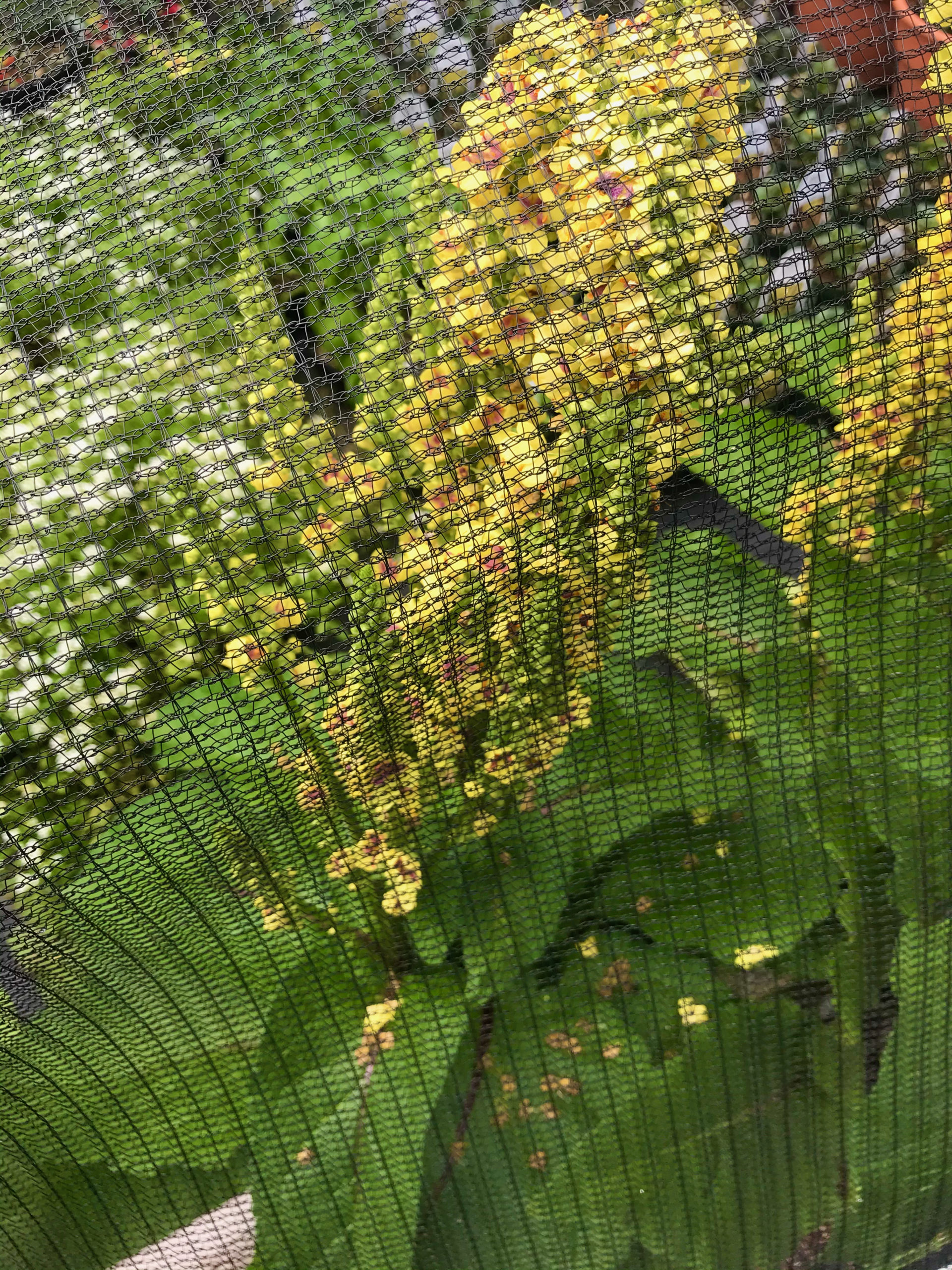 Sughra Raza. Untitled, July 2020.
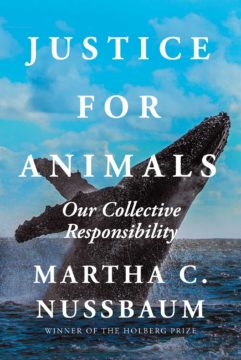 The cover of Martha Nussbaum’s Justice for Animals (2023) shows a humpback whale breaching: a magnificent sight, intended to evoke both respect for the animal’s dignity, and interest in its particular forms of behavior. Here is a creature which has moral standing, without being a direct mirror of our human selves.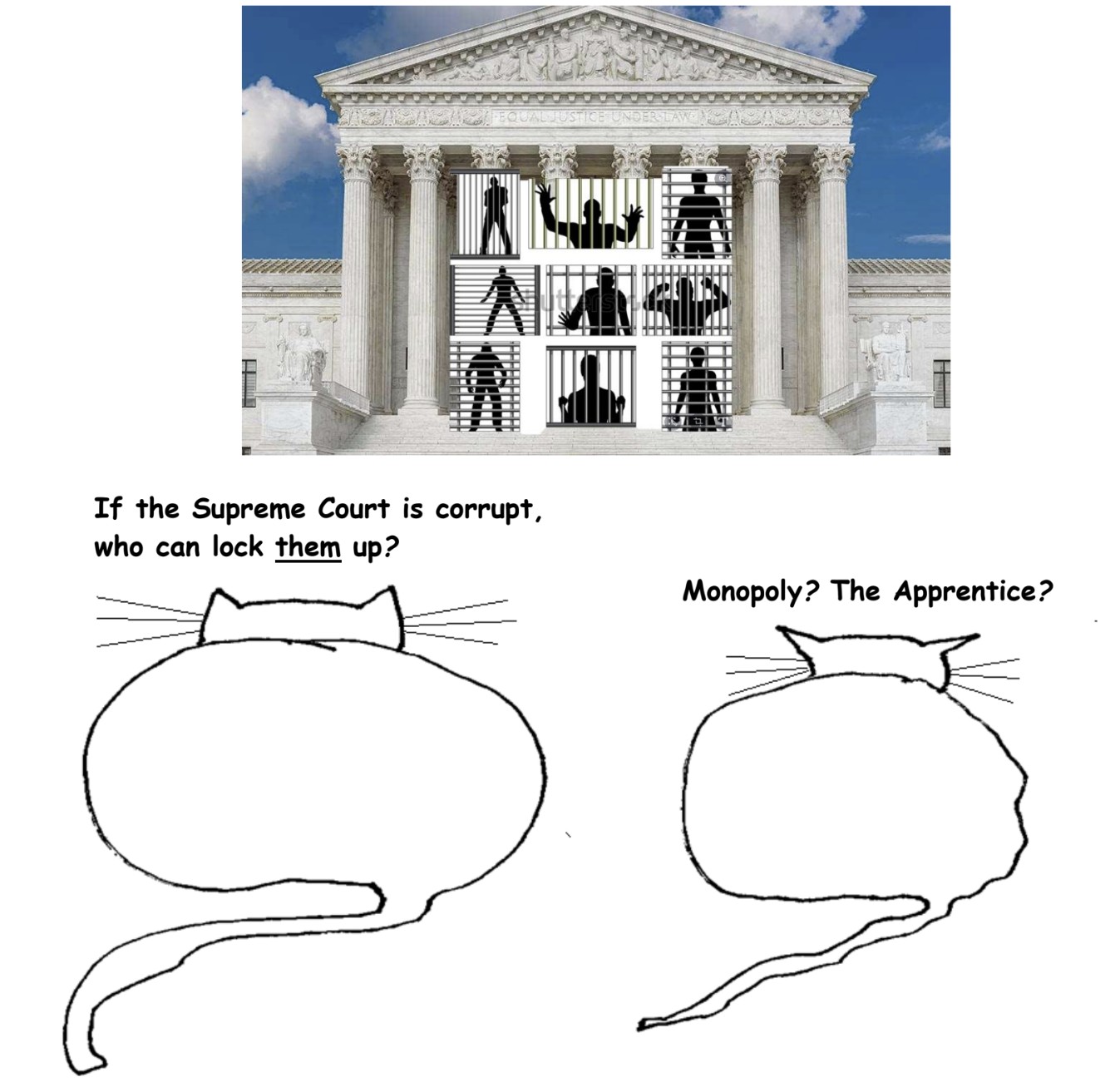

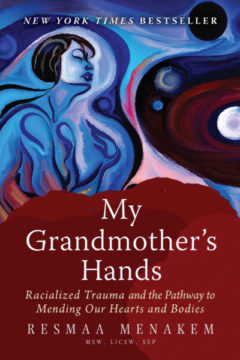 Resmaa Menakem’s
  Dear Peridot Child,
 I met Kseniia during my second visit to Ukraine, in June 2023. The moment I met her, I knew that this thirty-four-year-old woman is a special one. Kseniia belongs to the type of women who made Molotov cocktails to help defend Kyiv in March 2022. “I had some romantic idea to create these Molotov cocktails, because I heard that it might come to urban warfare, and I wanted to help. We spent a whole day making them, but the smell of petrol was awful.” Nevertheless, Kseniia made several boxes.
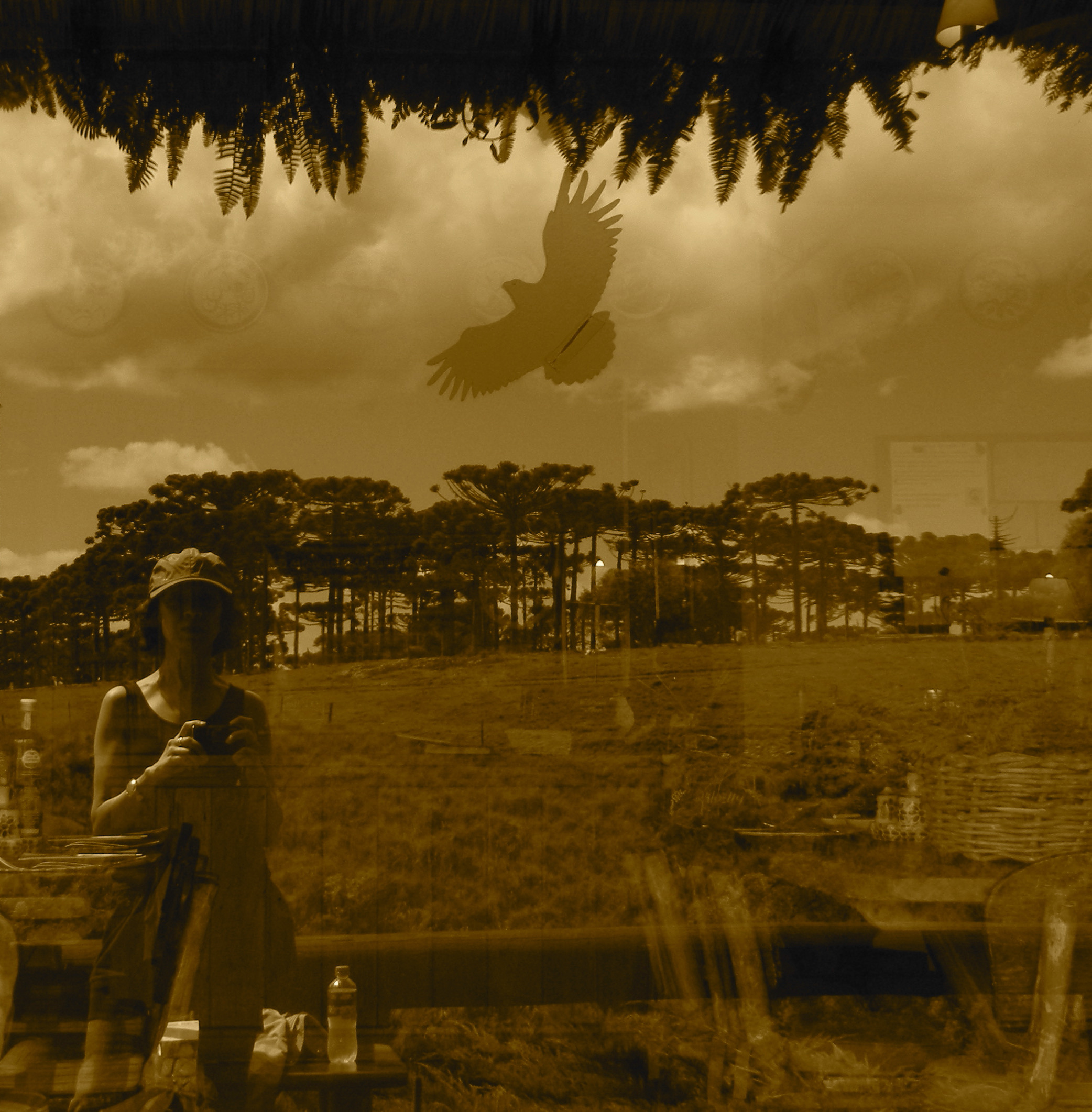 Sughra Raza. Self-portrait at Itaimbezinho Canyon, Brazil, March 2014.
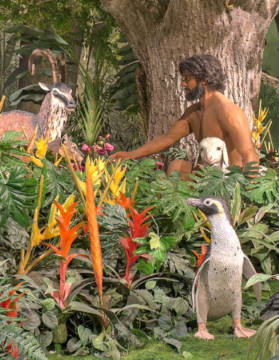 I picture the LORD God as a child psychologist—very much of a type, vaguely professorial, plucked from the ’50s. Picture him with me: shorn and horn-rimmed, his fingernails immaculate, he’s on his way to a morning appointment. As he kneels in the garden to tie his shoe, his starched white shirtfront strains against his gut.