by Ethan Seavey
September 7, 2021 (roughly 11,000 years ago)
A sad young novelist named Ethan Seavey wrote this sad scene in which the love interest is brutally honest and is revealed to be less loving of Peter the person and more loving of Peter the artist. At the end of a three month long workshop, Peter invites only the love interest, Noah.
//
Seavey wrote:
I sot [sic.] on the floor of the empty gallery for a while and waited. I finally hear the door open and he walks in and I pat the ground next to me. He sits next to me and glances around the room.
“Yours isn’t here,” he says. “But I bet that Joan of Arc painting won.”
“It’s not even biblical.”
“Where’s yours?”
And so I took him all the way to the top, to the dome and to my great failed masterpiece, a graffiti tableau on top of the old cathedral. I thought I’d shock him but it had no such effect on his face. He frowned and looked on.
“It’s not your best. Just your boldest. The Joan of Arc one deserved the win.”
I look at him and wonder how he can be so cruel.
“Your use of color is all over the place. You can’t see the whole picture. All you can see is each little vignette. In one corner a man is flayed by the beast; in another four horses jockey for first place and over there is the heavenly sphere you have broken up. It is biblical but not in grandness or nuance. It is a meaningless bastard tomorrow without implication.
“But Joan is assertive and beautiful and unsure. She says a lot without opening her lips. The artist has less talent than you but they knew how to fight with integrity.
“You see that. You know this isn’t the peak of your work. But you’re stubborn and sad. And that will offer no more opportunities than…” and he gestures at the dome, “this soulless failure.”
I listen until those last words and then I leave him alone on the roof. I’m walking down the stairs and yes I am gone but I am picturing him sitting alone and glowing in his genius like he always is.
//
After discovering this text, my team of archaeologists focused on two main points. One is relatively short compared to the intricacies of the other. Read more »
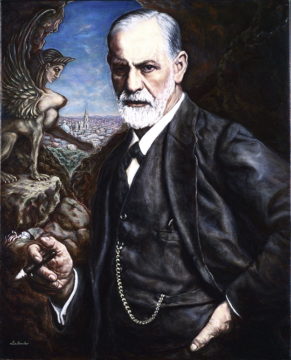
 The first

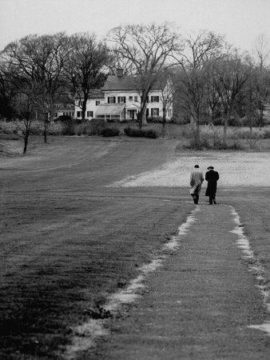

 Jeffrey Gibson. Chief Black Coyote, 2021.
 Lucky you, reading this on a screen, in a warm and well-lit room, somewhere in the unparalleled comfort of the twenty-first century. But imagine instead that it’s 800 C.E., and you’re a monk at one of the great pre-modern monasteries — Clonard Abbey in Ireland, perhaps. There’s a silver lining: unlike most people, you can read. On the other hand, you’re looking at another long day in a bitterly cold scriptorium. Your cassock is a city of fleas. You’re reading this on parchment, which stinks because it’s a piece of crudely scraped animal skin, by the light of a candle, which stinks because it’s a fountain of burnt animal fat particles. And your morning mug of joe won’t appear at your elbow for a thousand years.
 Harry Frankfurt died on July 16, 2023. As a philosophy student I came to appreciate him for his work on freedom and responsibility, but as a high school word nerd, I came to know him the way other shoppers did: as the author of one of those small books near the bookstore checkout line. That book, On Bullshit, had exactly the right title for impulse-buying, which has to explain how Frankfurt became a bestselling author in a field not known for bestsellers.
 I had my first experience with Daylight Saving Time when I was 9 or 10 years old and living in Phoenix. Most of the country was on DST, but Arizona wasn’t. I knew DST as a mysterious thing that people in other places did with their clocks that made the times for television shows in Phoenix suddenly jump by one hour twice a year. In a way, that wasn’t a bad introduction to the concept. During DST, your body continues to follow its own time, as we in Phoenix followed ours. Your body follows solar time, and it can’t easily follow the clock when it suddenly jumps forward.

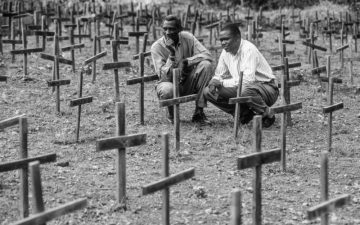 Unspeakable horrors transpired during the genocide of 1994. Family members shot family members, neighbours hacked neighbours down with machetes, women were raped, then killed, and their children forced to watch before being slaughtered in turn. An estimated 800,000 people were murdered in a country of (then) eight million. Barely thirty years have passed since the Rwandan genocide. Everywhere, there are monuments to the dead, but as an outsider I see no trace of its shadow among the living.