by Gus Mitchell
The idea for this essay came not just from Thoreau, but from a conversation between Professors Robert Pogue Harrison and Andrea Nightingale of Stanford University. That conversation can be heard here. I gratefully recommend it to everyone.

1. Sometime “early in ‘46” Henry David Thoreau sets out to measure the depth of a pond. He is at the end of his first year at the cabin in the woods.
2. Winter ice still covers the water. Thoreau uses only a “compass and chain and sounding line” to make his investigations. Walden – “that truly illusive medium” – is said to have no bottom. Perhaps it reaches clean through the centre of the earth to the other side; some Concordians have lie on its bank, fancying the source of the Styx opening from below.
3. “Be it life or death”, he writes early in Walden, “we crave only reality.” And morality, philosophy, imagination itself are all seeded and cultivated in observation and participation of the natural world, the true face of which is “wildness.”
4. The incuriosity of his fellow Concordians bothers Thoreau. He does what nobody else has thought to do with Walden Pond: “taking the trouble to sound it.” It’s done “easily, with a cod-line and a stone weighing about a pound and a half.” Being able to “tell accurately when the stone left the bottom, by having to pull so much harder before the water got underneath to help me.” He ends up measuring the depth of the pond, “a reasonably tight bottom, at a not unreasonable, though at an unusual, depth,” as 102 feet (adjusted to 107 feet once the water-level rises in Spring).
5. These experiments generate a host of hypotheses. Thoreau maps carefully, putting down soundings – “more than a hundred in all.” He wonders about larger, universal laws through which the depth of bodies of water might be inducted. He finds the intersecting lengthwise and breadthwise lines on his map meet at exactly the point of greatest depth in the map’s centre. From this, he moves to speculation on “the deepest part of the ocean as well as of a pond or puddle.” And might these rules apply to the height of mountains, as well as to the depth of valleys?
6. This is the concluding set piece Walden – a book made of set pieces – each one illustrating some aspect of the “truth” of which Thoreau has become “convinced.” He is a man both deeply practical and deeply extravagant. Read more »
 Resmaa Menakem’s
  Dear Peridot Child,

 I met Kseniia during my second visit to Ukraine, in June 2023. The moment I met her, I knew that this thirty-four-year-old woman is a special one. Kseniia belongs to the type of women who made Molotov cocktails to help defend Kyiv in March 2022. “I had some romantic idea to create these Molotov cocktails, because I heard that it might come to urban warfare, and I wanted to help. We spent a whole day making them, but the smell of petrol was awful.” Nevertheless, Kseniia made several boxes.
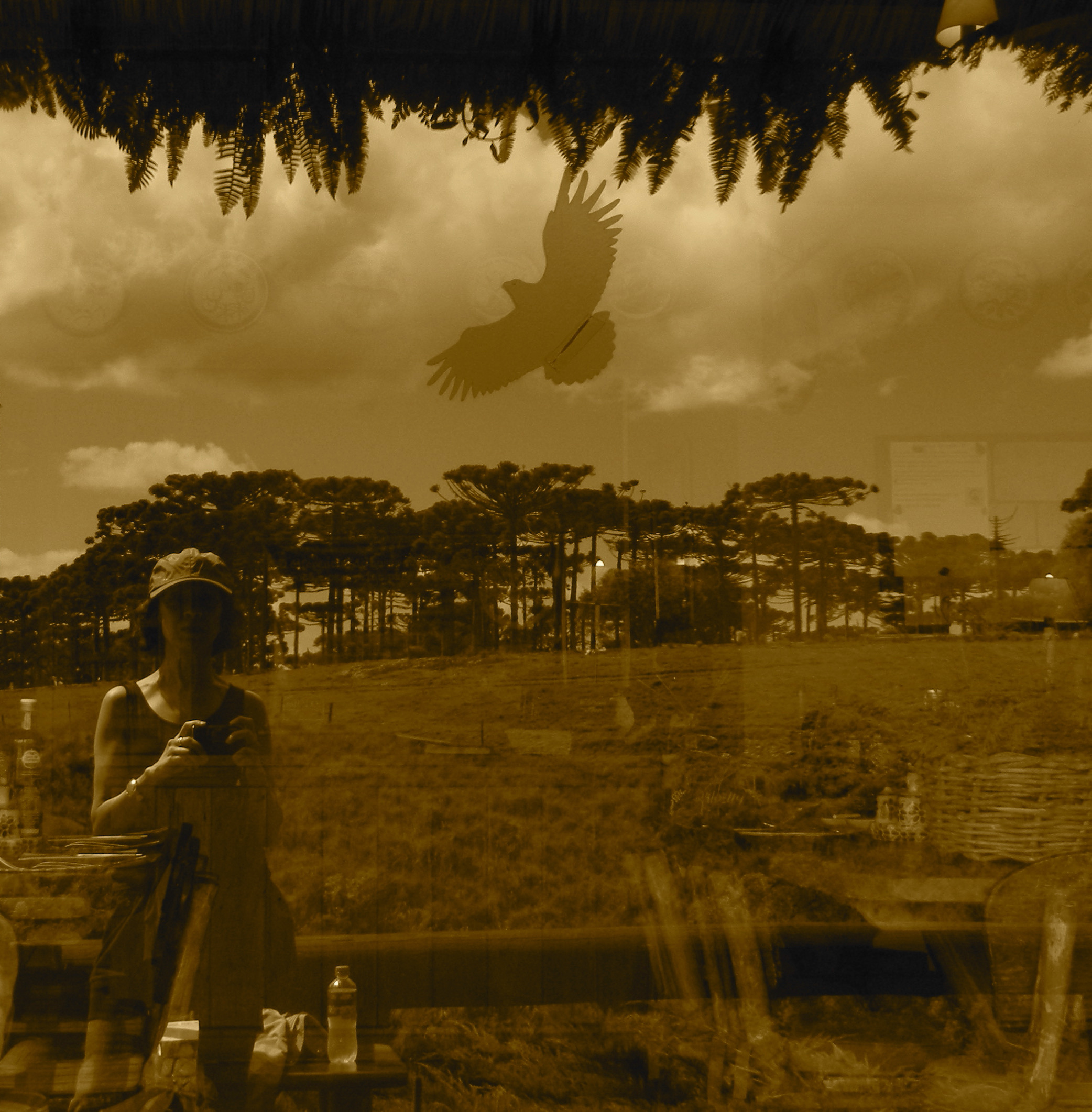 Sughra Raza. Self-portrait at Itaimbezinho Canyon, Brazil, March 2014.


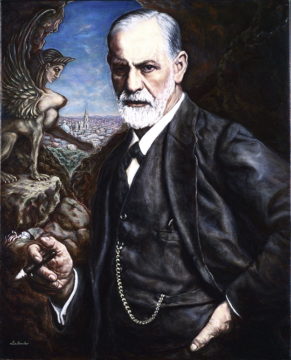
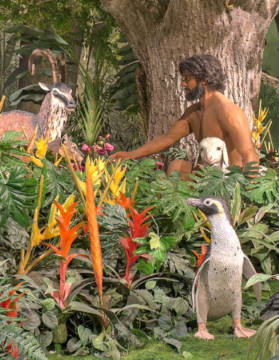 I picture the LORD God as a child psychologist—very much of a type, vaguely professorial, plucked from the ’50s. Picture him with me: shorn and horn-rimmed, his fingernails immaculate, he’s on his way to a morning appointment. As he kneels in the garden to tie his shoe, his starched white shirtfront strains against his gut.
 The first