
Cars in front of the train station of Franzensfeste, South Tyrol, during a brief but heavy snowfall last week.

Cars in front of the train station of Franzensfeste, South Tyrol, during a brief but heavy snowfall last week.
by Marie Snyder
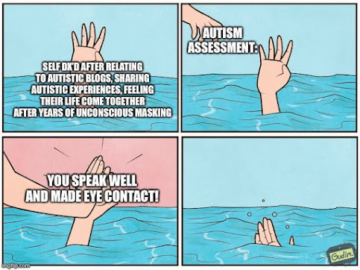 There are a few ideas I’ve seen floating around on social media about people with Autism Spectrum Disorder (ASD) having no empathy, no Theory of Mind, and being in need of fixing instead of accommodating. I just ignored them. But then I heard similar statements in a university class with controversial Autism Speaks and Hopebridge videos on the curriculum. I relayed my concerns about promoting only these organizations without explanation of current concerns and without providing other perspectives like from the National Autistic Society or Autistic Self Advocacy Network. This is a bit of a take-down on what appears to be an accepted curriculum around autism.
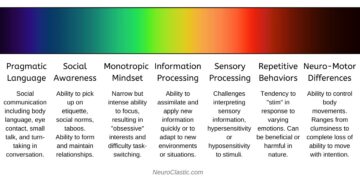 What is ASD? C.L. Lynch at NeuroClastic explains the spectrum really well using this illustration. You need to be affected in several of these areas regularly to be on the spectrum, and every person’s different. It’s complex. I went so far as to craft an assessment, the AQ-27, not remotely peer reviewed but rooted in the DSM-5, after being absolutely floored by the offensiveness or inaccuracy of the official assessments we had to learn in class.
Some advocates are “furious over the tone of the [Autism Speaks] video. ‘We don’t want to be portrayed as burdens or objects of fear and pity.” Hopebridge suffered scandals when an employee was fired for reporting an abusive incident with accounts of “undertrained staff and high turnover, a lack of transparency and accountability, and practices that prioritize profit over the needs and safety of young people with autism.” Some implications that people with ASD require lifelong care have been questioned since original stats were based on studies of children in psychiatric wards: “This potential bias means that we still know relatively little about the achievements of individuals in whom the presentation of early symptoms is more subtle.” Read more »
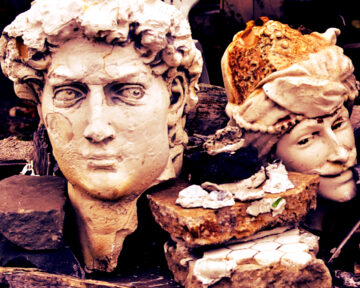 I read a great deal of Bertrand Russell when I was in my teens. I read various collections of essays, such as Why I Am Not A Christian, In Praise of Idleness and Other Essays, and Marriage and Morals, some of which my father had stored in a box in the basement, along with Orwell’s 1984, Huxley’s Brave New World, a book or two by this guy named Freud, though I forget which one, and some others. I also Russell’s – dare I say it? – magisterial A History of Western Philosophy And Its Connection with Political and Social Circumstances from the Earliest Times to the Present Day, which I purchase myself, a big thick paperback with a white cover. It was cited when he received the Nobel Prize for Literature in 1950.
It was from Russell more than anyone else that I got the idea that philosophy was a grand synthetic discipline, which I liked. Putting things together, seeing how all the parts interacted, that had immense appeal to me. And so I became a philosopher major when I enrolled in The Johns Hopkins University in 1965. I enjoyed an introductory course called, I believe, Types of Philosophy. Edward Lee’s course in Plato and the Pre-Socratics was wonderful as well; Lee was young, charismatic, and loved Mahler, as I did.
Then there was a two-semester sequence in the history of modern philosophy, from Descartes up through Kant. Maurice Mandelbaum taught the first semester, outlining each lecture on the board and then delivering on the outline. The lectures were so clear that you almost didn’t have to read the primary texts. The second semester was taught by a visitor from Chicago, Alan Gewirth. A different experience, like pulling teeth. Gewirth did the pulling and we students offered up our teeth. Ouch! But perhaps more pedagogically effective than Mandelbaum’s clarity, more Socratic, if you will.
By my junior year, however, I had come to realize that philosophy, as it is practiced in the academic world, is not what I had imagined it to be from reading Russell’s essay. It was another specialized discipline that had long ago abandoned any attempt at a broad synthesis. Fortunately, I had discovered literature, and Dr. Richard Macksey, whom I’ll discuss in more detail later. I’d always loved to read, and Macksey’s free-wheeling and broad ranging intellect appealed to me. I took four courses with him, plus an independent study on I forget what, and did a master’s thesis on “Kubla Khan” under his supervision. Literary criticism became the rubric under which I put things together. And why not? Literature expresses the world, and so couldn’t one study the world under the rubric of studying literature?
Well, no, if you must ask. By the time I’d figured that out – it didn’t take but a year or three – I was committed to an impossible intellectual project. I remain so committed. I will end this essay by arguing – it’s more of an earnest suggestion, really – that perhaps, if we do it right – of which there is no guarantee, and many signs that we’re botching it – we can harness these marvelous new machines to the job of synthesizing (human) knowledge. If we succeed, we’ll find ourselves in a whole new world, perhaps one where it is not at all obvious who is harnessed to what and to what end. I will, however, proceed indirectly. Read more »
by Ashutosh Jogalekar
Bill Lanouette is the author of “Genius in the Shadows“, the definitive biography of the Hungarian-born American physicist Leo Szilard. Szilard was one of the most creative and far-seeing minds of the 20th century, imagining before anyone else both the reality of nuclear weapons and the seismic political and social changes that would be needed to contain them. As a multidisciplinary thinker without parallel, he contributed deeply to physics, engineering, politics and biology, while having original opinions on virtually every other subject.
Szilard wrote the famous letter that Einstein sent to President Franklin Roosevelt warning about German’s possible efforts to develop an atomic bomb, started an organization to help Jewish refugee scientist find jobs, tried to argue for international control during his work on the Manhattan Project, went straight to the top to convince leaders like FDR, Truman and Khrushchev to work together to secure the peace and, by acting as an “intellectual bumblebee”, inspired the pioneering work of thinkers as diverse as Claude Shannon, James Watson, Francis Crick and Francois Jacob. If he had lived today, Szilard would have been as much at home in the corridors of power in Washington as in the garage startups of Silicon Valley. He would be what we would call today an “uber-influencer”, in the very best sense of the term.
But, unlike many of his famous contemporaries, Szilard remains the “genius in the shadows”, often ignored in conventional histories and movies about nuclear weapons and the Manhattan Project. Bill and I have a conversation about this remarkable man’s life and legacy and his enduring lessons for our time. For viewers with specific interests, I have broken the video into convenient topical segments which you can view by hovering over them. Read more »
by Tim Sommers

Global migration has been remarkably stable for decades. Despite that, media coverage of immigration tends to give the opposite impression. In the US, for example, there’s always a “crisis at the border.” But if there is a real crisis it’s not about the number of immigrants coming into the US relative to population. The percentage of the US population born outside the US is on the rise now, but it has never gone below 5% or above that 15%. The US does have more immigrants than any other country “by a wide margin” – and the rate of immigration has been trending up since the 1970s. But the percentage of immigrants living in the US relative to population (14%) is similar to the number living in similar countries like Canada (20%) and Australia (33%). And then there’s this from the nonpartisan Congressional Budget Office: “In our projections, the deficit is…smaller than it was last year because economic output is greater, partly as a result of more people working. The labor force in 2033 is larger by 5.2 million people, mostly because of higher net immigration. As a result of those changes in the labor force, we estimate that, from 2023 to 2034, GDP will be greater by about $7 trillion and revenues will be greater by about $1 trillion than they would have been otherwise.”
In a recent book, “How Migration Really Works,” Dutch sociologist Hans de Haas argues that the real immigration crisis is political and arises from what he calls the “paradox of immigration.” The problem is that there are three demands always in play in immigration debates. (i) We can’t reduce people’s rights to work or settle at the risk of disrupting the smooth running of the economy. (ii) We have a moral obligation to respect the rights of immigrants, including officially unauthorized immigrants, to fair and humane treatment. (iii) We should respect, or at least can’t resist, the political will of the majority of citizens who oppose immigration. The problem is we can do any two of these, but not all three. Simultaneous pressure from both the left and the right has reduced the Western political approach to immigration to, Haas argues, “bold acts of political showmanship that conceal the true nature of immigration policies.” In the U.S., as Duncan Black puts it, immigration “is an issue completely untethered from whatever the reality of it is, and people mostly don’t care until conservative media/politicians are telling them to care and then they get enraged…They aren’t mad about immigration, they are mad about what they see on television.”
One small contribution that ethics might make to this political morass is to examine our moral obligation to allow immigration – or not. Read more »
who knows from where the echoes come,
who knows who forms the echoes?
if, in a canyon, I speak loudly enough
that echoes come, I
might think it’s me, I
am the maker of echoes, I
belch a series of wave forms
toward a mirror of cliff and
hear myself return on ripples of air,
it’s simple. but what if I too am an echo,
a mere echo of echoes, an echo of something
with an infinity of mouths.
who was it that spoke first?
Jim Culleny, 2/18/24
by Jerry Cayford
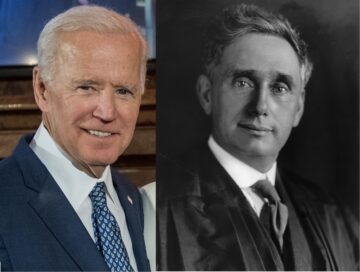
Biden matters because he is taking on the real problems that are wrecking America, the deep structural problems, created over decades, that benefit powerful people who will do anything to prevent change (the way fossil fuel companies do anything to block climate solutions that hurt profits). He is the first president since LBJ to take on problems that big.
“How can that be?” you ask. “Joe Biden hasn’t transformed the Middle East into peaceful democracies like George W. Bush did. Nor has he ended racial and partisan animosity in America like Barack Obama did, or drained the swamp like Donald Trump did. What has Biden done?” He has taken on a challenge as big as his three predecessors’ ambitions: breaking corporate monopoly power and restoring healthy competition.
“Competition policy” is the innocuous name for this program. It’s big because it seeks to cure the root malady ailing America. Obviously, I was being sarcastic about the successes of Biden’s predecessors: they got nowhere on their signature ambitions, because they did not even try. Bush’s program for the Iraq transition was an arrogant experiment in free-market fantasy, uninterested in democracy. Obama announced in an apology letter to supporters after winning the nomination that he was not going to change our corrupt and toxic politics. (I wrote a Daily Kos piece about it in July 2008.) And Trump, as the very embodiment of the swamp, would no more drain the swamp than a bullfrog would. But Biden is serious. Read more »
by Nils Peterson
This is what Abraham Lincoln said.
“Fellow citizens, we cannot escape history. We of this congress and this administration will be remembered in spite of ourselves. No personal significance or insignificance can spare one or another of us. The fiery trial through which we pass will light us down in honor or dishonor to the latest generation. We, even we here, hold the power and bear the responsibility.” [Annual Message to Congress, December 1, 1862]
“The dogmas of the quiet past are inadequate to the stormy present. The occasion is piled high with difficulty and we must rise with the occasion. As our case is new, so we must think anew and act anew. We must disenthrall ourselves and then we will save our country.” [Annual Message to Congress, December 1, 1862]
“It is the eternal struggle between two principles, right and wrong, throughout the world. It is the same spirit that says ‘you toil and work and earn bread, and I’ll eat it.’ No matter in what shape it comes, whether from the mouth of a king who seeks to bestride the people of his own nation, and live by the fruit of their labor, or from one race of men as an apology for enslaving another race, it is the same tyrannical principle.” [Lincoln-Douglas debates, 15 October 1858]
“As I would not be a slave, so I would not be a master. This expresses my idea of democracy. Whatever differs from this, to the extent of the difference, is no democracy.” [from a handwritten note]
And from a modern editorial, “Patriotism without criticism has no head; criticism without patriotism has no heart. Lincoln was capable of understanding both the greatness and the limits of Thomas Jefferson and the founders and still come out at the end embracing the American experiment for ‘giving liberty, not alone to the people of this country, but hope to the world for all future time.’ And so should we.” [Editorial. NYTimes, 7/4/15] Read more »
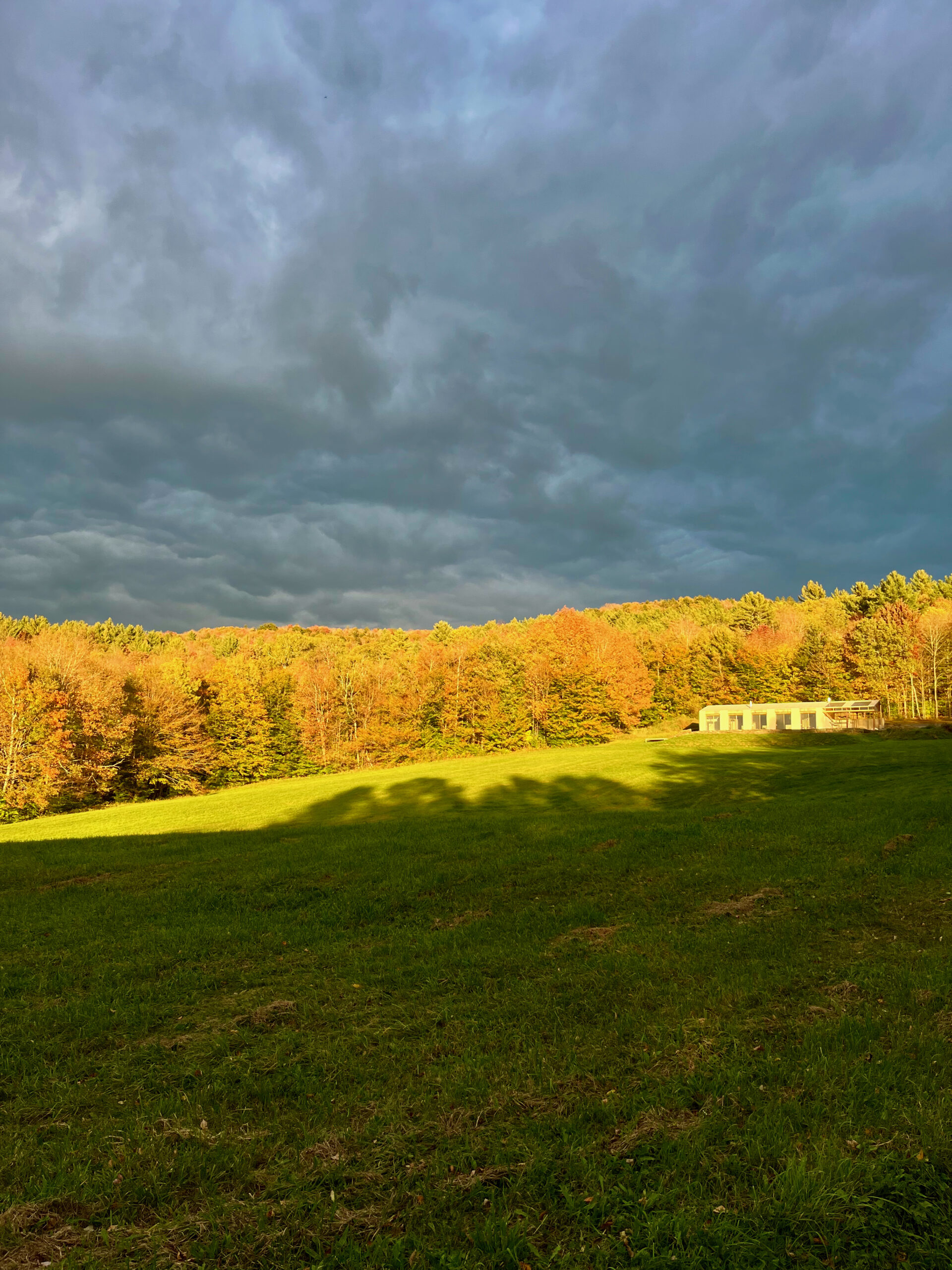 Sughra Raza. Let Me Just Absorb Today.
Digital photograph, October 2023.
by Chris Horner
Death is not an event in life: we do not live to experience death —Wittgenstein
The anaesthetic from which none come round —Phillip Larkin
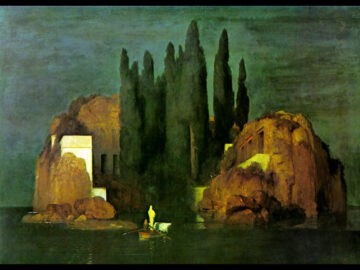
What can we do with the thought of death? Nothing can be done about death: you, me, everyone will die. Thinking can’t remove the fact. But the thought of death is another matter. We live with it; we get accustomed to it; we put it out of mind.
Not always of course: that epicurean advice meant to comfort us, that ‘where death is, I am not, and where I am death is not’, has its limits, particularly when we wake in the night. So does the admonition that since we don’t grieve for the aeons in the past when we did not exist, we should not mind not existing in the future. For that is what we fear: no future. We are creatures in time, forever projecting ourselves forward, and so the future we might miss weighs with us more than any past we never had. It’s another reason for dismissing the irritating injunction to live every day as if it were one’s last. We can’t do that: we need to know there will be a tomorrow.
Still, we make a pretty good fist of it on a daily basis. It’s as if the knowledge we have can be safely tucked away and disavowed: ‘I know very well how things are…but still…’ But one day, perhaps not too far in the future, we will cease to exist, be erased, vanish forever. For that is what death is, however we dress it with phrases like ‘passing on’. And we – me, you -are only one diagnosis away from that becoming imminent. Closer every day, comes that unimaginable end. Is it like going into a deep dreamless sleep under an anaesthetic and never waking? I hope so. There are lots of bad ways to die but that seems about the best to be wished for. Read more »
by Ed Simon
Demonstrating the utility of a critical practice that’s sometimes obscured more than its venerable history would warrant, my 3 Quarks Daily column will be partially devoted to the practice of traditional close readings of poems, passages, dialogue, and even art. If you’re interested in seeing close readings on particular works of literature or pop culture, please email me at [email protected]
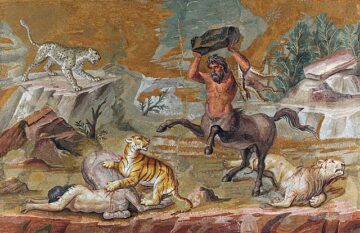 There is no genuinely effective lyric poem unless there is a line which lodges itself in the brain like a bullet. Often – though not always – these lines are the first in a poem, the better to abruptly propel the reader into the lyric. William Wordsworth’s “I wandered lonely as a cloud,” Walt Whitman’s “I celebrate myself, and sing myself,” or Langston Hughes’ “I’ve known rivers.” For example, John Donne and Emily Dickinson are sterling architects of not just the memorable turn-of-phrase, but the radiant introductory line as well. Think “Batter my heart, three-person’d God” or “I heard a Fly buzz – when I died.”
While memorizing poems in their entirety was a common pedagogical exercise at all levels of education until around a century ago, today works remain pressed in the commonplace-book of-the-mind because of a deftly memorable line, a phrase which announces itself like the hook of a pop song. With some irony, contemporary poetry is sometimes maligned by more conservative critics as having a deficit of iconic lines, where the language itself submerges into an undifferentiated mush of abstract nouns and erratically enjambed lines, experimental precociousness and pretentious obscurantism.
Presumably every period of literary history is deluged with bad poetry so that there is a bias towards that which survives, giving a shining glean to previous centuries which they may not entirely deserve. After all, not every poet in the English Renaissance was the equivalent of Shakespeare; most were as if Giles Fletcher or Barnaby Googe. Still, many readers would perhaps find it difficult to name a poetic turn-of-phrase as memorable as those written by Wordsworth, Whitman, or Hughes, not to mention Donne and Dickinson. Read more »
by Brooks Riley
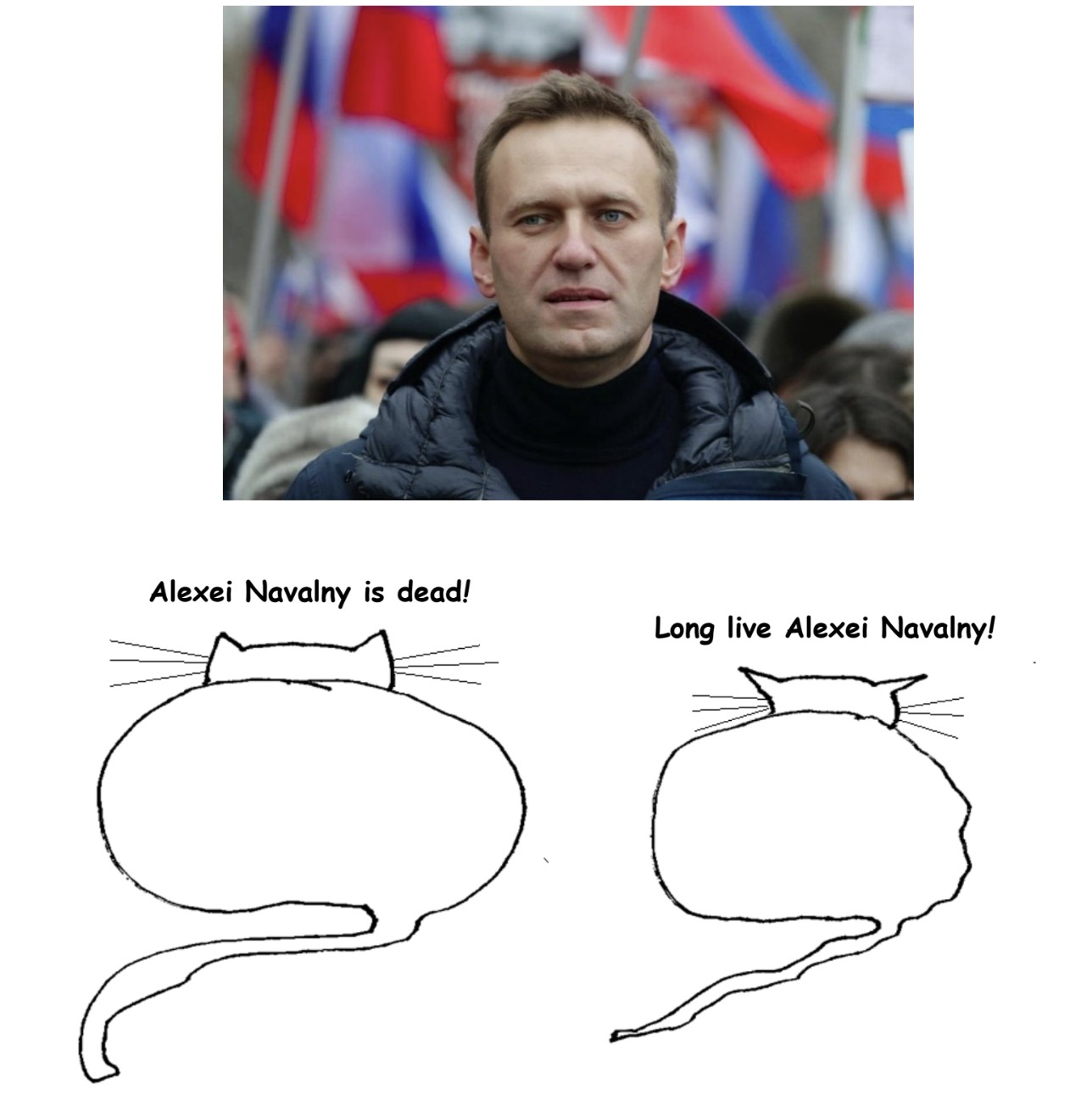
by Claire Chambers
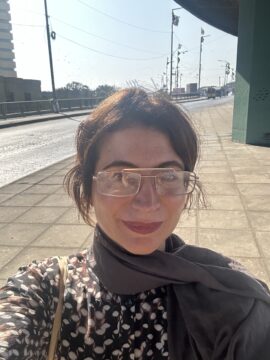
I have already written columns for 3 Quarks Daily about starting Hindi language-learning early in the Covid-19 pandemic, continuing to intermediate level as things opened up, and then learning Urdu alongside Hindi once Covid became less of a problem.
However, as is suggested by the post-2020 timestamp of my linguistic odyssey, I am internet ki bachi, a child of the internet. At least at the beginning, I was confined to my house using apps and working with online language tutors during successive lockdowns. As a consequence, I started to become passable in reading, listening, speaking, and writing on my keyboard with the help of a plug-in – but I could not write by hand.
In the final instalment of my previous trilogy, the blog post concerning Urdu, I discussed my hesitancy about handwriting. Finding myself reasonably proficient in constructing emails and short documents on the computer, learning Urdu calligraphy seemed unnecessarily burdensome on my mental capacity. There’s no familial need for me to produce handwritten notes, so I thought this competence wasn’t worth cultivating.
However, Leanne Ogasawara in particular encouraged me to think again. Read more »
by Thomas Wilk and Steven Gimbel

Last month’s open mic night at New College of Florida revealed more than just the comedic ineptitude of its administrators; it exposed the underbelly of a culture clash at the heart of the academic institution. Amidst the cultural war that has engulfed New College, following a takeover by figures appointed by Governor Ron DeSantis, the event was meant to be a light-hearted affair. Instead, it turned into a public spectacle with calls for a dean’s ouster and New College claiming a victory over cancel culture.
Hosted as part of a comedy course, the night featured a routine by Dean of Students David Rancourt that included jokes about a 7-year old boy exposing himself to a girl at the bus stop, violation by a drill sergeant’s baton, and a forced choice between death and “bunga bunga.” The jokes elicited a mix of reactions from the audience. Even New College President Richard Corcoran, who followed Rancourt’s performance, noted the abundance of gay jokes in the set. Corcoran jokingly called Rancourt his “former” dean of students, but, after his homophobic routine, some in the community wish that it wasn’t a joke.
In response to outrage from students and the media, the university gave a statement to The Sarasota Herald-Tribune: “Cancel culture is over at New College. Comedy is a work of art, one that is reliant on our society’s tenets of free speech and free expression. New College supports its students, faculty and staff’s right to participate in artistic endeavors like a comedy performance, or any other civil exercising of free speech and free expression.”
The College is making a common mistake about the ethics of humor. We’d know because we wrote the book on it. The mistake is to think that just because an act is intended to be humorous it must be beyond the scope of moral judgment. Read more »
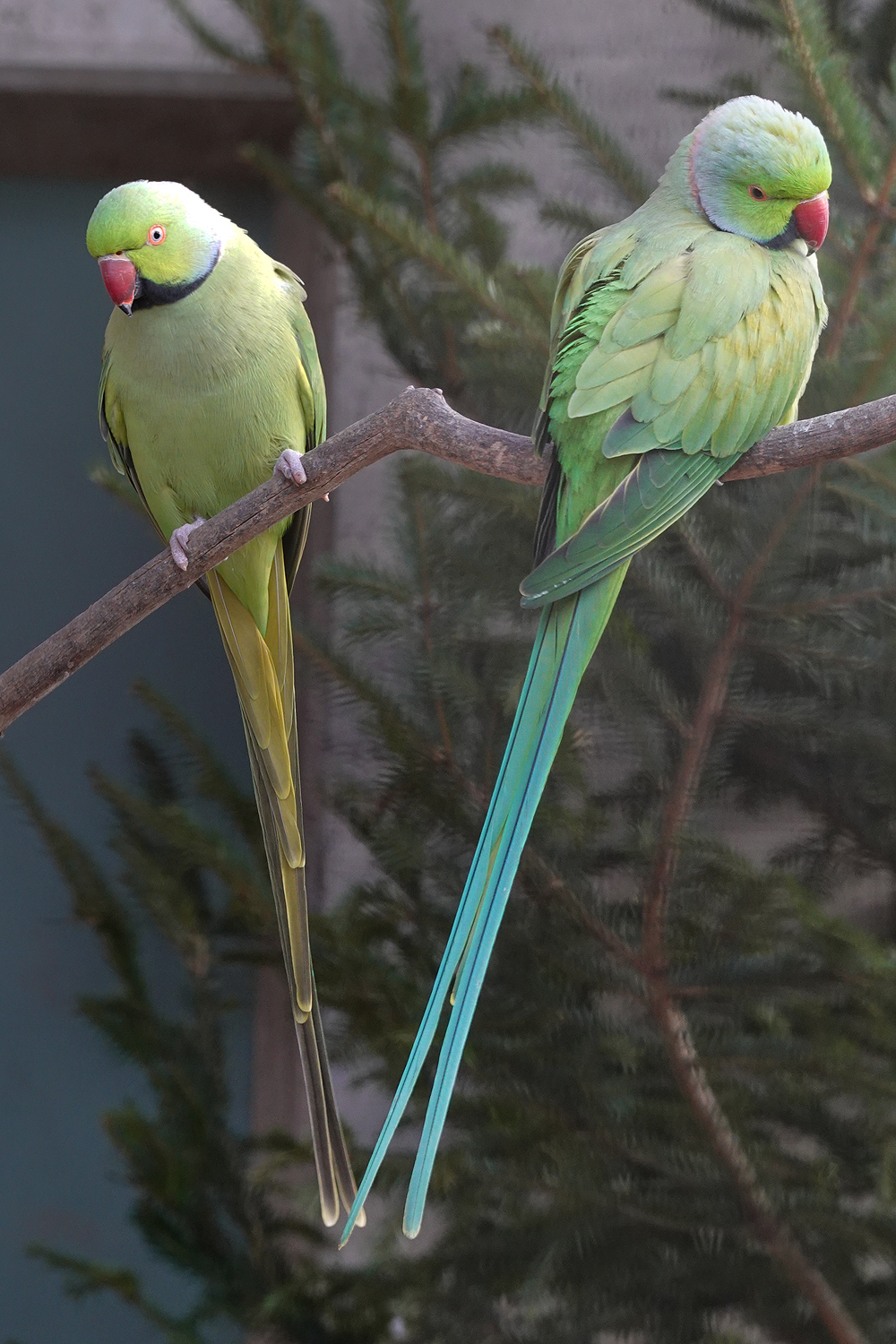
Rose-ringed parakeets at a children’s zoo in Brixen, South Tyrol.
by Dwight Furrow
 In a previous post, I began to articulate a conception of gastronomic pleasure loosely based on Aristotle’s view that pleasure is the natural culmination of unimpeded activity. I make use of such an ancient theory because it strikes me as true that when we exercise fundamental human capacities, and that activity proceeds without impediments or obstacles, we experience pleasure. When we don’t get pleasure from activities that engage basic human capacities, it’s because we’re not very good at them or some obstacle to completion was put in our way.
Eating, and its component activity tasting, is one such exercise of basic capacities that naturally aims at pleasure when the food is good, the company is right, and one’s sensory mechanisms are functioning properly. Tasting involves the basic skill of pattern recognition. When we eat, we build memory images of what various foods taste like and whether we like them or not. When the flavor/texture patterns in the food we are eating match, without impediment, the memory image of that food (which include hedonic responses), we experience pleasure.
One virtue of this conception of taste is that it accommodates a central feature of our enjoyment of food—familiarity is an important value. We are naturally reticent about taking something into our bodies that might be unpleasant or dangerous. Thus, we experience enjoyment when a present stimulus conforms to the familiar hedonic patterns of past experience. But of course, that memory image of what food should taste like is constantly being updated. We learn to taste new foods if only to avoid boredom since our sensory mechanisms are designed to experience repeated stimuli less intensely. Read more »
by Richard Farr
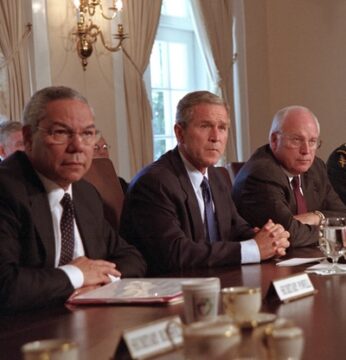
At first, the countless violations of the law by our new rulers still caused a degree of disquiet. But among the incomprehensible features of those months, my father later recalled, was the fact that soon life went on as if such crimes were the most natural thing in the world. —Joachim Fest, Not I – Berlin, early 1930s
[Y]ou have clearly proved, that ignorance, idleness, and vice, are the proper ingredients for qualifying a legislator; that laws are best explained, interpreted, and applied, by those whose interest and abilities lie in perverting, confounding, and eluding them. I observe among you some lines of an institution, which, in its original, might have been tolerable, but these half erased, and the rest wholly blurred and blotted by corruptions. —Jonathan Swift, Gulliver’s Travels, Book II, Chapter VI
The hero of a David Lodge novel says that you don’t know, when you make love for the last time, that you are making love for the last time. Voting is like that. —Timothy Snyder, On Tyranny
Sometimes it’s hard to stay on top of things. While trying to rank-order Nuclear War Over Taiwan, Deforestation in the Amazon, Child Slavery Linked to my own Spending Habits, The Latest Data from the Thwaites Glacier, and What’s Being Done Right Now to the Uighurs the Rohingya the Palestinians the Hazara the Yazidis the Kurds and the Tigrayans, I keep being distracted by trivia, like How Irritated I am to Have Received Yet Another Cloyingly Chummy Fund-Raising Email from the Biden-Harris Campaign.
Sometimes you have to put Now aside and get the cool perspective of ancient sources. So this week I dug around in my shelves and dusted off a book from a distant era. Written by Al Gore, and entitled The Assault on Reason, it’s an eyewitness account of the decline of more or less everything back when the American throne was occupied by the Kennebunkport Dauphin, George II.
Preoccupied with our current traumas, how quickly we forget! Gore is not a neutral observer, but his account is stolidly factual. And the fact is, George II’s reign at the great White Palace in Washington was astonishingly awful. Vandalizing, reckless, arrogant and ignorant; cruel and authoritarian; chaotic and incompetent beyond all previous measure; contemptuous of the law, of democracy, of transparency, of innocent life, of any “decent respect to the opinions of mankind.” In sum, what strikes the modern reader most forcibly perhaps is that the era, half lost in the mists of history, was so strikingly Trumpian. Read more »
—Narragansett Bay —1960, first time out
We part from pier
slow as disengaging lovers
one landlocked, the other a
floater who won’t be kept at bay
The diminishing dock slides back,
its bollards and planks deploy
to some other place not here
—to a distancing otherworld
The tether breaks
as stern-first we pass the
channel buoy
Quarter back, the OD says.
Quarter back, aye sir,
and we slip away
Steer two one zero, half ahead.
Two one zero, half ahead, aye sir
and we slow-slide down
the gleaming bay
The sun’s so bright it indicates
a tern on the roof of a big estate
a half mile away atop its
long lawn hill off the starboard bow
which slopes down clear
through the wind-wove air
to a point where jades meet blues
……… —which passes now as we part the sea while
making way
Further south the sea’s first chops
begin to unsettle our sheltered
adolescent cruise
Near the harbor mouth all decks
rise then make their first
supplicating bows to whatever
god it is who intervenes
to call-off wrecks
…… —we’re juggled gently first in
Neptune’s law as
pitches rolls & heaves
meet yaws
Grey diesel billows from our raked stacks
Halyards snap against the mast’s steel
Gulls abundantly rise & reel
over the white chaos of our wake’s track
Sunlight splinters
into rippled trillions
upon each breaker’s
sequined breast
before it folds
in a white rush, falling
to the soul percussion
of our bow-wave’s
shush
…………. shush
……………………
by Jim Culleny
November, 2009
by Mike Bendzela

We never travel, mainly because working a farm is a career, even a small one like ours, and also because my spouse’s Type 1 diabetes is better managed in a sedentary, predictable existence. I realized in marriage that I would never become “worldly” and didn’t care. I would have to learn whatever I could about the world on this “postage stamp of soil” (1), in William Faulkner’s memorable phrase. This existence has certainly turned us into “foodies” (scare quotes indicating how much I detest the term), even bad-ass foodies in our case, foodies such as our grandparents were. No, strike that–our great grandparents. How many people can say they grow their own stew?
During my twenties and thirties, when we first embarked on this course of Do It Yourself food production, I aspired to be “Green,” “Sustainable,” and “Self-sufficient”–even “Organic”! These are lofty ideals that died directly during their attempted implementation. All these decades later, I’ve settled for home food production and preservation that is cheap, fun, delicious, and humane. Much of it now depends on one big green secret ingredient of farming that I shall reveal at the end. Read more »
 Amy Sherald. They Call me Redbone but I’d Rather Be Strawberry Shortcake, 2009.