by Rebecca Baumgartner

I was looking at a grammar worksheet my fourth-grader recently brought home, and the instructions said to “Underline the predicate of each sentence.” I paused for a moment. What exactly is a predicate, again? Is it a fancy way of saying verb phrase? Or direct object? Or…what, exactly?
You might think I felt embarrassed to not know this, since I am a wordsmith by trade and by training. On the contrary! I think it’s damning of the educational system that someone with degrees in English and linguistics, who reads and writes constantly, has not found it necessary or important to know what a predicate is. The onus is on the educators to prove that it is in fact necessary and important to know this kind of information.
I love language. I love understanding how it works – so much so, in fact, that I suffered through tedious graduate courses in syntax and morphology taught by people who hadn’t had fun in 30 years. But linguists don’t use the term “predicate” (at least not in the way kids are taught to use it). Normal people don’t use it, either. Hell, the only time I ever even refer to the parts of speech nowadays is when I play Mad Libs.
So if a card-carrying linguist, erstwhile copyeditor, and hammer-wielding wordsmith has no need to know what a predicate is, the question is: Why does the school system, or the state, think my kid needs to know this stuff? Read more »

 In 1970, Pier Paolo Passolini directed a film titled Notes Towards an African Orestes, which presents footage about his attempt to make a movie based on the Oresteia set in Africa. The movie was never made. In the same way, this article will be about a series of essays, or perhaps a book, that may never be written.
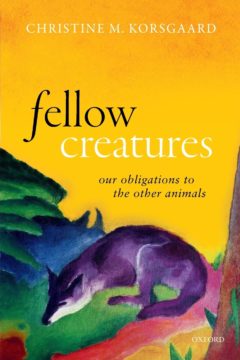 Without really looking into them, I have always felt sceptical of Kantian approaches to animal ethics. I never really trust them to play well with creatures who are different from us. Only recently, I cared to pick up a book to see what such an approach would actually look like in practice: Christine Korsgaard’s Fellow creatures (2018). An exciting and challenging reading experience, that not only made a very good case for Kantianism (of course), but also forced me to come to terms with some rather strange implications of my own views.
 The force of recent attempts to increase minority visibility in the performing arts, principally in the US, by matching the identity of the performer with that of the role—in effect a form of affirmative action—has been diminished by a series of tabloid “scandals”: the casting of Jared Leto as a trans woman in Dallas Buyers Club
  1.
1.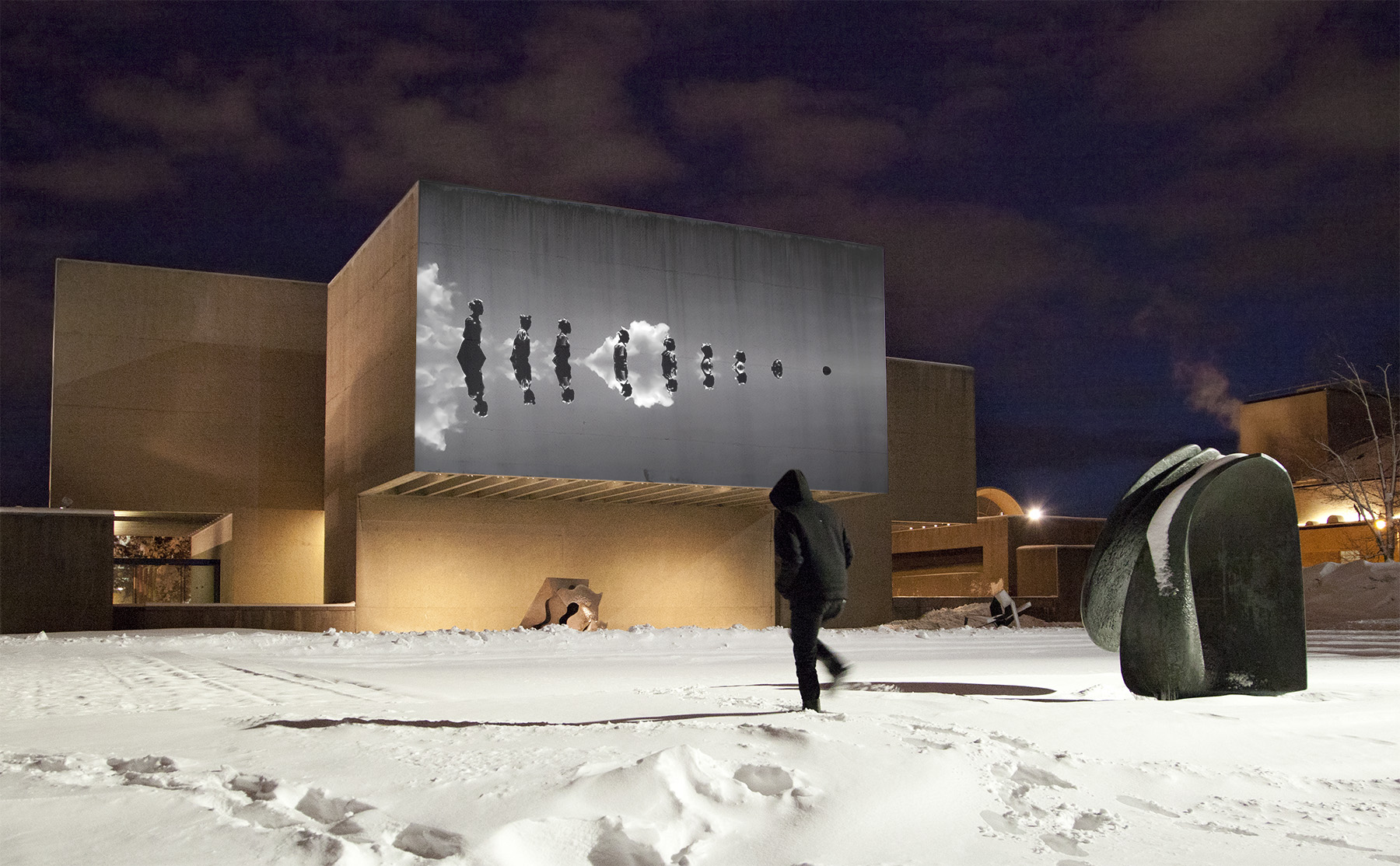 Jeannette Ehlers. Black Bullets, 2012.
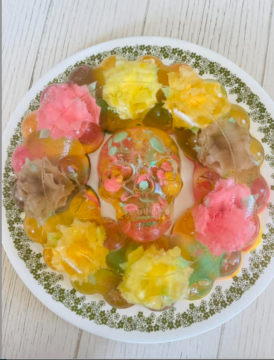 How plastic – really plastic – gelatin presents as a food. Not only in the “easily molded” sense of a pliable art material but also its transparency. Walnuts and celery, the “nuts and bolts” of gelatin desserts, defy gravity, floating amidst the cheerful jewel-like plastic-looking splendor of the 1950’s, when gelatin was the king of desserts. Gelatin’s mid-century elegance belies its orgiastic sweetness, especially the lime flavor, which is downright otherworldly. If you stir it up hot, half diluted, gelatin lives up to its derelict reputation with regard to the sickbed and sugar, being thick and warm, twice as intoxicatingly sweet, and surely terrible for an invalid’s teeth, if not metabolism. In my novel, Dog on Fire, I hypothesize that lime-flavored gelatin is the perfect murder weapon.
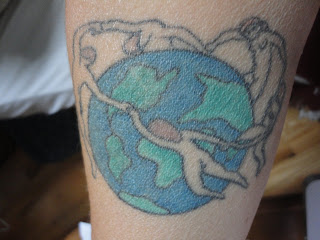 Barring that reality, and knowing this would be an ongoing, lifelong issue, I got a tattoo on my Visa-paying forearm to remind myself that my actions affect the entire world. I borrowed Matisse’s
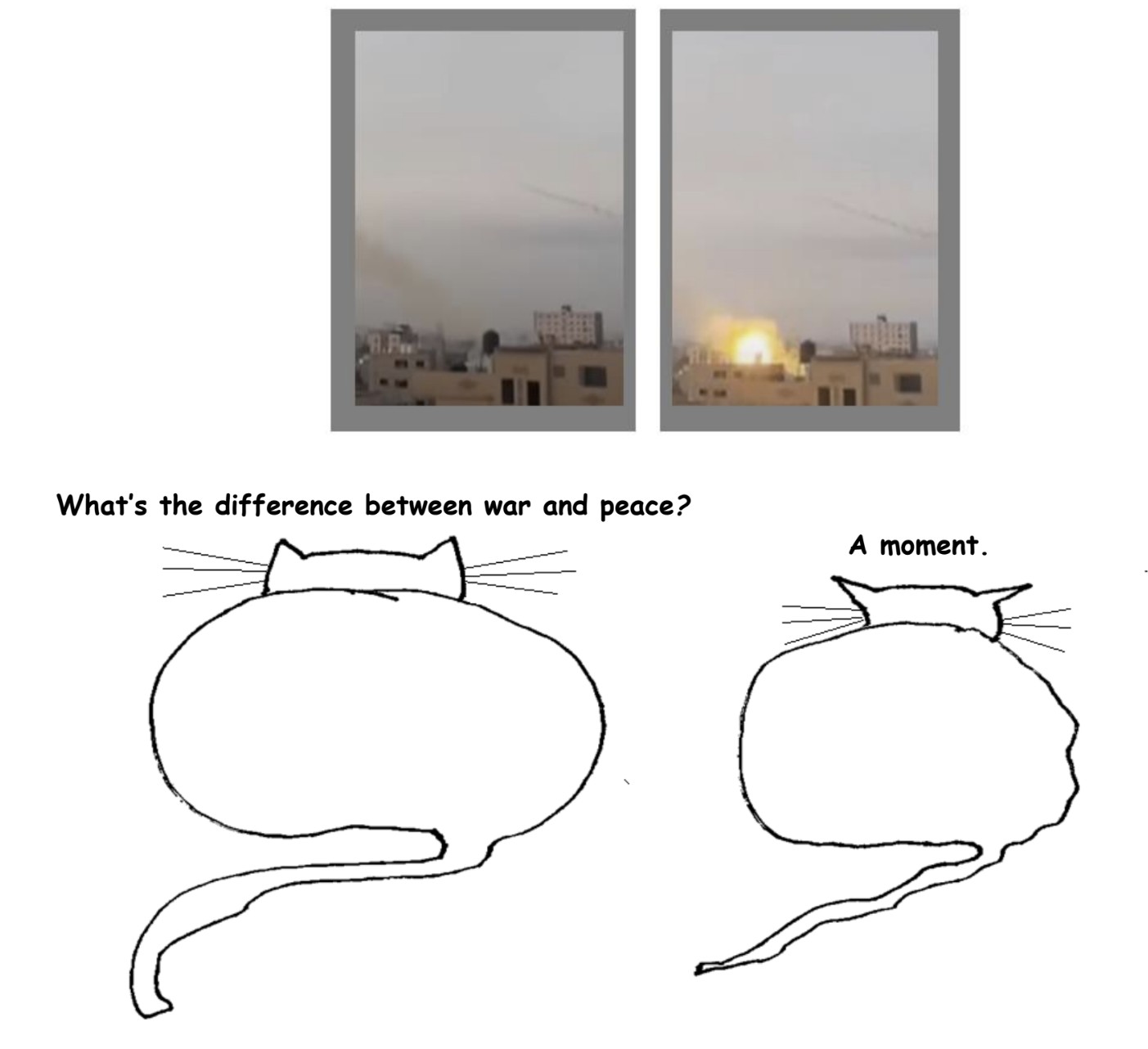
 I am sitting on the couch of our discontent. The Robot Overlords™ are circling. Shall we fight them, as would a sassy little girl and her aging, unshaven action star caretaker in the Hollywood rendition of our feel good dystopian future? Shall we clamp our hands over our ears, shut our eyes, and yell “Nah! Nah! Nah! Nah! Nah!”? Shall we bow down and let the late stage digital revolution wash over us, quietly and obediently resigning ourselves to all that comes next, whether or not includes us?
 I first became aware of Miriam Lipschutz Yevick through my interest in human perception and thought. I believed that her 1975 paper,
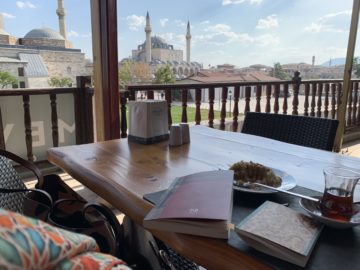 At dusk, the shaft of light striking Rumi’s tomb is emollient as pale jade. It has been a long, hot day in Konya, I’ve been writing in a café-terrace overlooking the famed white and turquoise structure of the tomb-museum complex. I sip my tea slowly, facing the spare, elegant geometry of the building that appears as a simple, intimate inscription on the vast blue. For once I am studying Rumi’s verses in Persian, not repeating English translations or paraphrasing in Urdu. “Bash cho Shatranj rawan, khamush o khud jumla zaban,” “Walk like a chess piece, silently, become eloquence itself!” I’m reciting to myself in the din, in awe of the kind of magnetism that would pull one as a chess piece. Only the heart understands this logic, not any heart, but the one that has been broken open, the one that is led to the mystery in cogent silence.