I’ve now seen Maestro twice, spread out over four, maybe five, sittings. I suppose the fact that I haven’t watched it straight through in a single sitting might be taken as an indication that I didn’t find it…Didn’t find it what? Good, compelling, interesting, satisfying? If one or some combination of those is true, then why did I watch it twice? Maybe I found it disturbing and wanted to figure out what was bugging me? If it was disturbing, the disturbance was unconscious.
[That I didn’t watch the whole film in a single sitting is certainly an indication of the fact that I watched the film at home, in front of a small screen, instead of in a theater and with a large audience.]
Was I bugged? Yes, I was bugged, about the damned prosthetic nose. I kept reading that Bradley Cooper’s prosthetic offended some people. Bernstein’s kids defended it. There I am, watching the film. There’s the second scene where Bernstein is seated, gray hair, red shirt, smoking a cigarette, and talking about his (dead) wife. He had an intense almost vibrant tan, a color looking like it didn’t quite make the cut for Rudolph’s nose. Did he hang out in a tanning booth? That bugged me, a little.
I don’t know whether or not I’d have been bugged about the nose if I hadn’t heard so much about it. I never saw Bernstein live, but I certainly saw him on TV and saw lots of photos. As far as I recall I never gave two thoughts to his nose.
Now my father, he had a nose. We called it a Danish nose because his parents were from Denmark. Which was bigger, my father’s Danish nose, Bernstein’s (Jewish) nose, or Bradley Cooper’s prosthetic version of Bernstein’s (Jewish) nose? This is silly.
I wonder if all this fuss about a schnoz is part of the shadow cast by the awful events of October 7th? Or the resurgence of antisemitism in the country? Did I know that Bernstein was Jewish the first time I became aware of him, perhaps from one of those Young People’s Concerts on TV or perhaps it was a more straightforwardly didactic program? I’m pretty sure I knew Louis Armstrong was black the first time I became aware of him. Couldn’t miss it. The color of his skin was as plain as the four-letter-word on your face. Read more »

 Two weeks after my wife died this past October, she briefly returned. Or so it seemed to me.
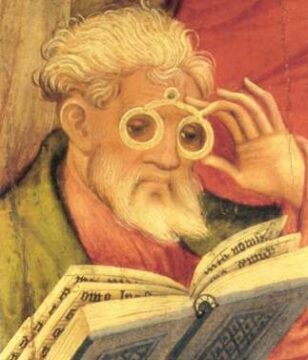 I’m haunted by the enormity of all of that which I’ll never read. This need not be a fear related to those things that nobody can ever read, the missing works of Aeschylus and Euripides, the lost poems of Homer; or, those works that were to have been written but which the author neglected to pen, such as Milton’s Arthurian epic. Nor am I even really referring to those titles which I’m expected to have read, but which I doubt I’ll ever get around to flipping through (In Search of Lost Time, Anna Karenina, etc.), and to which my lack of guilt induces more guilt than it does the real thing. No, my anxiety is born from the physical, material, fleshy, thingness of the actual books on my shelves, and my night-stand, and stacked up on the floor of my car’s backseat or wedged next to Trader Joe’s bags and empty pop bottles in my trunk. Like any irredeemable bibliophile, my house is filled with more books than I could ever credibly hope to read before I die (even assuming a relatively long life, which I’m not).
 It might strike you as odd, if not thoroughly antiquarian, to reach back to Aristotle to understand gastronomic pleasure. Haven’t we made progress on the nature of pleasure over the past 2500 years? Well, yes and no. The philosophical debate about the nature of pleasure, with its characteristic ambiguities and uncertainties, persists often along lines developed by the ancients. But we now have robust neurophysiological data about pleasure, which thus far has increased the number of hypotheses without settling the question of what exactly pleasure is.
 Sughra Raza. Self Portrait in Praise of Shadows. Shalimar Bagh, Lahore, December 10, 2023.
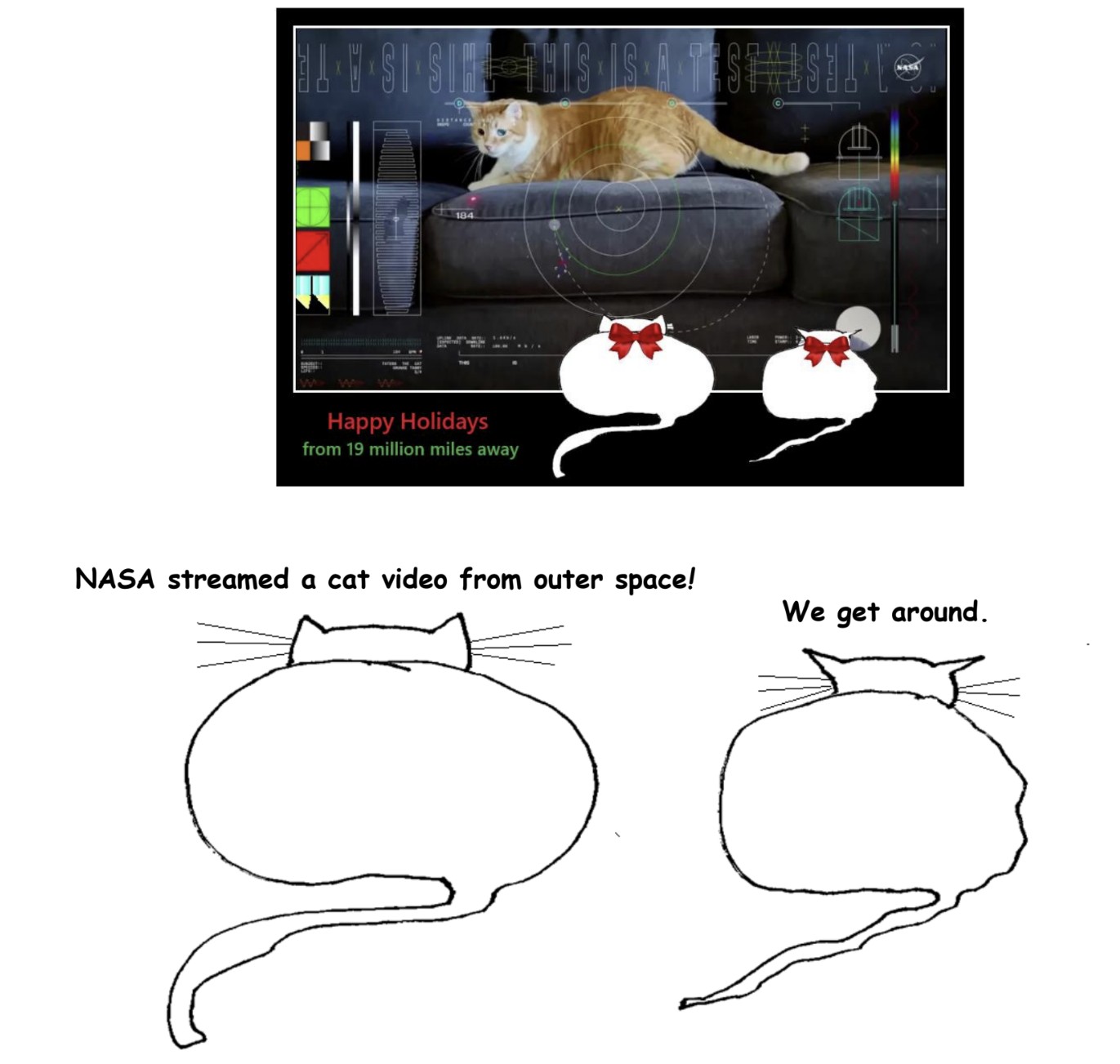
 Andrew Torba, Christian Nationalist founder of the rightwing social media site Gab, recently argued on his podcast that the fact that many of the most beloved Christmas songs were written by Jewish composers was part of a conspiracy to take Christ out of Christmas: to secularize one of the holiest Christian holidays and allow Jews to subtly infiltrate Christian-American culture with their own agenda. He might just be right.


 I have no idea what the lyrics to the Oasis song “Champagne Supernova” mean,