by Jonathan Kujawa

Among our many flaws, humanity prefers to be shortsighted. We tend to set our priorities by what we see right in front of us. This makes some sense. After all, there is no point in worrying about storing food for the winter when facing down a saber toothed tiger. But eventually winter arrives.
There is a reason Aesop told us the fable of the Ant and the Grasshopper. Children want to stay up late, eat candy for every meal, and skip anything that seems like work. As we grow up, we hopefully learn the value of investing in our future.
But just planning for the next winter is not what got us to where we are today. Hobbes said the natural life of a human was “solitary, poore, nasty, brutish, and short”. We may still sometimes be nasty brutes to each other, but most of us have long lives filled with health, wealth, and ease.

The progress of the last century is astonishing. When my grandfather was a young boy, the Wright brothers flew at Kitty Hawk. When my parents were children, polio was a real worry [1]. When I was young, international phone calls were a dollar per minute, shopping options were limited to whatever the local stores carried, and the sum total of knowledge on a subject was contained in the encyclopedias at the library. Now we have transcontinental flights, a polio vaccine, and the internet.
How did we get from there to here? I can tell you what we didn’t do. We didn’t just solve today’s problems. We also invested in solving future problems, even problems we didn’t know existed. Even the times when we made a maximum effort to solve a hard problem of the day (the atomic bomb, the moon landing, the Covid-19 vaccine), we depended on the prior work of people who were interested in developing our fundamental knowledge with no immediate application in mind.
There will always be a tension between the problems of today and an investment in the future. We have pressing needs, and it can be hard to trust that research driven by curiosity is worth the cost. Especially when the research sounds nonsensical or when its utility is impossible to imagine. And it’s true that much of that research will never come to anything.
But when it pays off, it pays off big. Non-Euclidean Geometry was an idle amusement until it was key to understanding spacetime and, in turn, gave us space travel and GPS. The numerology of elliptic curves was an esoteric glass bead game until it became the ubiquitous key ingredient of modern cryptography. The theory of Linear Algebra was developed with no idea that it would be essential to Google Search and the current AI explosion. All of mathematics could be funded on a tiny sliver of the profits generated off of the discoveries of a century ago [2].


 Sughra Raza. Self Portrait At Home. December 2024.
 After many years as a practicing lawyer, I remain proud of what I do. Putting aside lawyer jokes, stale references to ambulance chasing and analogies with other professions that charge by the hour, I have enjoyed doing what lawyers do and I am unapologetic about it.


 With its pristine rainforest, complex ecosystems and rich wildlife, Ecuador has been home to one of the most biodiverse countries on Earth. For thousands of years indigenous peoples have also lived harmoniously in this rainforest on their ancestral land. All that has now changed. Since the 1960s, oil companies, gold miners, loggers and the enabling infrastructural workers have all played their part in the systematic deforestation and destruction of this complex eco-system. Human rights abuses, health issues, deleterious effects on the people’s cultures and the displacement of people have all become part of the indigenous people’s lives. But wherever and whenever oppression, exploitation and social injustice raises its ugly head, resistance will eventually emerge, and so it is with the indigenous Waorani people of the Ecuadorian rainforest, under the leadership of Nemonte Nenquimo.
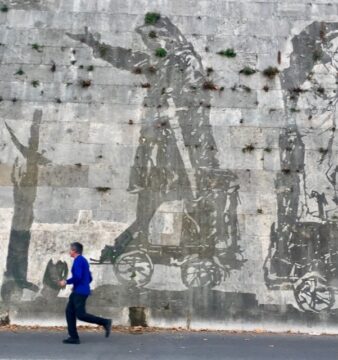



 It doesn’t take a lot of effort to be a bootlicker. Find a boss or someone with the personality of a petty tyrant, sidle up to them, subjugate yourself, and find something flattering to say. Tell them they’re handsome or pretty, strong or smart, and make sweet noises when they trot out their ideas. Literature and history are riddled with bootlickers: Thomas Cromwell, the advisor to Henry VIII, Polonius in Hamlet, Mr. Collins in Pride and Predjudice, and of course Uriah Heep in David Copperfield.
 There is something repulsive about lickspittles, especially when all the licking is being done for political purposes. It’s repulsive when we see it in others and it’s repulsive when we see it in ourselves It has to do with the lack of sincerity and the self-abasement required to really butter someone up. In the animal world, it’s rolling onto your back and exposing the vulnerable stomach and throat—saying I am not a threat.