by Ed Simon
Alternating with my close reading column, every even numbered month will feature some of the novels that I’ve most recently read, including upcoming titles.
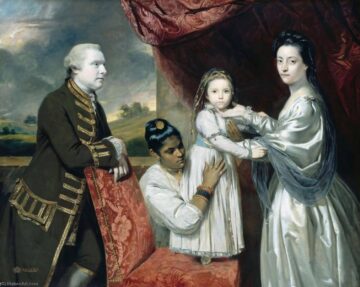
There was a meme that circulated a few years back amongst the tweedier of the interwebs which roughly claimed that when it came to literature, great French novels are about love, the Russians focus on existence, and Americans are concerned with money. Like most jokes in that vein, the observation is more funny than perceptive, though it’s not really much of either. Regardless, there is some truth to the quip, one worth considering no more so than right now, the month that sees the centennial of that greatest American novel of upward mobility and conspicuous consumption F. Scott Fitzgerald’s The Great Gatsby. “Let me tell you about the very rich,” promises Fitzgerald through his narrator Nick Carraway, they “are different from you and me.” From Edith Wharton’s The Age of Mirth to Brett Easton Ellis’ Less Than Zero, American literature has long focused on money, even if it’s under the guise of “freedom” (the former being a prerequisite for the later anyhow). Whether or not that’s the intrinsic, essential, integral deciding difference and definition for American letters is too sweeping a claim to make, for certainly there are Frenchmen not concerned with love and Russians of a lighter disposition, but for the four new American novels I read this month, and the single English novel concerned with class – which is just money baked for four centuries and dressed in a tuxedo and top hat – money was certainly the major topic of concern.
Sara Sligar’s deft and entertaining new novel Vantage Point, published this past January, imagines inherited wealth as the wages of a historic curse, returning to that earliest and most American of genres in the gothic. Vantage Point’s narrative is loosely based on Charles Brockden Brown’s 1798 Wieland; or, The Transformation: An American Tale, arguably the first example of the American novel and one that you’re unlikely to ever heard of unless you’re a specialist, for the simple reason that it’s more interesting than it is good. In Brockden Brown’s original, the titular Wielands are Pennsylvania gentry, cursed by the memory of their father spontaneously combusting in his library overlooking the Schuylkill as a result of his alchemical experiments, only a generation latter to be taken in by the nefarious machinations of a biloquist named Carwin. Read more »
 In his inaugural speech on 20 January 2025, Donald Trump jumped into the fray on the contentious issues of gender identity and sex when he announced that his administration would recognise “only two genders – male and female”. At this point there is no conceptual clarity on his understanding of the contested issues of ‘gender’ and ‘male and female’, but we do not have to wait too long before he clarifies his position. His executive order, ‘Defending Women from Gender Ideology Extremists and Restoring Biological Truth to Federal Government’ signed by him soon after the official formalities of his inauguration were completed, sets out the official working definitions to be implemented under his administration.

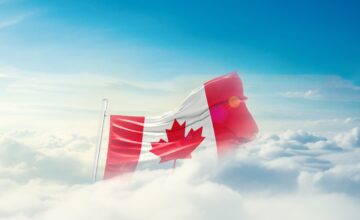 If you had to design the perfect neighbor to the United States, it would be hard to do better than Canada. Canadians speak the same language, subscribe to the ideals of democracy and human rights, have been good trading partners, and almost always support us on the international stage. Watching our foolish president try to destroy that relationship has been embarrassing and maddening. In case you’ve entirely tuned out the news—and I wouldn’t blame you if you have—Trump has threatened to make Canada the 51st state and took to calling Prime Minister Trudeau, Governor Trudeau.

 How are we to live, to work, when the house we live in is being dismantled? When, day by day, we learn that programs and initiatives, organizations and institutions that have defined and, in some cases, enriched our lives, or provided livelihoods to our communities, are being axed by the dozen? Can one, should one, sit at the desk and write while the beams of one’s home are crashing to the floor? Or more accurately: while the place is being plundered? There have been moments of late when I’ve feared that anything other than political power is frivolous, or worse, useless. In those moments, I myself feel frivolous and useless. And worse than that is the fear that art itself is useless. Not to mention the humanities, which right now in this country is everywhere holding its chin just above the water line to avoid death by drowning. It can take some time to remember that these things are worth our while, not because they’ll save us today, but because they’ll save us tomorrow.