Sometime in 1984, after Apple had released the first Macintosh, my friend Rich sent me a short note he’d written on one. The note had some text, not much, nor do I remember about what, and a black and white image of Japanese woman that Apple had put on the over of the user guide for the Mac. I took one look and thought, “text and images together on a page from the same computer, I gotta’ have one.” So I took out a loan for $4,000 ($12,000 in current dollars for the Mac, disk drive, and printer) and bought one. I wrote text, made images, and above all, put them on the same page using the same program.
I ended up writing an article for Byte Magazine, one of the premier magazines for home computers back then, “The Visual Mind and the Macintosh.”
In my opinion, the Apple Macintosh is the most significant microcomputer since that original MITS kit. but its importance hasn’t been adequately explained. The Mac is user friendly, but even more important is what lies beyond that user-friendly interface–MacPaint. […] By making it easy for us to create images and work with them, the Macintosh can help us to think. Perhaps our society will create a pool of images for thinking comparable to our pool of proverbs and stories.
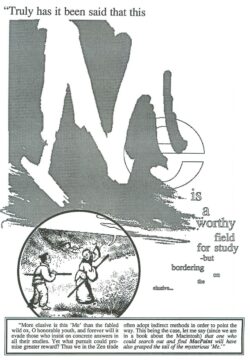
A year or so later one Michael Green published an astonishing book, Zen and the Art of Macintosh. Green used a Macintosh to place text and images together on each page, seamlessly, wonderfully. I began daydreaming about a publishing renaissance, page after page where text and image worked together in new and wonderful ways.
Alas, it didn’t happen. Retrospectively it’s obvious why. Who’s going to create such books? Relatively few people are highly skilled in the production of both text and images. Green is exceptional.
On December 6, 2024 I published the first of many posts in which I asked Claude to describe a photograph I taken of a Burger King outside the Holland Tunnel at night. When I asked, “What artist painted pictures like this?” it got the answer I was fishing for: Edward Hopper. That’s been an interesting series of posts, though I have don’t one since the end of April.
At roughly that same time, April 24, I did a post where I had ChatGPT create variations on an image that I uploaded. That’s the first post where I used an image created by ChatGPT. I’ve done many such posts since then, and created many images with ChatGPT that I’ve not posted. In many cases, perhaps the majority at this point, I gave it a photograph as the basis for an image. In some cases I asked it to modify the image in a simple way (see the coffee cup below) while in other cases I asked it use that image as the basis for a new one. In a few cases I’ve had it create an image on the basis of a verbal prompts, sometimes simple, sometimes complex.
In the rest of this post I give you a small handful of examples. As is often the case with my posts, it’s a bit wordy, so you might pour yourself a gin and tonic or a cup of tea. Or you might decide, “It’s got pictures! To hell with the words!” Let’s dive in. Read more »
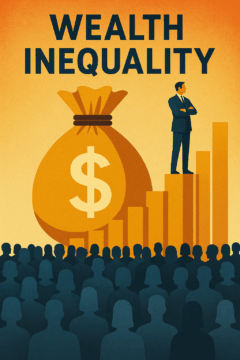 By many measures wealth inequality in the US and globally has increased significantly over the last several decades. The number of billionaires has increased at a staggering rate. Since 1987, Forbes has systematically verified and counted the global number of billionaires. In 1987, Forbes counted 140. Two decades later Forbes tallied a little over 1000. It counted 2000 billionaires in 2017. In 2024 it counted 2,781, and in March this year it counted 3,028 billionaires (a 50% increase in the number of billionaires since 2017 and almost a 9% increase since 2024).
 Recently I’ve noticed that a new wave of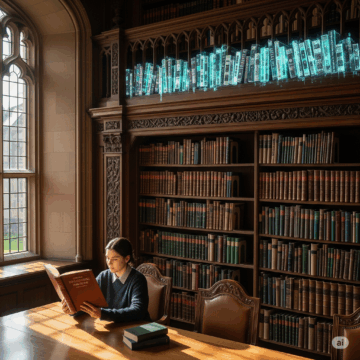
 There was a prevailing idea, George Orwell wrote in a 1946 essay

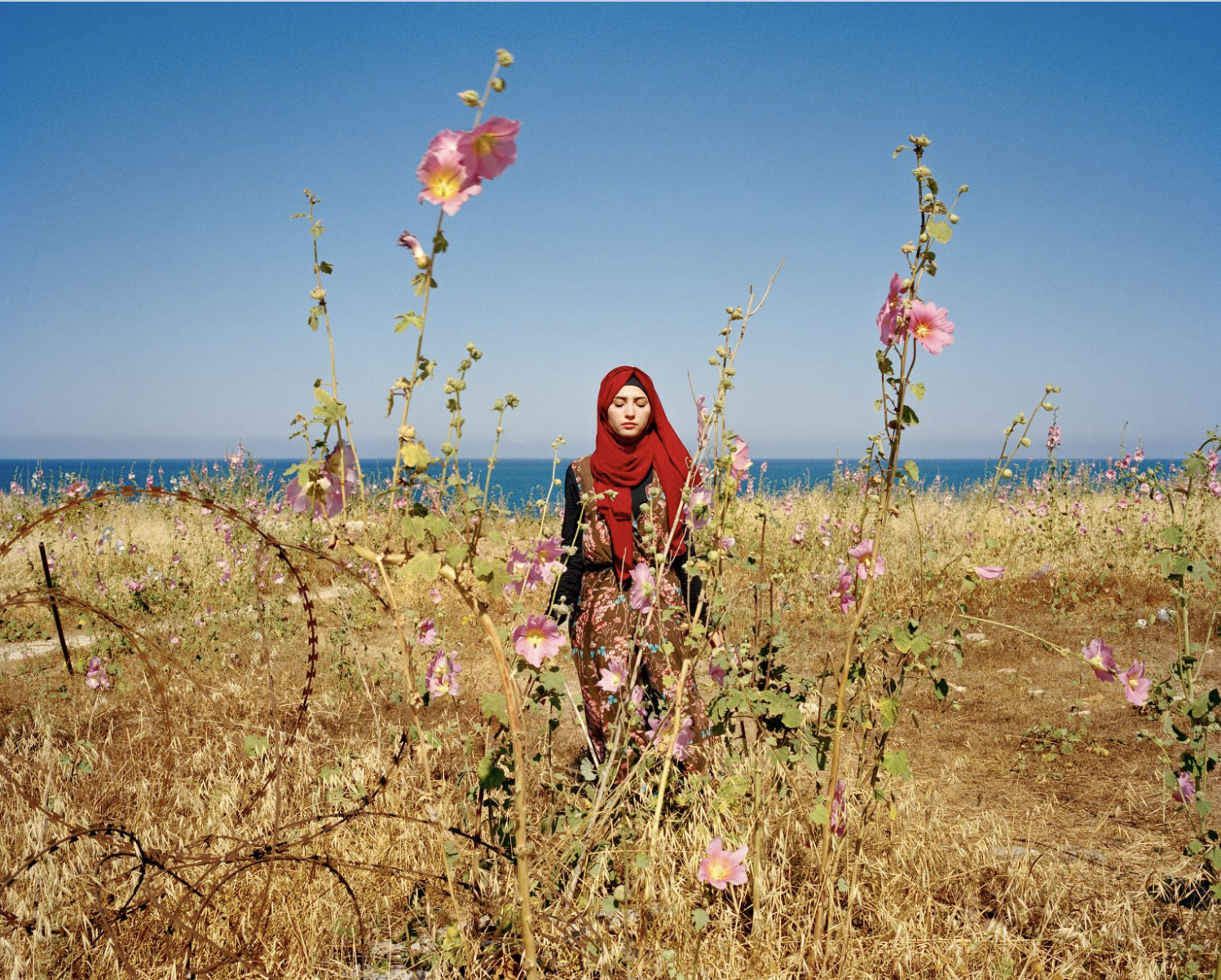 Rania Matar. Samira, Jnah, Beirut, Lebanon, 2021.