by Stephen T. Asma
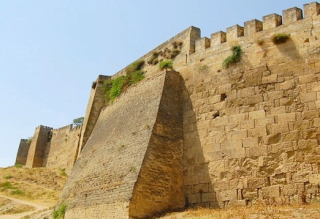
The xenophobic idea of dangerous barbarians culminated in a popular story about “Alexander's Gates.” The European version of the story, of a barrier erected against savage enemies, seems to have first appeared in sixth century accounts of the Alexander Romance, but the legend is probably much older. Alexander supposedly chased his foreign enemies through a mountain pass in the Caucasus region and then closed them all behind unbreachable iron gates. The details and the symbolic significance of the story changed slightly in every medieval retelling, but it was very often retold –especially in the age of exploration.
By the thirteenth and fourteenth centuries, the meaning of Alexander's Gates had long since been Christianized, and played an important role in both the geography of monsters and the ultimate end-time purpose of such fiends. The maps of the time, the mappaemundi, almost always include the gates, though their placement is not consistent. Most maps and narratives of the later medieval period agree that this prison territory, created directly by Alexander but indirectly by God, housed the savage tribes of Gog and Magog. Recall that Gog and Magog are referred to, with great ambiguity throughout the Bible –sometimes as individual monsters, sometimes as nations, sometimes as places. In the story of Alexander's Gates, a kind of synthesis occurs, in which “Gog and Magog” becomes a label for designating infidel nations and monstrous races –a monster zone, which different scribes can populate with all manner of projected fears.