by Andrea Scrima
Ally Klein was born in 1984 and studied philosophy and literature; she lives and works in Berlin. Carter (Literaturverlag Droschl, Graz, Austria, August 2018) is her first book.

The novel’s plot is easily summarized. Carter, the main character of the eponymous novel, is dead. When the narrator hears the news, he or she—the sex is never clear—is caught by surprise. The book opens with an introductory recapitulation of events, but reveals very little in the way of biographical information about the person telling the story. When the story proper begins, the narrating self wanders ghostlike through the streets of an unknown city until, one night, it runs into Carter—a striking figure bursting with so much life energy that she immediately pulls the narrating self into her orbit. Fascinated, this self tries to court Carter; the ensuing relationship wavers between intimacy and distance, the respective degree of which always lies in Carter’s hands. In the end, everything ends in catastrophe, while the narrating self gradually appears to lose its sanity and its grasp on reality.
Andrea Scrima: In one sense, Carter reads like a fever dream; when the narrating self moves to a small city divided by a river, its mind is already beginning to break down. Whether or not Carter might be a product of the self’s imagination or a projection of a part of the self is something the book leaves open. Without focusing too much on interpretation, my question is: does the novel allow for this read?
Ally Klein: Yes, among all the other possible interpretations, you can also see Carter as a product of the imagination. The question is where this imagination begins, and how far it carries. As the book opens, the reader learns that Carter had been suffering from a heart condition that, in the end, proved fatal. The narrating self, which came close to getting a degree in medicine, is shocked by the news; somehow, it managed to ignore all the telltale signs.
Perhaps the self doesn’t want to face the obvious; when they meet the first time, it sees nothing but vitality in Carter. It interprets the sound she makes inhaling a cigarette as a potent life force, whereas for Carter, breathing presents a real struggle. This is where the so-called imagination begins. Carter’s entire identity is filtered through the perception of the narrating self. Read more »

 Three years ago I posted on this site “



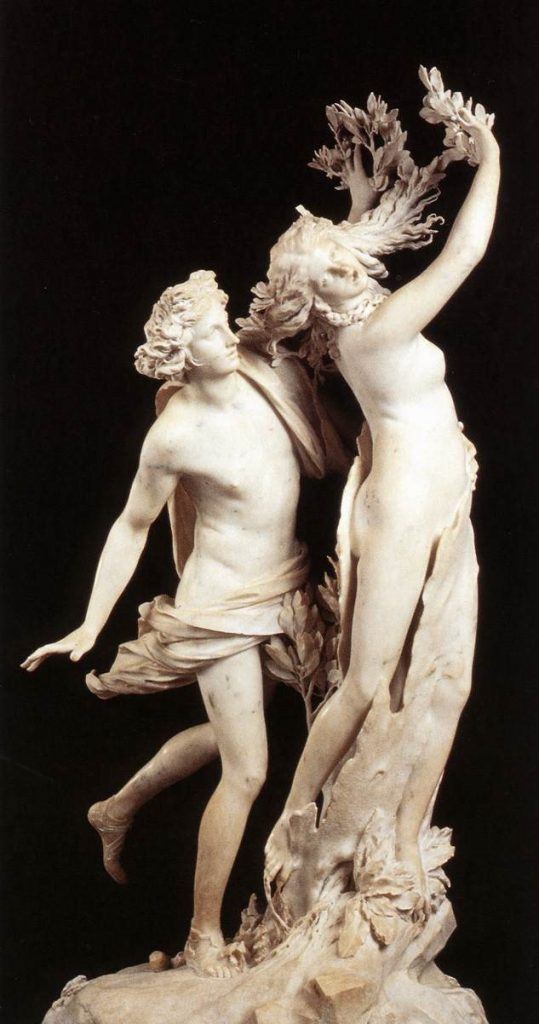
 I write this as Saturday begins to wane on the long Columbus Day weekend while I listen on the radio to the speeches given by senator after senator prior to the final confirmation vote for Bret Kavanaugh as Associate Justice on the Supreme Court of the United States of America. The vote is scheduled for 3.30 p.m. October 6, 2016. I listen to their conflicted words in the Senate of the United States pleading yes or no, or yes and no. Conjuring images, I am reminded of that Roman mythology and the artists’ rendition of it, of the Rape of the Sabine Women.


 My
My