by Ashutosh Jogalekar
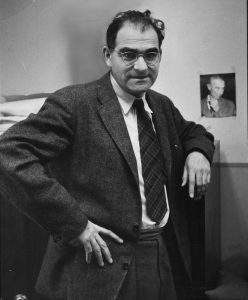 Victor Weisskopf (Viki to his friends) emigrated to the United States in the 1930s as part of the windfall of Jewish European emigre physicists which the country inherited thanks to Adolf Hitler. In many ways Weisskopf’s story was typical of his generation’s: born to well-to-do parents in Vienna at the turn of the century, educated in the best centers of theoretical physics – Göttingen, Zurich and Copenhagen – where he learnt quantum mechanics from masters like Wolfgang Pauli, Werner Heisenberg and Niels Bohr, and finally escaping the growing tentacles of fascism to make a home for himself in the United States where he flourished, first at Rochester and then at MIT. He worked at Los Alamos on the bomb, then campaigned against it as well as against the growing tide of red-baiting in the United States. A beloved teacher and researcher, he was also the first director-general of CERN, a laboratory which continues to work at the forefront of particle physics and rack up honors.
But Weisskopf also had qualities that set him apart from many of his fellow physicists; among them were an acute sense of human tragedy and triumph and a keen interest in music and the humanities that allowed him to appreciate human problems and connect ideas from various disciplines. He was also renowned for being a wonderfully warm teacher. Many of these qualities are on full display in his wonderful, underappreciated memoir titled “The Joy of Insight: Passions of a Physicist”.
The memoir starts by describing Weisskopf’s upbringing in early twentieth century Vienna, which was then a hotbed of revolutions in science, art, psychology and music. The scientifically inclined Weisskopf came of age at the right time, when quantum mechanics was being developed in Europe. He was fortunate to study first at Göttingen which was the epicenter of the new developments, and then in Zurich under the tutelage of the brilliant and famously acerbic Wolfgang Pauli. It was Göttingen where Max Born and Heisenberg had invented quantum mechanics; by the time Weisskopf came along, in the early 1930s, physicists were in a frenzy to apply quantum mechanics to a range of well known, outstanding problems in nuclear physics, solid state physics and other frontier branches of physics. Weisskopf made important contributions to quantum electrodynamics which underlies much of modern physics. Read more »
 When you consume a meal, do you eat cow or beef? Yes, these are the same, especially considering where they end up, but we tend to think of the cow as the beginning of this particular process, and the beef as the product. More of these pairings include calf/veal, swine or pig/pork, sheep/mutton, hen or chicken/poultry, deer/venison, snail/escargot.
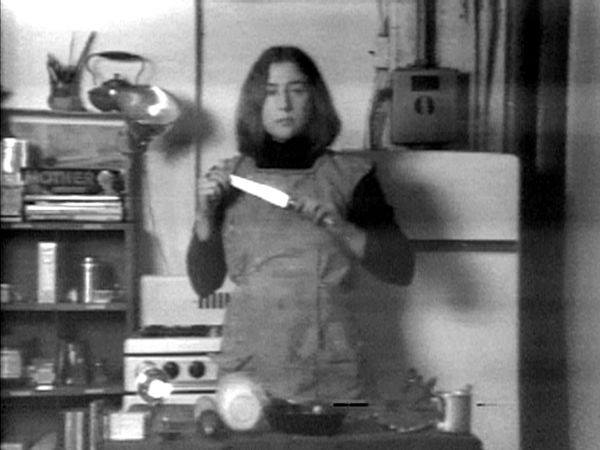

 It could almost be a question on a very meta personality quiz: Do you prefer the Myers-Briggs typology or the Big Five personality traits? The Myers-Brigg Type Inventory is a popular tool that was developed outside of the scientific establishment by two women who did not have credentials in psychology. It’s qualitative rather than quantitative, and in the past decade or so, it’s been criticized as meaningless or unscientific. The Big Five taxonomy is widely accepted in academia and is the basis of much current personality research. It’s quantitative; in fact, it’s based on statistical analysis. Am I rejecting science if I continue to prefer the Myers-Briggs system as a key to understanding my own personality and those of others?
 It is difficult to remember a time over recent decades when a president of the United States (US) has created so much controversy and division within the US and challenged its credibility and standing in international relations as has the incumbent president, Donald Trump. Indeed, so bewildering to many is the election of a former reality TV star and dubious businessman without experience in government, to the high office of president of the US and ‘leader’ of the ‘free’ world, a plethora of literature to account for such a phenomenon has emerged. Similarly, commentaries on evaluations of Trump’s calibre and character, and just how far he is fit for such high office and powerful position in global politics, are plentiful. Jon Meacham’s The Soul of America: The Battle for Our Better Angels can be viewed as a contribution to the literature on those issues.

 Last fall, after a day spent hiking around the neighborhood, I ended up back on my porch with my buddy, Chef Mike. We were drinking beers and chatting about life.
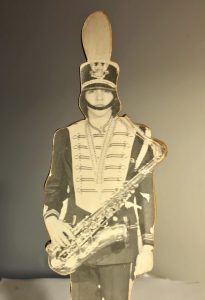 The William Penn High School Marching band was a juggernaut, the coolest team in school. Its director, Holman F James, strode the football field, unzipped windbreaker, cigarette dangling, the Greatest Generation’s bandmaster. A sterling musician, he played trumpet and piano, wrote or arranged all the music and choreographed our field shows. He was also a solider, avid outdoorsman and master craftsman, everything Hugh Hefner should have been.
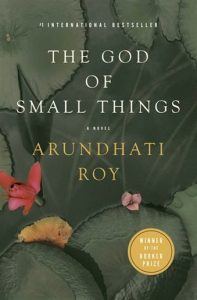 A bit of self indulgence – also a kind of preface to all the 3 Quarks Daily
 1. Bored, and with little to occupy their time, two cousins, Elsie, who was 16, and Frances, who was 10, decided to play around with photography. At a river near where they lived, they manipulated an image so that it looked as if they were interacting with little, magical winged creatures — fairies.