by Camilla Power
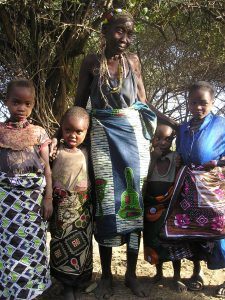
Modern Darwinism, neo-darwinism, aka ‘selfish-gene’ theory is often regarded as deeply politically suspect by social scientists. It’s viewed as a Trojan horse for capitalist ideology as soon as any evolutionary anthropologist or, worse, psychologist, tries to say anything about human beings. But the funny thing is that sociobiology, evolutionary ecology, whatever you want to call it (it keeps changing name because social scientists are so rude about it) has taken an extraordinary feminist turn through this century.
The strategies of females have now become central to models of human origins. Forget ‘man the hunter’, it’s hardworking grandmothers, babysitting apes, children with more than one daddy, who are the new fairytale heroes. Man the mighty hunter comes as a late afterthought. And these are not just lean-in alpha females but collectives in increasingly complex female coalitions, with the idea that the ‘social brain is for females’ extrapolated from primate studies.
Taken together, these models add up to a broad view that gender egalitarianism was not just part of the package but a fundamental aspect of what made us modern humans. They include Kristen Hawkes and colleagues ‘grandmother hypothesis’; Sarah Hrdy’s model of cooperative childcare as matrix of emotional modernity; Steven Beckerman and Paul Valentine’s ‘partible paternity’ model; the rejection of patrilocality as standard for hunter-gatherers by Frank Marlowe, Helen Alvarez, Mark Dyble and colleagues; and the ‘Female cosmetic coalitions’ hypothesis for the emergence of symbolic culture, by myself, Chris Knight and Ian Watts.
Responding to the seminal conference on ‘Man the Hunter’ in the mid-1960s, feminist anthropology of the 1970s began to examine critically whether women’s oppression was a true universal resulting from the sexual division of labour. Read more »
 Every October there’s a huge book fair in my town, where used books donated by the community are put up for sale in a large hall at the fairgrounds. It’s no exaggeration to say that it’s a high point of my year.
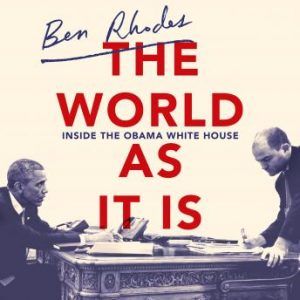 As the first African American president of the United States (US), Barack Obama is a uniquely historical personality. Each of us has our opinions, or will formulate opinions, as to the success or limitations of his eight years in office as a Democratic president from 2009-2017, and as to the person who is Obama. Helping us in the formulation of our views on Obama and his presidency, is Ben Rhodes book, The World As It Is: Inside the Obama White House.
 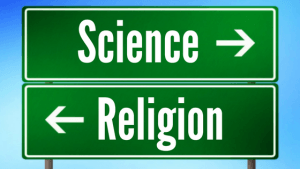 One of the most simple, elegant and powerful formulations of the conflict between science and religion is the following bit of reasoning. ‘Faith’ is belief in the absence of evidence; science demands that beliefs are always grounded in evidence. Therefore, the two are mutually exclusive. This is an oft-repeated argument by modern atheists, and it connects different aspects of what is usually called the ‘Conflict Thesis’: the idea that science and religion are opposed to each other not just now, but always and necessarily.
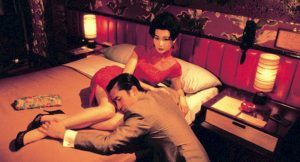 In the Mood for Love

 One of the things I love about sports is they’re a low-stakes environment in which to practice high-stakes skills. For most people, most of the time, the results of a sporting match don’t affect the long-term quality of their lives. This is what I mean by “low-stakes.” In the grand scheme and scope of our lives, the outcomes of games rarely matter. Which is what makes sports such a great place to practice skills that really can and do impact our lives for the better. This is what I mean by “high-stakes.”
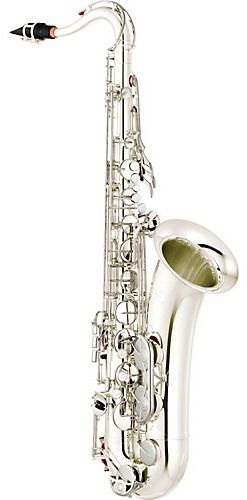 In the fall of 1970, I brought a Bundy tenor saxophone home from school. I was nine and in Mrs Farrar’s 5th grade class. To celebrate, my father slid an LP called “Soultrane”out of a blue and white cardboard jacket. The first sounds from the record player’s single speaker: a muscular folk song with rippling connective tissue that quickly spun free into endless cascades. Dad explained that it was my new horn, in the hands of John Coltrane. I didn’t know his name and nothing that day seemed possible, anyway.
 Recently, CNN sent their reporter to cover yet another Trump rally (in Pennsylvania), but this time reporter Gary Tuchman was assigned the more specific task of interviewing Trump supporters who were carrying signs or large cardboard cut-outs of the letter “Q” and wearing T-shirts proclaiming “We are Q”.
 In the 1960s, in the sleepy little city of Sialkot, almost in no-man’s land between India and Pakistan and of little significance except for its large cantonment and its factories of surgical instruments and sports goods, there were two cinema houses, all within a mile of our house, No. 3 Kutchery Road. Well three to be exact, the third being an improvisation involving two tree trunks with a white sheet slung between them at the Services club and only on Saturday nights.
 Would I rather go deaf or blind? Every once in a while, I come back to this question in some version or another. Say I had to choose which sense I’d lose in my old age, which would it be? I always give myself, unequivocally, the same answer: I’d rather go blind. I’d rather my world go darker than quieter. I imagine it as a choice between seeing the world and communicating with it; in this hypothetical, communication with the world is all-encompassing, its loss more devastating than the loss of sight. It is perhaps clear from the mere fact that I pose this question that I do not live with a disability involving the senses. Individuals who are vision- or hearing-impaired would have an entirely different take on this question and on the issues I raise below, but hopefully what I write here will go beyond stating my own prejudices.