And there’s a love-torn couple In the lap of a shikara on Dal
And there’s a vermilion cloud In a sapphire sky flirting a peak
And there’s a deodar With kohl-rimmed eyes
And there’s a tulip With parched lips
And there’s a wine goblet Bubbling with pearls
And there’s a black wasp Digging the heart of lotus
And there’s a whirligig Dancing
And there’s a surge Rising, naturally.
Oh, spirit, Amidst all this
If you did not hold my hand And beat in tune
With my pulse, Would you know
How my unruly heart sings And an orchestra plays?
* * *
Abdur Rehman Rahi, b.1925, recipient of several top literary awards in India, is the greatest living poet of the Kashmiri language. He has published five collections of poems and seven books of literary criticism in Kashmiri. Rahi lives in Srinagar.
Translated from the original Kashmiri by Rafiq Kathwari for 3QD.
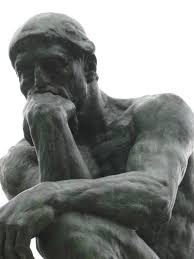
“…And now to introduce our second panelist: Martha. Martha does believe that academic philosophy is worth pursuing, and she has – of course – written a book about it. Martha, can you briefly summarize your argument?”
M: “Thank you. Yes, well, you can imagine that, though I told my publisher that my book is aimed at a broader audience, I should also like to emphasize that my argument will not easily be shortened to 140 characters. Even though I have no doubt that Rob here would find a way to do so.”
R: “Not in your case, Martha; your books are a three-tweet problem. But in all seriousness: I see what Martha is getting at here. It is the contrast between highbrow academic philosophy and ‘pop philosophy’ – a contrast I believe to be mostly a fiction. The notion that what happens in the universities is real philosophy, and that whatever the public can digest can only be a shadow of that, is misguided. It is an artifact of the fact that a few generations of great philosophers happened to work in a world where the highest intellectual authority was that of the university professor.
That Hegel’s lectures were well-attended does not mean that philosophy is, of its essence, most at home in the university. On the contrary: it is illustrative of the fact that a certain, very abstract type of thinking is suitable to the university. But it is not for school, but for life that we learn; there are other types of philosophy, and I am not ashamed that on my Twitter account I try to connect traditional philosophy to topical and pressing issues. I also write books, by the way..”
M: “That is all well and good, but I’d say that now Rob has replaced one doubtful contrast by another: his approach to philosophy concerns ‘life’, and academic philosophy, by contrast, is scholastic – which apparently means dead or lifeless.”
R: “Those were not my exact words, but I will happily embrace a similar statement in the same spirit: philosophy, in the classical sense of that notion, is not a system of more or less well-founded claims, but a way of life, defined and inspired by a reflective attitude towards life. And yes, that requires it to engage in conversation with life.” Read more »
For weeks, I’ve gone to bed at exactly 10 PM because—as Shawn Stevenson shows in Sleep Smarter—a consistent bedtime is the single most important factor in waking up well-rested. Before getting out of bed, I perform a series of stretches to prime my body for the day and gently transition to a waking state. I stand up feeling energized. I go to the window, open the blackout shades, and take a moment to appreciate the view. I’m ready to win the morning.
It’s hard to overstate the value of a morning routine. According to Hal Elrod, the author of The Miracle Morning, “By simply changing the way you wake up in the morning, you can transform any area of your life, faster than you ever thought possible.” My morning routine begins with some vigorous exercise, a HIIT of strength and cardio. With the Scientific 7-Minute Workout, I “essentially [combine] a long run and a visit to the weight room into about seven minutes of discomfort.” This leaves me with plenty of time to meditate afterwards.
For a long time, I struggled to choose between mantra meditation, body scan meditation, and breath awareness meditation, so now I cycle through and reap the benefits of all three. I spend half an hour chanting, scanning, and breathing before taking a short contrast shower, alternating between warm and cold water in order to boost circulation and relieve tired muscles. I get dressed for the day, choosing an outfit that is both comfortable and likely to impress. I tidy my room and go to the kitchen. Read more »
What song did you have in your head when you woke up today? Was it, “Oh Danny Boy, the pipes, the pipes are calling” as you recalled your St. Patrick’s Day celebration from the previous weekend?
Probably not. Chances are, the song in your head was not a slow, melodic ballad with simple lyrics, but a catchy, snappy tune. It might have been a line from a popular song, such as Lady Gaga’s “Rah-rah-ah-ah-ah” from her song Bad Romance, or Queen’s “Bohemian Rhapsody.”
Maybe it was an annoying commercial jingle “1-8-7-7-Kars-4-Kids.” Maybe you’re thinking of food, and getting hungry. O-Oh! How about some Spaghetti O’s? Or Rice a Roni, that San Francisco treat?
If you didn’t wake up with a song in your head, you probably have one after reading this far. I’ve just infected you with an earworm.
An earworm is a catchy tune that worms its way into your head when you hear or even read it, and then seems to get stuck there. And it’s really hard to get rid of. Many people enjoy these tunes that loop through their brains, much like they enjoy listening to music on the radio or their iPod. Others find them distracting. And for a very small number of people, they can be incapacitating. Read more »
My answering machine whirrs. From an echoing room, the chainsaw-voice shouts into a speaker phone:
THIS IS GOD. ANSWER THE PHONE… SON….OF….A….BITCH PICK… UP… THE… GODDAMPHONE…… CALL ME…GOD ‘click’
Creator of the universe overloads a magnetic comb-and-wax-paper. Failing to make contact, he curses his fragile creation, then himself. W was that God. In truth, he was an atheist. Son of a Vaudeville pianist, Confirmed Catholic, drummer and devout musician (per Prophet Charlie Parker), W realized early his Washington, DC parish was as ignorant and segregated as its city, so he kept only the latter faith.
In the sixties, W opened a music store in a sleepy neighborhood just beyond the District line. As the population grew, it got rougher. During a lesson on a hot day, one kid asked to go out for a cold drink. W pulled a pistol from an ankle holster, then headed to an open window, saying over his shoulder. “Run, I’ll cover you.” Read more »
One of the philosophical tools that seems utterly obvious to me is the so-called “use/mention distinction”. Because it strikes me as so obvious, it is always baffling to me that people seem to have such trouble with it.
Simply put, the use/mention distinction is this. Let’s look at use first.
In order to choose an easy case, let’s say that the word I’m using is a noun. If I use a noun, I utter or write the noun in order to refer to what the noun refers to. So if I write “Neptune is the farthest planet from the sun in our solar system”, the word “Neptune” in that sentence refers to the planet Neptune.
If I mention a word, on the other hand, I am not using the word. Let’s take the case of nouns again. If I mention the word “Neptune”, then I’m referring to the word itself, rather than the object to which the word refers. So, for example, in the sentence ‘“Neptune” isn’t the only seven-letter planetary name’, I’m referring to the word “Neptune” rather than the planet Neptune.
Simple, right?
So why does it seem so hard for people to get it?! For example, there was the recent kerfuffle over an Augsburg University professor who, in discussing James Baldwin’s The Fire Next Time, had a student who quoted Baldwin’s use of the N-word. The professor, then, in discussing the student’s mentioning of the word, employed the word himself. Read more »
Dead Lew comes to Gary in a poem and tells the thing that must be taught, he says, ……….. Teach the children about the cycles. The life cycles. He may as well have said the universe is a breathing spinning top, the children should know this, a cliché is its essence, what goes around comes around believe it or not; and ……….. All other cycles, he says, so as to bring the truth of all turbulence out and set it on a table turning to make the why of their dizziness understandable and clear. Because, Lew goes on to say, It’s what it’s all about but it’s been forgot, which keeps us in our fears and burnings and our fables while at the center, at its hub, everything is still. This is what they should be learning
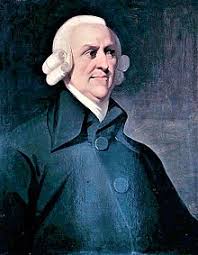
I just read Adam Smith’s The Wealth of Nations for the first time. Not every word. It’s over a thousand pages, and there are long “Digressions” (Smith’s term) on matters such as the history of the value of silver, or banking in Amsterdam, which I simply passed over. I was mainly interested in what Smith has to say about work, so I also merely skimmed some other sections that seemed to have little relevance to my research. Time and again, though, I found myself getting sucked into chapters unrelated to my concerns simply because the topics discussed are so interesting, and what Smith has to say is so thought-provoking. Reading the book is also made easier both by Smith’s admirably lucid writing and by the brief summaries of the main claims being made that he inserts throughout at the left-hand margin.
By any measure The Wealth of Nations is one of the most influential books ever written and represents a monumental intellectual achievement, initiating a paradigm shift in political economy. Before its publication in 1776, the dominant view in Britain and many other countries was some form of mercantilism. According to this theory, the path to prosperity and power for a nation lay in its having a positive balance of trade, exporting more than it imported, thereby accumulating wealth at the expense of its rivals. Government policy thus sought to promote the production of goods while ignoring or even suppressing domestic consumption. Against this, Smith argues that the wealth of a nation does not reside in a store of goods or gold, but consists, rather, in the totality of the economic activity that its people and institutions are engaged in. Read more »
After an anxious and grey winter, the gloom of an unraveling economy, topped by the ominous beating of war drums, spring arrived in Punjab and Lahore’s academies and activists put aside their concerns to celebrate Women’s International Day on March 8. Amidst the blooming of flowers and the heady fragrance of newly sprouting jasmine—feminism and feminist concerns and the doings of women suffused the air.
There were reviews of achievements by Pakistani women—Malala, Sharmeen Chinoy, Mukhtaran Mai, Fehmida Riaz, Hina Khar were lauded. There was the woman’s march of sisterhood and solidarity. The Prime Minister wants to ‘create an environment in which women can play their rightful role.’ Lively discussions were held on university campuses and in exclusive clubs. Television channels and talk shows competed to give more upbeat views of the whole ‘woman question’ that included duties of women, responsibilities of women, rights of women, clothes of women as well as the pro-women actions undertaken and being planned. A female student of an elite university dared to attempt to wear shorts. Thankfully that is where it remained, a dare. We spoke of the hijab, the veil, its ‘badness’ and ‘goodness,’ and so on. All discussions ended with exhortations for ‘women’s empowerment.’
Ah, that word. What does it even mean? Read more »
In 1987, Anderson University, an Evangelical school in Indiana, acquired 140 works by the artist Warner Sallman, including Head of Christ. You may have never heard of Sallman, but in terms of sheer sales and presence, his Head of Christ makes him the most popular 20th Century artist in America. Exponentially more popular than Warhol or Wyeth. If you are a Boomer or Gen X Evangelical, Head of Christ provided the definitive image of Jesus, in a way that you can never shake.
At my house, this was the only “art” hanging on the wall. Many of my friends could say the same. One of the wealthier families in our church also had a copy of Sallman’s Christ at Heart’s Door, with a heavy gilt frame and one of those fancy lights attached at the top to better illuminate Jesus trying to get in. The painting has obvious echoes to William Holman Hunt’s The Light of the World without thePre-Raphaelite theatrics. Our Jesus did not wear a cape. And that beard needs a trim. As a freshman in college I learned Hunt had also painted The Awakening Conscience, a painting so erotic to my sheltered sensibilities I could not reconcile the two. I also stared at the reproduction in my British literature anthology for hours on end.
If you are wondering just how ubiquitous Sallman’s picture is, over 500 million copies have been sold since he painted it in 1940. That’s enough for every man, woman, and child in the U.S. with plenty left for Justin Trudeau to pass out to his disillusioned base. Oh pretty, pretty Justin. Read more »
We are all the animals and none of them. It is so often said that poetry and science both seek truth, but perhaps they both seek hedges against it. —Thalia Field
Konrad Lorenz, still charming, circa 1981.
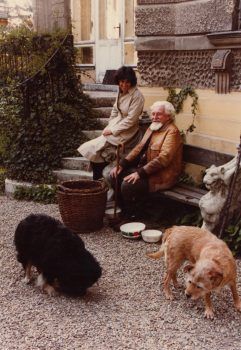
A handsome bearded man leads a row of eager young ducklings who mistake him for their mother. Many of us recognize this image, warm and charming, gemütlich even, as that of ethologist, Konrad Lorenz. Thalia Field, in her book Bird Lovers, Backyard, in a section titled “A Weedy Sonata,” leads us to Lorenz the way I came to him, the way I remember him from childhood: “…the imprinting idea reveals this white-bearded man in work pants and waders, a row of ducklings strolling behind him….Picture: Konrad Lorenz on his steps, feeding a baby bird from a dropper. Martina the goose waiting to go up to sleep in ‘her bedroom’ at the top of his house. A family portrait in progress.”
Recently Leanne Ogasawara, in her 3 Quarks Daily essay on Leonardo’s painting Salvator Mundi, concludes that in evaluating the provenance of an Old Master, it is wisest to trust the scientists, a position with which I’m inclined to agree. But in the discussion that followed, others raised the need for a “fresh eye,” suggesting that artists and philosophers and laymen should weigh in for a more balanced view, one less prone to innate bias. Today, with more women in science, with research in neuroscience leading to an explosion in ideas about what consciousness is, with neuroscientists concluding that animals too are conscious, there is recognition that we have drawn false borders where there may be none. Previously agreed on methods and theories have been increasingly questioned both from within and without a number of fields. There is a general re-visioning of assumed truths, of the canon left by mostly white men. Of course the best science is always open to correction as more information becomes available.
My mother, a passionate animal lover, who often preferred animals to humans, and who had six kids in a row, somewhat as if she’d produced a litter, had Lorenz’s book, King Solomon’s Ring, on her shelf, though I no longer remember if she gave it to me to read, or I just found it myself. And what I remember, what everyone remembers from the book, is this man, embodying both the maternal and paternal, leading a flock of baby geese around, feeding them, acting as their substitute mom. Imprinting. Read more »
It is fashionable to say that great wine is made in the vineyard. There is a lot of truth to that slogan but in fact wine is made by a complex assemblage with various factors influencing the final product. Last month I argued that the wine quality revolution in the U.S. was a result of a fascination with the French image of wine, new technology, a focus on varietal expression, and the benefits of California sun that enabled grapes to ripen more consistently. However, an additional factor influencing wine quality is the feedback from wine critics who influence consumer tastes as well as production styles. How much do critics influence wine styles and how is that influence transmitted?
Any discussion of the influence of wine critics must start with the iconic Robert Parker who is widely credited with rousting wine production from its complacent slumber in the early 1980’s. Yet, he is also widely blamed, rightly or wrongly, for making wine more homogeneous and less interesting by (1) encouraging more alcoholic, riper wines that lacked nuance while (2) introducing a scoring system for wine judging that made wine more accessible to consumers by suppressing its complexity. Regardless of which side of this fence you’re on, Parker was no doubt extraordinarily influential, and it’s worth looking at the sources of that influence to better understand how wine styles change. Read more »
From aviation to zoo-keeping, there’s a simple rule for safety in potentially hazardous pursuits. Always keep an eye on the ways that things could go badly wrong, even if they seem unlikely. The more disastrous a potential failure, the more improbable it needs to be before we can safely ignore it. Think icebergs and frozen O-rings. History is full of examples of the costs of getting this wrong.
Sometimes the disaster is missing something good, not meeting something bad. For hungry sailors, missing a passing island can be just as deadly as hitting an iceberg. So the same principle of prudence applies. The more we need something, the more important it is to explore places we might find it, even if they seem improbable.
We desperately need some new alternatives to fossil fuels. To meet growing demands for energy, with some chance of avoiding catastrophic climate change, the world needs what Bill Gates called an energy miracle – a new carbon-free source of energy, from some unexpected direction. In this case it’s obvious what the principle of prudence tells us. We should keep a sharp eye out, even in unlikely corners.
Yet there’s one possibility that has been in plain sight for thirty years, but remains resolutely ignored by mainstream science. It is so-called cold fusion, or LENR (for Low Energy Nuclear Reactions). Cold fusion was made famous, or some would say infamous, by the work of Martin Fleischmann and Stanley Pons. At a press conference on March 23, 1989, Fleischmann and Pons claimed that they had detect excess heat at levels far above anything attributable to chemical processes, in experiments involving the metal palladium, loaded with hydrogen. They concluded that it must be caused by a nuclear process – ‘cold fusion’, as they termed it. Read more »
The man for whom the word “Emergency” must have been invented (“serious, unexpected, and often dangerous situation requiring immediate action”) pulled the pin out of yet another hand grenade.
Our President, Donald J. Trump, bollixed, frustrated, stymied, and parboiled (twice) by the evil Nancy Pelosi, went off and did just what he wanted to do anyway. He picked up the compromises made by Democrats in bipartisan negotiations to re-open the government, put them in his pocket, and grabbed for more.
What a fine drama it was. He summoned Senate Majority Leader Mitch McConnell to the White House, heard him say the votes were there to pass the bill, and told McConnell that he, Trump, did not care what Congress thought. It was irrelevant. The President had consulted his legal advisors, his portrait of Andrew Jackson, and his statue of Winston Churchill, and concluded that the term “emergency” also encompassed any situation in which he did not get his way.
“Mitchie,” he thundered (the exact transcript has been suppressed and placed in a secure location with the Putin conversations), “I want my Wall, and I will smite this bill unless you pledge your undying support for my Emergency Declaration.” The Senior Senator from Kentucky, wily cephalopod that he is, complied. None of us need speculate over exactly what curses, orbs, and scepters were employed, or whether McConnell extracted something for himself, but he knelt, thanked his master, and then left the Oval Office back-side first, bowing at every other step.
Game on! So we move to the most frequently used phrase in the Trump Era, “Can he do this?”Read more »
I’d been living in Tokyo about ten years, when a friend’s father decided to perform a little experiment on me. Arriving one cool autumn evening at their home in suburban Mejirodai, he waved my friend away, telling her: “I want to have a little chat with Leanne.” Sitting down on the sofa across from him, he poured me a cup of tea. In truth, I can’t recall what we chatted about, but about twenty minutes into the conversation, he suddenly clasped his hand together in delight–with what could only be described as a childlike gleam in his eyes– and said, “Don’t you hear something?”
I was puzzled by this sudden turn of events. I sat quietly for a moment, listening– and then shook my head, no.
He was incredulous (but I couldn’t help but feel he also looked quite pleased with himself) and said: “Are you telling me that you have noticed nothing unusual here this evening?” He cupped his hand around his right ear as if making to try and hear a faint sound.
When I shook my head again, he giddily pulled out a small bamboo cage from under his chair. I immediately realized that he had a bell cricket in there. In fact, the cricket was chirping quite loudly!
How on earth had I missed it?
Seeing my look of distress, he excitedly explained that Japanese people process the sound of insects using the same side of their brain as they do language –while foreigners (he looked at me pointedly) process it on the other side of the brain, as a kind of background noise. He wondered if the sound didn’t actually annoy me? Japanese people, he said, hear the sound of singing crickets as music. He then told me about a recent academic paper that had been published on this very subject (he was, after all, a scientist). Here is a more recent such paper. My friend Chieko had come downstairs by this time and was listening to all this from the corner of the room, rolling her eyes dramatically.
What could I say? I simply didn’t “hear” it. Read more »

 “…And now to introduce our second panelist: Martha. Martha does believe that academic philosophy is worth pursuing, and she has – of course – written a book about it. Martha, can you briefly summarize your argument?”


 My answering machine whirrs. From an echoing room, the chainsaw-voice shouts into a speaker phone:
 One of the philosophical tools that seems utterly obvious to me is the so-called “use/mention distinction”. Because it strikes me as so obvious, it is always baffling to me that people seem to have such trouble with it.
 I just read Adam Smith’s The Wealth of Nations for the first time. Not every word. It’s over a thousand pages, and there are long “Digressions” (Smith’s term) on matters such as the history of the value of silver, or banking in Amsterdam, which I simply passed over. I was mainly interested in what Smith has to say about work, so I also merely skimmed some other sections that seemed to have little relevance to my research. Time and again, though, I found myself getting sucked into chapters unrelated to my concerns simply because the topics discussed are so interesting, and what Smith has to say is so thought-provoking. Reading the book is also made easier both by Smith’s admirably lucid writing and by the brief summaries of the main claims being made that he inserts throughout at the left-hand margin.



 It is fashionable to say that great wine is made in the vineyard. There is a lot of truth to that slogan but in fact wine is made by a complex assemblage with various factors influencing the final product. Last month
  From aviation to zoo-keeping, there’s a simple rule for safety in potentially hazardous pursuits. Always keep an eye on the ways that things could go badly wrong, even if they seem unlikely. The more disastrous a potential failure, the more improbable it needs to be before we can safely ignore it. Think icebergs and
  The man for whom the word “Emergency” must have been invented (“serious, unexpected, and often dangerous situation requiring immediate action”) pulled the pin out of yet another hand grenade.
 I’d been living in Tokyo about ten years, when a friend’s father decided to perform a little experiment on me. Arriving one cool autumn evening at their home in suburban Mejirodai, he waved my friend away, telling her: “I want to have a little chat with Leanne.” Sitting down on the sofa across from him, he poured me a cup of tea. In truth, I can’t recall what we chatted about, but about twenty minutes into the conversation, he suddenly clasped his hand together in delight–with what could only be described as a childlike gleam in his eyes– and said, “Don’t you hear something?”